Grenadian fish counters change through the year in a way that supermarket freezers never do. In the drier months, the talk is of dolphin and tuna and the boats come in heavy; later in the year, catches thin out, small fish take centre stage and the river mouths fill with people waiting for titiri. Knowing the pattern helps you buy the best fish at the best price, and it explains why your favourite species can be plentiful one month and absent the next.
This calendar is written from the buyer's side of the counter: what tends to appear at markets and roadsides, when it is cheaper, and when to expect gaps. Fish do not read calendars, and catches vary from year to year with weather and sea conditions, so treat it as a pattern rather than a promise.
Why Grenada has fish seasons at all
Much of the fish sold in Grenadian markets is pelagic, meaning it lives in open water and moves with currents and food supply. Species such as dolphin, yellowfin tuna, blackfin tuna and kingfish pass through the waters around Grenada in greater numbers at certain times of year, and the small-boat fleet follows them. When those fish are running, supply rises and prices ease. When they move on, the boats switch to other targets or stay closer to shore.
Weather is the other half of the story. The dry season, roughly January to May, generally brings steadier seas, though the trade winds can make the water choppy. The rainy season, roughly June to December, overlaps with the Atlantic hurricane season from June to November, and stretches of rough weather keep open boats ashore. Fewer days at sea mean less fish at market, regardless of what is swimming offshore.
Rules matter as well. Grenada's Fisheries Division sets closed seasons and size limits for certain species, notably lobster, and these determine what can legally be sold.
The drier months: roughly January to May
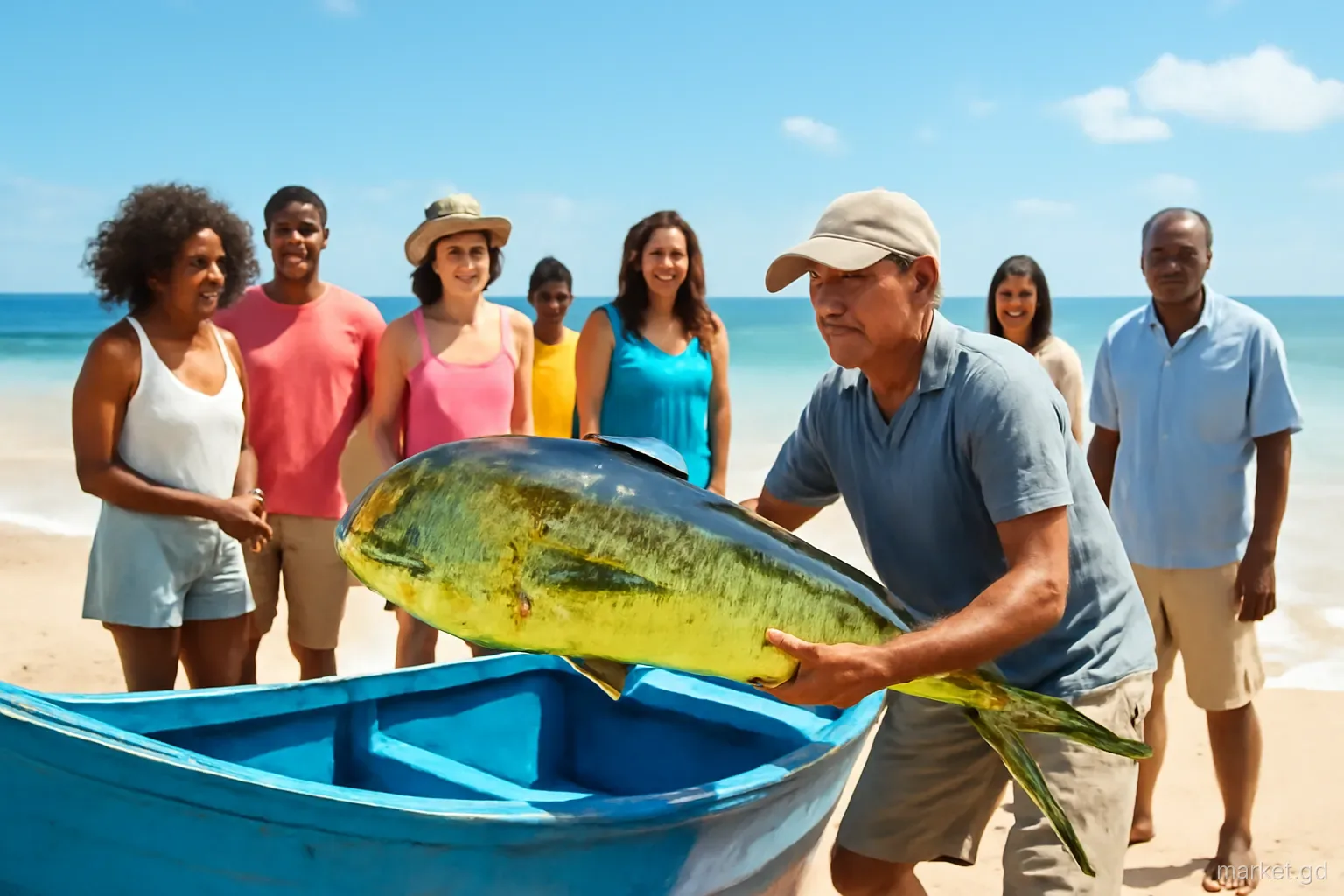
Dolphin. This is the period most associated with good dolphin catches, and counters can be full of the bright, blunt-headed fish. When dolphin is running, it is often among the best-value larger fish on offer.
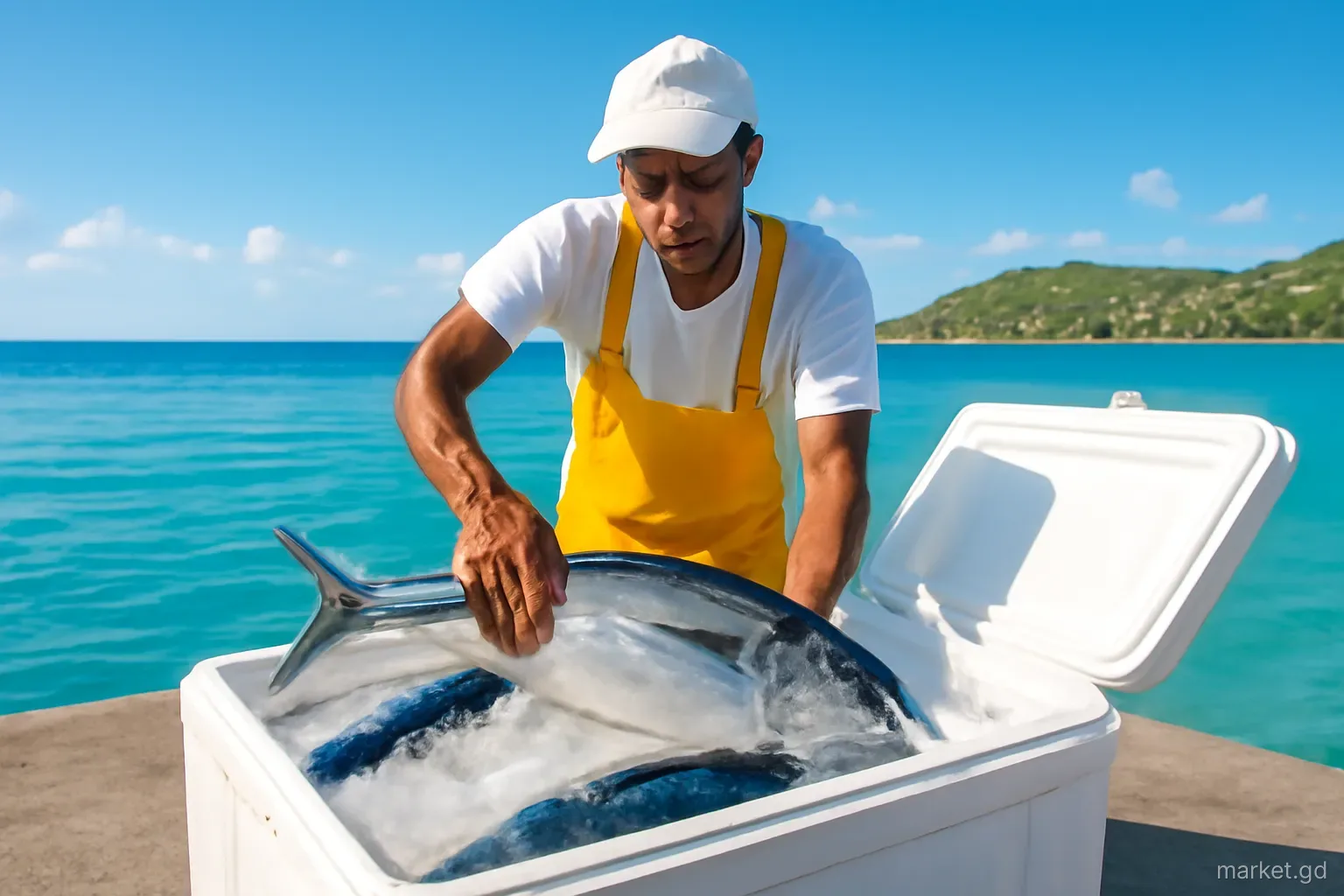
Tuna. Yellowfin and blackfin tuna are taken through much of the year, but many buyers notice better supply in the first half of the year. Tuna is one of the dearer fish per pound, so a good run makes a real difference to price.
Kingfish and other large pelagics. Kingfish and wahoo appear alongside the tuna and dolphin, though catches are less predictable.
Lent and Easter. Demand for fish rises during Lent, especially on Fridays and through Holy Week. Supply may be good, but so is competition, so buy early in the day.
Billfish season. Sport fishers target sailfish and marlin in the early part of the year. These are not everyday market fish, but their presence signals that the pelagic season is in full swing.
The rainier months: roughly June to December
Fewer big pelagics. Dolphin catches usually drop away, and tuna can be patchier. Expect higher prices and less choice of large fish, especially after rough weather.
Small fish carry the market. Jacks, robins and similar schooling fish are a dependable part of the market for much of the year, and they matter even more when larger fish are scarce. They are sold by the bunch or string and are among the most affordable fish available.
Titiri season. During the wetter months, tiny juvenile fish called titiri run at the mouths of rivers, and people gather with fine nets to scoop them. They are sold in small heaps or by the cup and are made into titiri bakes or fritters. The timing depends on rain and moon phases, so it is a case of hearing that the titiri are running.
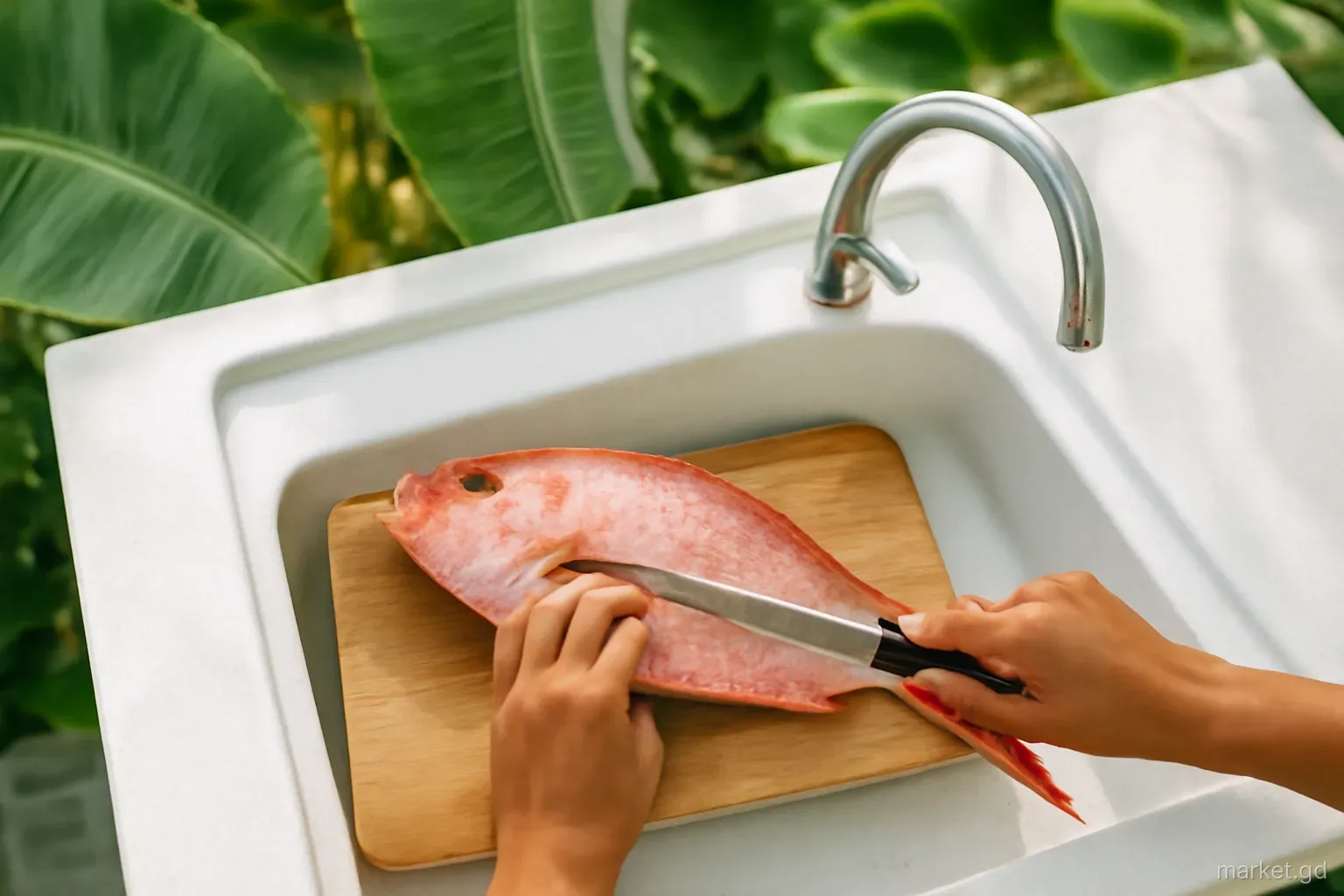
Reef and bottom fish. Snapper, grouper, hind and other bottom fish are caught year-round with lines and pots, and they fill gaps when pelagics are scarce. Large reef predators carry a small risk of ciguatera, so buy them from vendors who know where they were caught.
Hurricane interruptions. In active storm years, several days at a time can pass with almost no fresh fish. Households often keep frozen or preserved fish for those spells.
Lobster, conch and other regulated seafood
Spiny lobster has a closed season in Grenada during which catching and selling it is prohibited, as well as size rules and a ban on taking egg-bearing females. The closed season has traditionally covered the late spring and summer months, but the exact dates are set by the Fisheries Division and can change, so check the current rules before you buy and be wary of lobster offered during the closed period.
Lambi, the queen conch, is caught by divers and sold fresh or cleaned. It is subject to fisheries management, and international concern over conch stocks has increased in recent years, so rules on size and seasons may tighten. Sea eggs, the white sea urchin, have at times been under long harvesting bans; treat any offer of sea eggs with caution unless you know the season is open.
A simple principle covers all of these: if a vendor is selling something that is supposed to be out of season, the cheap price is not worth the damage to the stock or the risk of buying something taken illegally.
The year at a glance
A rough, buyer's-eye summary of what to expect. Use it as a starting point and let your vendor fill in the detail for the current year.
- January to March: dolphin and tuna usually at their most plentiful; billfish season offshore; trade winds can make some days rough for small boats.
- March and April: pelagic catches often still good; Lent and Easter push up demand, especially on Fridays and through Holy Week.
- May and June: the dry season ends and catches of the big migratory fish start to taper; check whether the lobster closed season has begun.
- July to September: rainy and hurricane season; more days lost to weather; jacks, robins and bottom fish carry the counters.
- September to November: titiri may run at river mouths after heavy rain; storm interruptions remain possible until the end of November.
- December: demand rises for Christmas cooking; seas may begin to settle and the first of the new season's dolphin can appear.
Using the calendar to save money
Buying with the seasons is the easiest way to eat well for less in Grenada. A few habits make the most of it.
- When dolphin or tuna is plentiful, buy extra, portion it and freeze it for the leaner months.
- In the rainy season, build meals around jacks and other small fish rather than chasing scarce tuna.
- Watch the weather: after a calm spell, markets are fuller and prices softer; after a rough week, expect the opposite.
- Ask your vendor what has been running well. They know before anyone else when a species has arrived.
- Keep some saltfish or frozen fish in reserve for storm weeks, when fresh supply can disappear for days.
- Avoid buying regulated species out of season, however tempting the price.
Mistakes people make with fish seasons
The most common mistake is expecting a fixed menu. Visitors used to supermarket fish counters sometimes plan a dinner around a particular species and then find it is simply not available that week. Plan meals around whatever is good on the day, and keep a second option in mind.
A second mistake is treating a calendar like this one as precise. Seasons shift with water temperature, currents and weather, and one year's excellent dolphin run can be followed by a disappointing one. Vendors, fishers and the Fisheries Division are better guides to what is happening right now than any general pattern.
Finally, people sometimes forget that restaurant menus follow the same seasons. A beach bar offering lobster in the middle of the closed season is a reason to ask questions, not a reason to celebrate.
Frequently asked questions
When is dolphin fish in season in Grenada?
Dolphin, also known as mahi-mahi, is most associated with the drier months, roughly January to May, when catches are usually strongest. It can appear at other times, but supply is less reliable in the second half of the year.
Is tuna available all year in Grenada?
Yellowfin and blackfin tuna are caught through much of the year, but supply varies with the season and weather. Many buyers find tuna easier to get in the first half of the year, and prices rise when catches are poor or seas are rough.
When is lobster season in Grenada?
Lobster has a closed season set by the Fisheries Division, traditionally covering part of the late spring and summer. Dates can change, so check the current rules each year. Size limits apply, and egg-bearing females must not be taken or sold.
What is titiri and when can you buy it?
Titiri are tiny juvenile fish caught at river mouths during the rainy months. They are sold in small heaps and made into bakes or fritters. The run depends on rain and moon phases, so availability is unpredictable and short-lived.
Why is there sometimes no fresh fish at the market?
Rough seas keep small open boats ashore, especially during the rainy and hurricane season. After several days of bad weather, markets can have very little fresh fish until conditions improve and the boats can safely go out again.
Which fish are cheapest in Grenada?
Small schooling fish such as jacks and robins are usually the most affordable, sold by the bunch. Larger fish like dolphin become better value during strong runs. Buying whatever is plentiful that week is the simplest way to keep costs down.