Lambi is the Grenadian name for queen conch, the large sea snail whose pink-lipped shell turns up as a doorstop, a garden border or a horn blown at the beach. Inside is a firm, pale meat that, handled properly, becomes one of the most prized seafoods in the country. Handled badly, it is rubbery enough to bounce. The difference lies almost entirely in buying and preparation, which is what this guide covers.
Lambi is eaten across Grenada, Carriacou and Petite Martinique, curried, stewed, in souse, in fritters and in the deep-flavoured broths sold at Fish Friday in Gouyave. Carriacou in particular has a long association with conch, and the shells are part of the landscape there. For the home cook, buying lambi at a market and turning it into a good dish is very achievable once the basics are clear.
What you are actually buying
Conch lives on sandy and seagrass bottoms and is gathered by divers rather than caught on lines. Most buyers never deal with a live conch in its shell: the meat is usually removed by the divers or vendors, who knock a small hole near the top of the spiral to cut the muscle free, then slide the animal out. The tough outer skin and the dark parts are trimmed away, leaving the white-to-pinkish meat sold by the pound.
At market you may see lambi in three forms: whole in the shell, which is uncommon and hard work; cleaned but untrimmed, with some skin and the orange-pink edges still attached; and fully cleaned, ready to tenderise. Fully cleaned lambi costs more per pound but has little waste. Untrimmed lambi is cheaper but you will lose a meaningful share of the weight to trimming.
Some vendors also sell the crystalline style, a clear rod from the digestive tract that some people eat raw. It is a local curiosity rather than an essential part of the dish.
How to judge good lambi
Freshness checks for conch are a little different from those for fish. Look for these signs before buying.
- The meat should look moist and glossy, white to cream with pinkish or orange edges, not grey or yellowed.
- It should smell clean and briny. Any sour or ammonia smell means it is old.
- It should feel firm and slightly springy, not slimy or mushy.
- Ask whether it was cleaned that day and whether it has been frozen. Frozen lambi is common and perfectly usable, but it should be sold as frozen.
- Ask how much trimming is left to do. A vendor will usually finish the cleaning for you if asked.
- If buying frozen lambi from a supermarket, look for solid packs without large ice crystals inside the bag, which suggest thawing and refreezing.
Tenderising: the step that makes or breaks it
Conch is a large muscle, and it needs to be broken down before or during cooking. There are two main approaches, and many Grenadian cooks combine them.
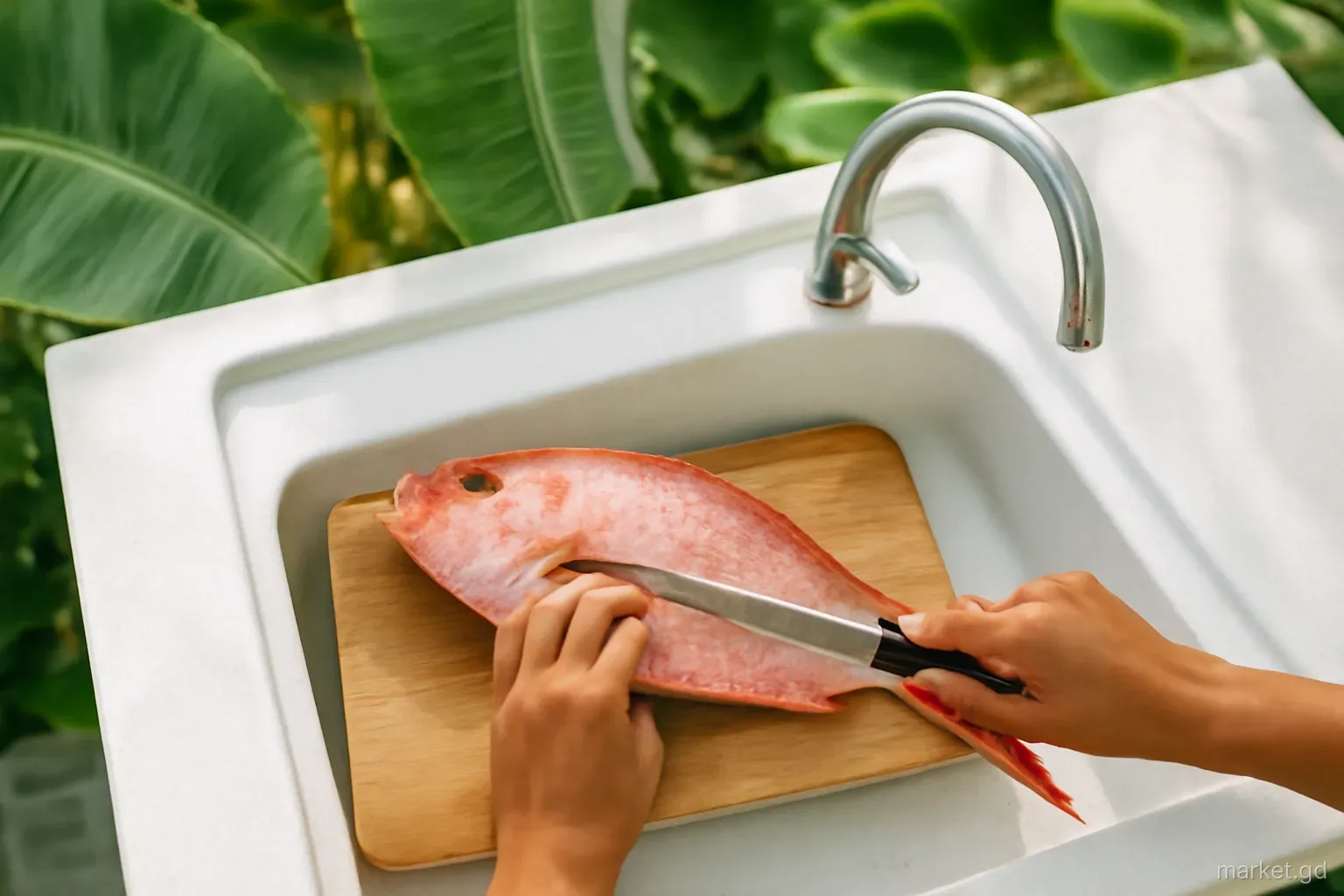
- Trim thoroughly. Remove any remaining skin, dark membranes and very tough bits with a sharp knife. Leftover skin is the commonest cause of chewy lambi.
- Wash with lime. Rinse the meat in water with lime or lemon juice, as with fish. This is a traditional cleaning step that also freshens the flavour.
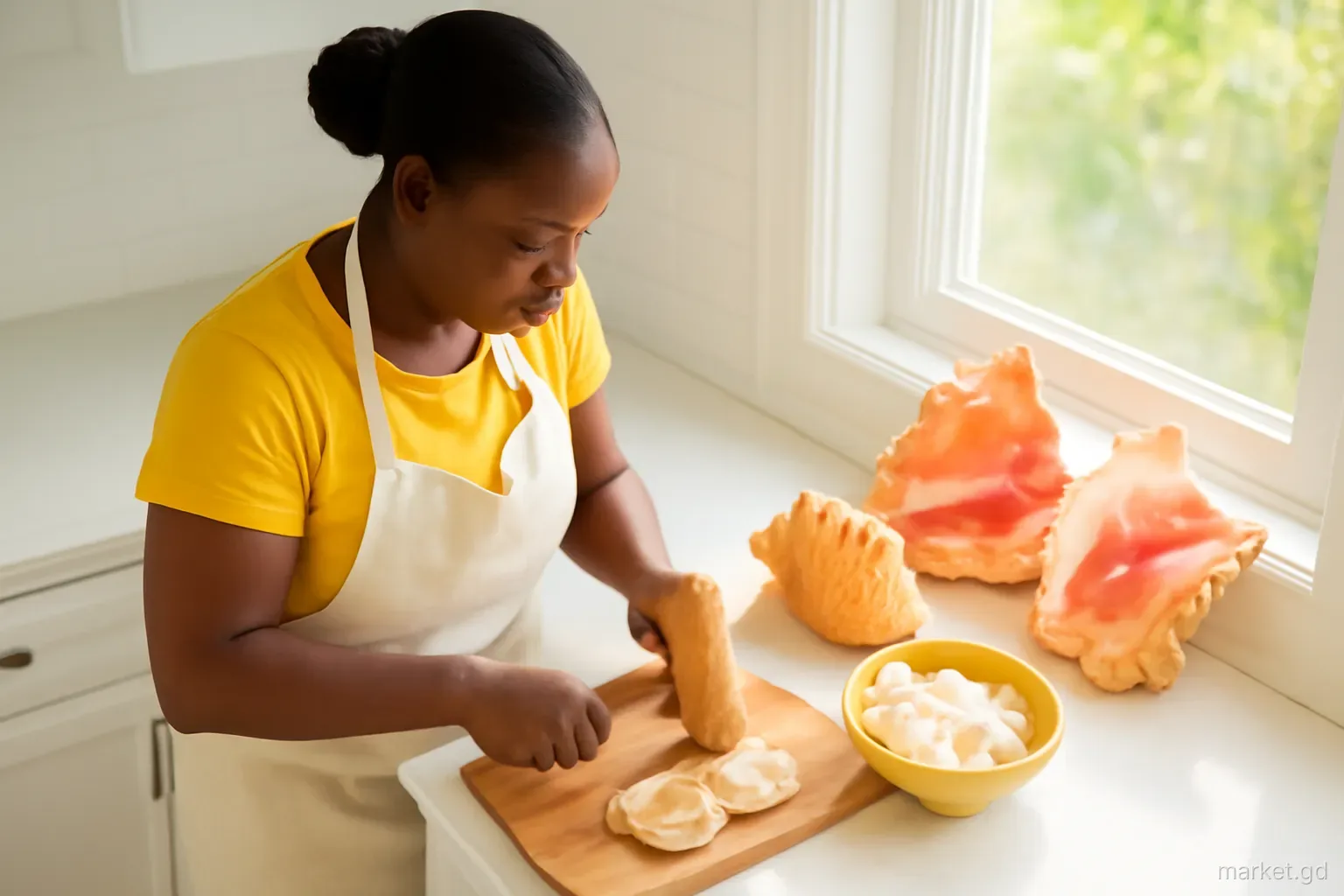
- Pound it. Place the meat between sheets of plastic or in a strong bag and beat it with a meat mallet, the back of a heavy pan or a smooth stone until it is noticeably flatter and softer. This works well for lambi that will be fried or used in fritters.
- Or pressure-cook it. For stews and curries, many cooks cut the meat into pieces and pressure-cook it in seasoned water before adding it to the sauce. Timing depends on the conch and the cooker, so test a piece and stop when it is tender but not falling apart.
- Season early. Lambi takes on flavour well. Marinate the tenderised meat in green seasoning, garlic and lime before cooking.
- Do not overcook quick dishes. If frying or using thin slices, cook briefly. Conch goes tough again if cooked for a medium length of time; it needs either very short cooking or long, gentle cooking.
Classic ways to cook lambi
Curried lambi. Tenderised conch simmered in a curry made with local curry powder, onion, garlic, thyme, hot pepper and sometimes coconut milk. Served with rice, roti or provisions, it is one of the most popular ways lambi is eaten.
Stewed lambi. Browned in a little burnt sugar in the Caribbean style, then simmered with tomato, onion, sweet pepper, herbs and seasoning until rich and tender.
Lambi souse. Boiled, thinly sliced conch dressed in a sharp mixture of lime juice, cucumber, onion, hot pepper and herbs, served cold. It needs very tender meat, so pressure-cook or pound well first.
Lambi water and broth. A simple, peppery soup made from conch, seasoning and sometimes dumplings or provisions. Popular as a restorative and as late-night street food.
Lambi fritters. Finely chopped or minced conch mixed into a seasoned batter and fried. A good use for trimmings and smaller pieces.
Lambi in oil down. Some cooks add conch to oil down, the national dish, alongside salted meats, breadfruit and callaloo.
How much to buy and what to expect on price
Lambi is one of the dearer local seafoods per pound, typically costing more than everyday fish such as jacks and often sitting closer to the price of good tuna. The reason is the labour involved in diving for it and cleaning it, plus the pressure on stocks. Prices move with supply and season, so ask at the counter rather than relying on a figure heard months ago.
For a curry or stew, a common rule of thumb is around a quarter to a third of a pound of cleaned meat per person when served with rice and provisions, a little more if lambi is the only protein on the table. If you buy untrimmed conch, allow extra to cover the skin and edges you will cut away. For fritters, a smaller quantity goes a long way, because the meat is chopped fine and stretched with batter. Buying a couple of pounds at once and freezing portions is sensible when supply is good, since lambi can be scarce for weeks at a time.
Stock concerns and rules to check
Queen conch is a slow-growing animal, and populations across the Caribbean have come under pressure from heavy fishing. It is listed under the international CITES convention, which regulates trade in its meat and shells, and regional fisheries bodies have been urging tighter management. In Grenada, the Fisheries Division is responsible for the rules on conch, which can include minimum sizes and other measures. Those rules may change as management tightens, so check before buying large quantities.
There is also a human side. Conch in deeper water is often gathered by free divers or by divers using compressors, and decompression illness has been a known risk among conch divers in the region. Paying a fair price for lambi reflects real work and real risk.
Taking conch shells home as souvenirs can be restricted by your home country's import rules, even if the shell was bought legally. Check before packing one.
Mistakes that ruin lambi
Skipping the trimming. Even a thin layer of skin turns chewy. Trim carefully.
Cooking for a medium time. Ten to twenty minutes of simmering often makes conch tougher, not softer. Go short or go long.
Buying untrimmed lambi without allowing for waste. A pound of untrimmed meat yields noticeably less once cleaned. Factor that into quantities and cost.
Ignoring the source. If the conch seems unusually small or cheap, ask questions. Undersized conch has not had time to breed, and buying it rewards the fishing that is emptying the seagrass beds.
Thawing on the counter. Frozen lambi left out in a warm kitchen softens unevenly and can spoil on the outside before the centre thaws. Move it to the fridge the night before.
Pounding too hard. The aim is to break down the fibres, not to shred the meat. Beat evenly until the piece is flatter and slightly yielding, then stop; mashed conch falls apart in the pot.
Frequently asked questions
What is lambi in Grenada?
Lambi is the Grenadian name for queen conch, a large sea snail with a pink-lipped shell. Its firm white meat is cooked in curries, stews, souse, broths and fritters, and it is one of the most popular seafoods in Grenada, Carriacou and Petite Martinique.
How do you make lambi tender?
Trim off all skin and dark membrane, then either pound the meat flat with a mallet or pressure-cook it in seasoned water until tender. Avoid medium cooking times, which tend to toughen conch. Quick frying or long, gentle stewing both work.
Is it legal to buy lambi in Grenada?
Yes, conch is legally fished and sold in Grenada, subject to Fisheries Division rules such as minimum sizes. Because queen conch is under regional pressure and listed under CITES, rules may tighten, so check current regulations before buying in quantity.
Can visitors take conch shells home?
Many countries restrict the import of queen conch shells and meat because the species is listed under CITES. Even a shell bought legally in Grenada may need permits. Check your home country's customs and wildlife rules before packing one.
Where is the best place to eat lambi?
Lambi appears on many local menus around Grenada, from rum shops to restaurants, and at Fish Friday in Gouyave. Carriacou has a strong conch tradition too. Availability depends on the catch, so ask what is fresh that day.
Does frozen lambi taste as good as fresh?
Well-frozen lambi works very well, especially in curries and stews where it is cooked long and gently. Thaw it slowly in the fridge, trim any leftover skin, and tenderise it just as you would fresh conch for the best texture.