Vendors at Grenadian markets will clean fish for you, and on a busy morning that is often the sensible choice. But there are plenty of reasons to do it yourself: a neighbour drops off a bunch of jacks, a fisherman at the beach sells you a whole snapper uncleaned, or you simply want the head and bones for broth. Knowing how to scale, gut and portion a fish turns any of those moments into dinner rather than a problem.
This how-to covers the tools, the basic sequence for whole fish, how to cut steaks from larger fish and how to fillet a medium reef fish, followed by the Grenadian habits of washing and seasoning and the right way to store what you do not cook straight away.
The tools that make it easy
A Grenadian kitchen does not need specialist equipment to clean fish, but a few items make the job faster, safer and less messy.
- A sharp, sturdy knife. A medium chef's knife handles most jobs. A thinner, flexible knife helps with fillets. Blunt knives slip and cause more injuries than sharp ones.
- A scaler or the back of a knife. A cheap fish scaler from a hardware store works well, but the blunt back of a knife or even a spoon will do.
- A heavy cleaver or cutlass for large fish. Cutting tuna or kingfish into steaks requires going through the backbone, which needs weight.
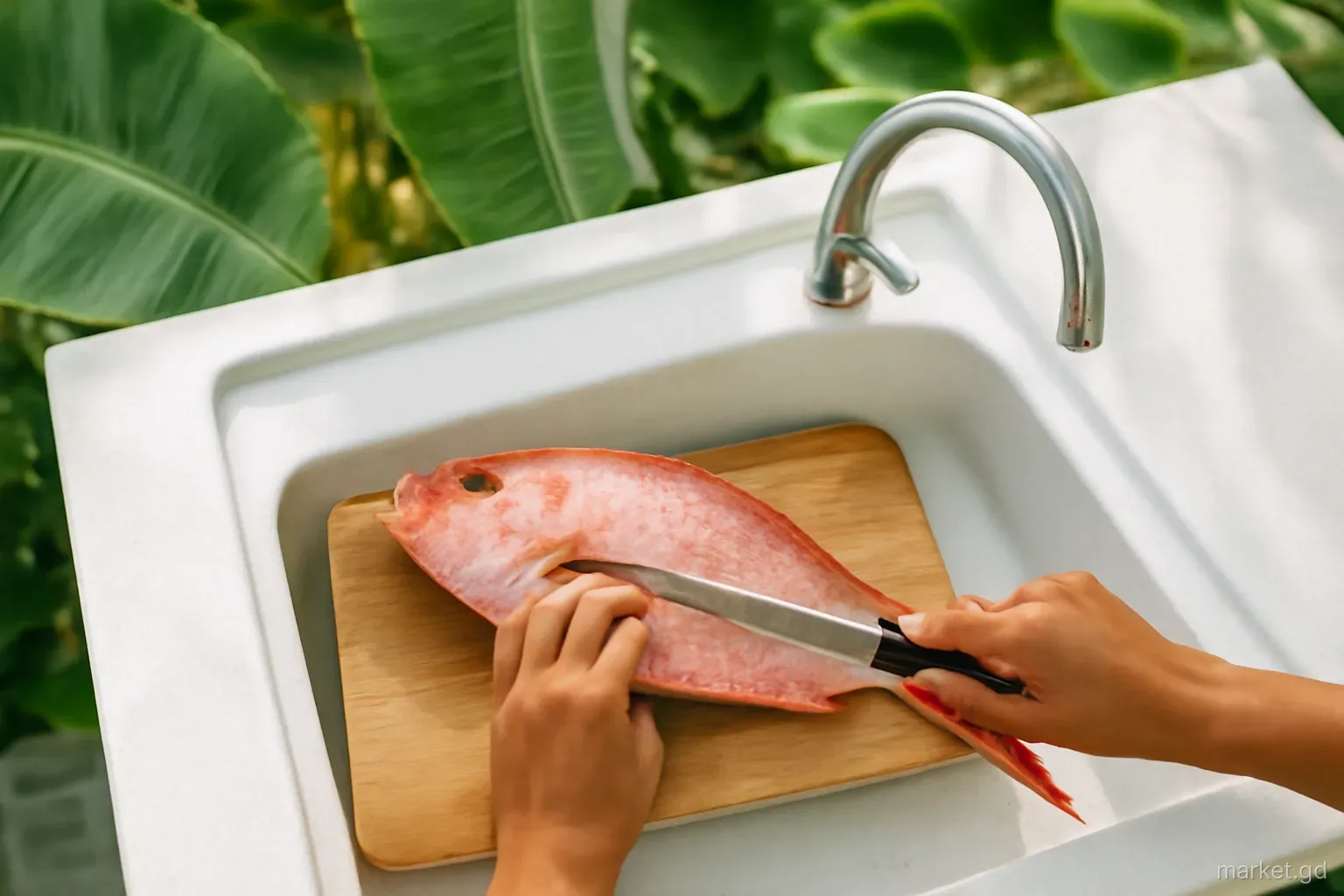
- A large board and an outdoor sink if possible. Scales fly. Many Grenadian homes clean fish at an outdoor tap or sink to keep the mess outside.
- Limes or lemons and a bowl of water. For washing the fish once cleaned.
- Gloves (optional). Some fish have sharp spines. Gloves protect your hands and keep the smell off them.
Scaling and gutting a whole fish
This sequence works for jacks, snapper, grouper and most small to medium fish. Keep the fish cold until you are ready to start.
- Trim the spines. Use scissors to cut off sharp dorsal and side fins, especially on snapper and grouper, so they do not stab you.
- Scale from tail to head. Hold the tail firmly and scrape against the direction of the scales with a scaler or knife back. Work under running water or inside a large bag to contain the scales. Do both sides and around the belly and head.
- Open the belly. Insert the knife tip at the vent near the tail and cut forward along the belly towards the head, keeping the blade shallow so as not to pierce the guts.
- Remove the guts. Pull out the innards with your fingers. Scrape away the dark bloodline running along the backbone inside the cavity, which tastes bitter.
- Remove the gills. Cut the gills free at the top and bottom and pull them out. Gills spoil quickly and spoil the flavour of broth.
- Rinse thoroughly. Wash inside and out until the water runs clear.
- Score small fish if frying. Make diagonal cuts along each side so seasoning penetrates and the fish cooks evenly.
Cutting steaks from tuna, dolphin and kingfish
Large pelagic fish are usually cut into steaks across the body rather than filleted. If a vendor sells you a large chunk rather than ready-cut steaks, this is the method. Lay the fish or the piece on a large board. Using a heavy knife or cleaver, cut straight across the body at right angles to the backbone, in slices about two to three centimetres thick for grilling or a little thinner for frying.
When you reach the backbone, position the blade carefully and bring it down firmly in one stroke, or press down on the back of the blade with the palm of your other hand. Do not saw back and forth, which crushes the flesh. With tuna, many cooks remove the dark red bloodline running along the centre of each steak, as it has a strong flavour that some people dislike.
Dolphin has a thick skin that is usually removed before cooking. Skin it by sliding a knife between skin and flesh on fillets, or peel it back from steaks after a short time on the grill.
Filleting a medium reef fish
Snapper, grouper and similar fish are worth filleting when you want boneless pieces for frying, steaming or a fish tea.
- Lay the scaled, gutted fish on its side with the backbone towards you.
- Make a cut behind the gill cover down to the backbone, angling slightly towards the head.
- Turn the blade flat and run it along the backbone from head to tail, keeping the knife pressed against the bones and lifting the flesh away as you go.
- Cut through the rib bones or slide around them to free the fillet.
- Turn the fish over and repeat on the other side.
- Run your fingers over each fillet to find pin bones and pull them out with tweezers or pliers.
- Keep the frame, head and tail for broth. Simmered with onion, thyme, garlic and pepper, they make the base for fish tea or a soup.
Cleaning a bunch of jacks or robins quickly
Small fish arrive in quantity, and cleaning a bunch of twenty jacks one by one with the full method takes a while. Grenadian cooks speed it up with a production line. Scale the whole batch first, in a bucket of water or a large bag. Then go through the batch again, opening each belly with a single short cut and hooking out the innards with a finger. A third pass removes the gills and rinses each fish.
Most cooks leave the heads on small fish, because they help hold the fish together when frying and many people enjoy the crisp head and cheeks. Score both sides two or three times with diagonal cuts, season the batch together in a bowl and leave it to marinate. Small oily fish spoil faster than large ones, so clean them the same day you buy them and keep them chilled until the oil is hot.
Washing, seasoning and storing
Grenadian cooks traditionally wash cleaned fish in water with lime or lemon juice, sometimes with a little salt, then rinse again. This freshens the smell and firms the surface. After washing, the fish is usually rubbed with green seasoning, a blend of chive, thyme, parsley, celery, garlic, hot pepper and other herbs, sometimes with a little salt and black pepper, and left to marinate in the fridge for at least half an hour before cooking.
Anything not cooked within a day should be frozen. Pat the pieces dry, wrap them tightly in plastic or put them in freezer bags with as much air pressed out as possible, and label them with the species and date. Freezing in meal-sized portions saves defrosting more than you need. Thaw in the fridge, never on a warm counter. Fish heads and frames can also be frozen for broth later.
Dispose of scales and guts carefully. Bag them tightly and put them out on collection day or bury them, rather than leaving them where dogs, cats and flies will find them.
Common mistakes
Piercing the gut. A deep cut along the belly can rupture the innards and taint the flesh. Keep the blade shallow.
Leaving the bloodline. The dark line along the backbone is bitter. Scrape it out.
Using a blunt knife. Blunt blades slip. Sharpen before you start.
Letting fish warm up while you work. Clean one fish at a time and keep the rest on ice or in the fridge. On a hot afternoon, a pile of fish on the counter warms quickly, and that is when tuna and dolphin in particular become risky.
Washing the kitchen with fish water. Scales and slime spread further than expected. Wipe surfaces, boards and the sink with hot soapy water afterwards, and wash the knife before using it for anything else.
Throwing away the best parts. Heads, frames and the cheeks of larger fish are full of flavour. Freeze them for broth instead of binning them.
Frequently asked questions
Is it better to have the vendor clean the fish?
For large quantities or awkward fish like tuna, letting the vendor clean and cut it saves time and mess. Cleaning it yourself is useful when you buy straight from a fisherman, want to keep the head and bones, or prefer particular cuts.
Why do Grenadians wash fish with lime?
Washing fish with lime or lemon juice is a traditional step that freshens the smell, firms the surface and removes slime. It is about flavour and cleanliness, not safety; it does not replace proper chilling or make old fish safe to eat.
What is green seasoning?
Green seasoning is a blended herb mix used across the Caribbean, made with chive, thyme, parsley, celery, garlic, hot pepper and other herbs. Grenadian cooks rub it on fish and meat before cooking, and many households keep a jar in the fridge.
How do you remove fish scales without making a mess?
Scale the fish inside a large plastic bag or under running water at an outdoor sink. Work from tail to head with a scaler or the back of a knife. The bag or water keeps the scales from scattering across the kitchen.
Should the head be kept for anything?
Yes. Fish heads, frames and tails make excellent broth. Simmer them with onion, thyme, garlic and hot pepper for a base for fish tea or soup. Remove the gills first, as they turn broth bitter, and strain carefully before using.
How long can cleaned fish be frozen?
Well-wrapped lean fish such as snapper keeps good quality for several months in a home freezer, while oily fish like tuna and jacks are best used within a couple of months. Freeze in portions, label with the date and thaw in the fridge.