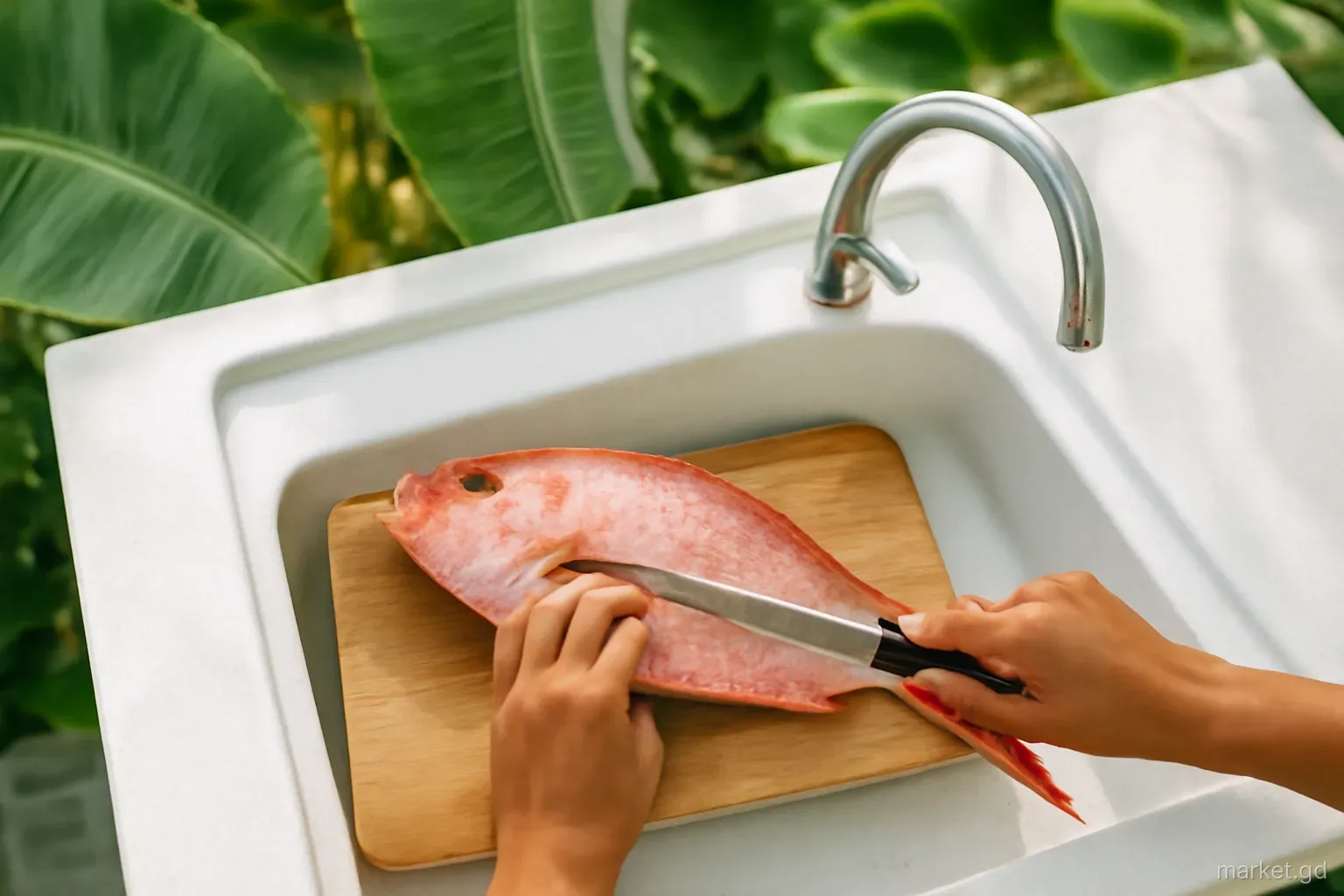
For an island surrounded by fresh fish, Grenada eats a remarkable amount of fish that has been salted, dried or smoked somewhere far colder. Saltfish, smoked herring and salt mackerel are pantry staples in many households, sold in supermarkets, village shops and market stalls, and they anchor some of the best-loved breakfast and Saturday dishes. Their roots go back to the plantation era, when salted fish from North Atlantic fisheries was shipped south as cheap, long-lasting protein. The habit outlived the system that created it and became part of Grenadian cooking.
These preserved fish behave very differently from fresh catch. Buying the right piece and, above all, desalting it properly are the keys to a good result. This guide explains the main types, what to look for at the shop, how to prepare each one and the dishes they turn into.
The main types on the shelf
Saltfish. Salted, dried white fish, traditionally cod but often pollock, hake or similar species, imported mainly from the North Atlantic. It is sold in whole sides, boneless or skinless pieces, shredded packs and small boxes. Bone-in saltfish with skin is usually cheaper and many cooks say it has more flavour; boneless saves time.
Smoked herring. Whole or filleted herring that has been salted and smoked, giving it a strong, smoky flavour and a firm texture. It is used in smaller quantities as a flavouring as much as a main ingredient, especially in breakfast dishes and with provisions.
Salt mackerel. Mackerel preserved in brine, often sold by the piece from tubs or buckets in shops, or in sealed packs. It is oily and rich and is commonly cooked with green bananas, provisions or in a run down with coconut milk.
Pickled herring and others. Brined or pickled herring and occasionally salted local fish turn up too. Some households salt and dry their own fish when catches are good, although this is less common than it once was.
How to choose a good piece
Preserved fish can vary a great deal in quality, and the cheapest option is not always the best value once you account for bones, skin and waste.
- Saltfish should be thick and white to creamy. Thin, yellowed or very dark pieces are older or lower quality. A thick, meaty piece rehydrates into firm flakes.
- Check for pink or red discolouration. Pinkish patches on salted fish can indicate spoilage. Avoid them.
- Smell it. It should smell strongly salty and fishy, but not rancid or musty.
- Consider bone-in versus boneless. Bone-in costs less per pound but you lose weight to bones and skin. Boneless is convenient for quick dishes.
- For smoked herring, look for firm, golden-brown fish. Avoid pieces that are crumbly, oily to the point of being greasy or that smell stale.
- For salt mackerel, check the brine. It should be clear-ish rather than cloudy or foul-smelling.
- Look at dates and packaging. Sealed packs should be intact. Loose fish sold from a counter should be kept covered.
Desalting: the step people rush
Most preserved fish is far too salty to eat straight from the pack. Desalting is non-negotiable, and how thoroughly you do it depends on the dish and on your taste.
- Rinse off surface salt. Wash the fish under running water to remove loose salt crystals.
- Soak overnight for thick pieces. Cover bone-in or thick saltfish with cold water in the fridge and soak for several hours or overnight, changing the water two or three times.
- Or boil for speed. The quick method is to bring the fish to a boil in fresh water, drain, and repeat once or twice. This is faster but can make the fish slightly tougher.
- Taste a flake. Before using it in a dish, taste a small piece. It should be pleasantly salty, not harsh. Soak or boil again if needed.
- Remove skin and bones. Once soft, pull away the skin and bones and flake the flesh with your fingers or a fork.
- Treat smoked herring similarly. Soak or boil smoked herring briefly to soften it and reduce the salt, then skin, bone and flake it.
- Do not add salt to the dish until the end. Taste first. Preserved fish can carry more salt than you expect even after soaking.
Classic dishes
Saltfish souse or salad. Flaked desalted saltfish tossed with onion, tomato, sweet pepper, cucumber, hot pepper, lime juice and oil. Eaten cold with bakes or bread, often at breakfast. The style known in Trinidad as buljol is closely related.
Bake and saltfish. Fried or roasted bakes, a simple flour bread, served with sautéed saltfish cooked with onion, garlic, tomato, thyme and pepper. A classic weekend breakfast.
Smoked herring with provisions. Flaked smoked herring cooked down with onion, tomato and pepper, served alongside boiled green bananas, dasheen, breadfruit or bakes. A strong, savoury breakfast or lunch.
Salt mackerel run down. Salt mackerel simmered in coconut milk with onions, garlic, herbs and pepper until the sauce thickens, served with provisions.
Saltfish in oil down and callaloo. Saltfish and other salted proteins can add depth to oil down, callaloo soup and provision dishes. Salted pig tail and salt beef are more traditional in oil down, but saltfish appears in many household versions.
Fish cakes. Flaked saltfish mixed into a seasoned flour batter with herbs and pepper and fried until golden. Sold at snackettes and street stalls and easy to make at home.
Cooking preserved fish with less salt
High blood pressure and diabetes are common health concerns in Grenada, as across much of the Caribbean, and many families now look for ways to keep the flavours of saltfish and smoked herring while cutting back on salt. The most effective step is longer desalting: soaking overnight with several changes of water removes much more salt than a single quick boil.
Stretching a smaller amount of preserved fish with plenty of vegetables also helps. A saltfish souse heavy on cucumber, tomato, sweet pepper and onion, or a herring dish served with a generous amount of provisions and greens, delivers the taste with less fish per plate. Fresh herbs, garlic, lime and hot pepper add brightness that reduces the urge to add salt or seasoning cubes. Some cooks combine desalted saltfish with flaked fresh fish, such as leftover grilled tuna or jacks, for a lighter version of classic dishes. Anyone on a medically restricted diet should follow the advice of their doctor or a dietitian.
Where to buy and what affects price
Supermarkets across Grenada stock saltfish, smoked herring and salt mackerel in sealed packs, and many village shops and minimarts sell them too, sometimes by the piece. Market stalls and smaller grocers may sell loose saltfish from a box, cut and weighed to order. Because these are imported products, prices follow international fish markets, freight costs and import duties rather than the local fishing season, and they have risen noticeably over the years as North Atlantic stocks and shipping costs changed.
Saltfish is no longer the cheap staple it once was, and good-quality, thick boneless saltfish can cost more per pound than some fresh local fish. That is worth remembering when planning a budget: a bunch of jacks from the market may be better value than a pack of boneless saltfish, while a small quantity of smoked herring goes a long way as a flavouring.
Preserved fish keeps well in a cool, dry place in its packaging, and once opened it should be stored in the fridge in a sealed container.
Mistakes with preserved fish
Under-soaking. Saltfish that has not been desalted enough makes a dish inedibly salty. Taste before cooking.
Over-boiling. Repeated hard boiling can make saltfish rubbery. For the best texture, soak slowly when there is time.
Adding salt by habit. Seasoning a saltfish dish with salt before tasting usually ruins it. Season at the end.
Ignoring the smell. Rancid or musty preserved fish will not improve with cooking. Return it or throw it away.
Soaking at room temperature for hours. Long soaks belong in the fridge. A bowl of saltfish left on a warm kitchen counter overnight is a breeding ground for bacteria once the salt has been drawn out.
Flaking too fine. Shredding saltfish into threads makes souse mushy. Pull it into bite-sized flakes so it keeps some texture against the onion and tomato.
Frequently asked questions
Why do Grenadians eat saltfish when fresh fish is available?
Saltfish became a staple during the plantation era, when salted cod and other fish were shipped from the North Atlantic as cheap, long-lasting protein. The taste and the dishes built around it, such as bake and saltfish, outlived the system and remain part of Grenadian cooking today.
How long should saltfish be soaked?
Thick or bone-in pieces benefit from soaking in cold water in the fridge for several hours or overnight, changing the water two or three times. For speed, boil in fresh water and drain once or twice. Taste a flake before cooking to check the salt level.
Is boneless saltfish worth the extra cost?
It saves time and has little waste, which suits quick dishes and smaller households. Bone-in saltfish is cheaper per pound and many cooks feel it has more flavour, but you will lose weight to skin and bones. Compare cost per usable pound.
What is the difference between saltfish and smoked herring?
Saltfish is salted, dried white fish such as cod or pollock, with a mild flavour once desalted. Smoked herring is salted and smoked, giving a strong, smoky taste. Smoked herring is often used in smaller amounts as a flavouring alongside provisions.
Where can saltfish be bought in Grenada?
Supermarkets across the island sell saltfish, smoked herring and salt mackerel in sealed packs. Village shops, minimarts and some market stalls also sell them, sometimes loose by the piece or weight. Prices follow import costs, so they can vary between shops.
Can saltfish go bad?
Yes. Although heavily salted, it can spoil if stored in damp or warm conditions. Pink or red patches, a rancid or musty smell or a slimy texture are warning signs. Keep it dry and cool, and refrigerate once the pack is opened.