Grenada was once described as being below the hurricane belt, and for decades many people believed it. Hurricane Ivan in 2004 ended that belief, devastating the island, and Hurricane Beryl in July 2024 caused catastrophic damage on Carriacou and Petite Martinique. The Atlantic hurricane season runs from the first of June to the thirtieth of November, and a well-stocked pantry is one of the simplest, most useful preparations any household can make.
This guide focuses on the grocery side of storm preparation: when to buy, what to keep, how much water you need and how to avoid the empty shelves that appear when a storm is forecast. For official guidance on shelters, warnings and evacuation, follow the National Disaster Management Agency and the Grenada Meteorological Service.
Why shop early rather than when a storm is forecast
When a tropical storm or hurricane watch is issued for Grenada, supermarkets fill within hours. Water, bread, tinned food, batteries, candles and cooking gas sell fast, and queues stretch out of the doors. Shelves that are restocked by ship cannot be replenished overnight, and some items run out entirely until the next delivery after the storm has passed.
Shopping early avoids all of this. Buying a few storm items each week from May onwards spreads the cost, gives you time to compare prices and means you are ready before the season's peak. The busiest part of the Atlantic season is usually from August to October, though Beryl showed that a powerful storm can arrive as early as July.
There is also a community reason. Households that are already stocked do not need to join the last-minute rush, leaving shelves for those who could not afford to buy ahead.
Water: how much and how to store it
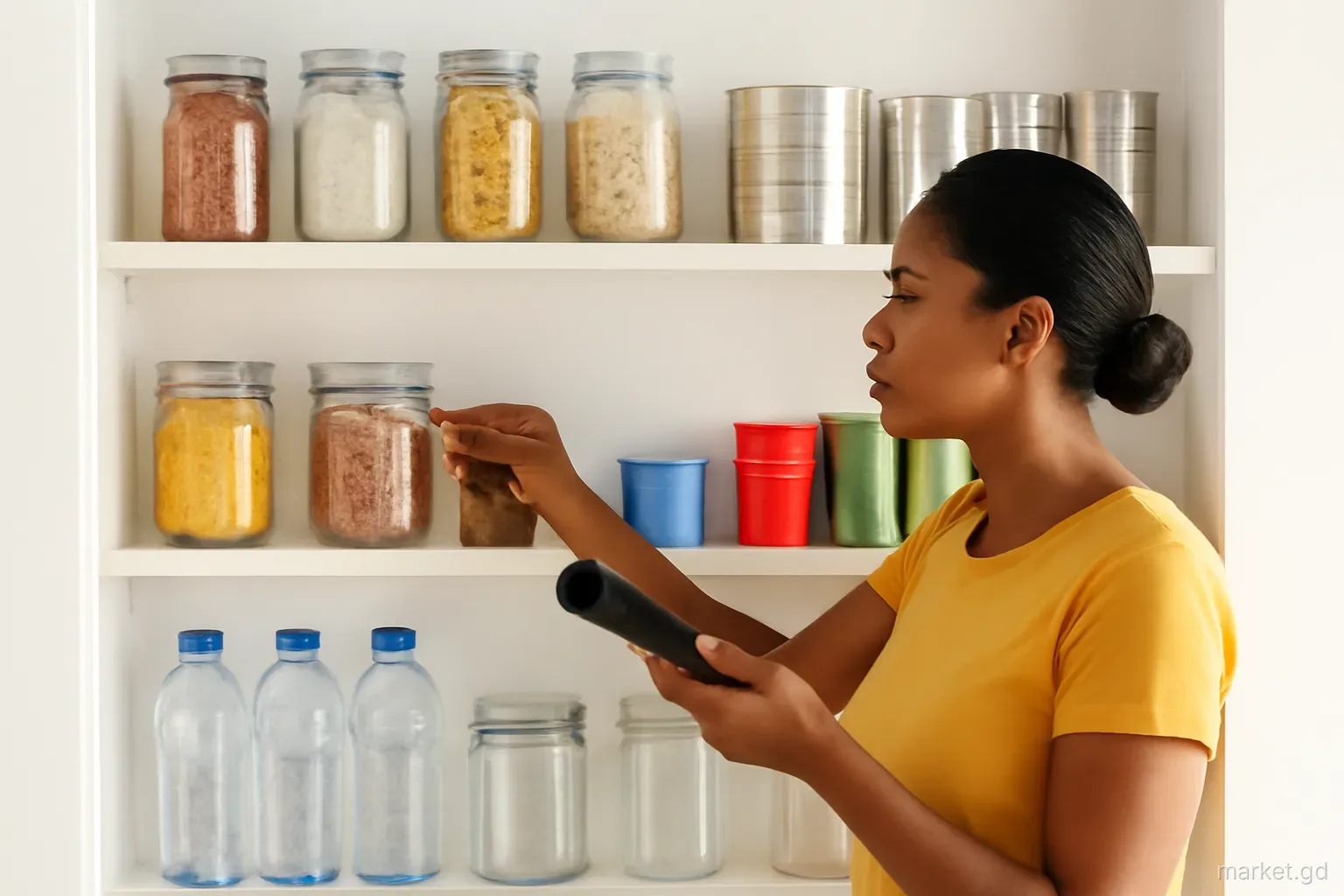
How much. A commonly recommended minimum is around a gallon, roughly four litres, per person per day for drinking and basic hygiene, for at least several days. Many Grenadian households aim for a week or more, as water supply can be disrupted for longer after a severe storm.
Bottled water. Cases and large containers of bottled water keep well if stored out of sunlight. Rotate them each year.
Stored tap water. Clean, food-grade containers filled from the tap before a storm add to your reserve. Many homes in Grenada also have rainwater cisterns or tanks; make sure they are clean and covered.
Water for washing. Fill buckets, a bathtub or barrels before a storm for flushing toilets and washing, separate from drinking water.
Treatment. Keep unscented household bleach or water purification tablets to treat water if supply becomes questionable, and follow official guidance on safe dosing.
The core storm pantry
Focus on foods that need no refrigeration, little or no cooking and minimal water. Choose things your household actually eats so that nothing is wasted.
- Tinned fish, corned beef, sausages, chicken and beans.
- Tinned vegetables, soups and fruit.
- Crackers, biscuits and crispbreads, which keep longer than bread.
- Peanut butter, jam and cheese spread in sealed jars.
- UHT or powdered milk, and tinned evaporated or condensed milk.
- Breakfast cereal, oats and granola bars.
- Rice, pasta, lentils and split peas for when cooking is possible.
- Dried fruit, nuts and snacks.
- Coffee, tea, sugar and salt.
- Baby food and formula, pet food and any special dietary items.
- A manual tin opener, which is easy to forget and essential.
- Long-life bread such as packaged sweet bread or wraps, and a few local ground provisions like sweet potatoes, which keep for a week or more without refrigeration.
Power cuts, cooking and the freezer
After a hurricane, electricity can be out for days or, after a severe storm, weeks. Plan your pantry on the assumption that the fridge and freezer will not work. In the days before a storm, eat down perishable food, avoid restocking the freezer and freeze bottles of water to keep the freezer cold for longer if power goes.
Most Grenadian homes cook with bottled cooking gas, which continues to work during a power cut. Check the level of your cylinder at the start of the season and keep a spare if you can. Gas supply can be disrupted after a storm, so a full cylinder is valuable. A small camping stove with spare fuel is a backup for those without gas.
Never use charcoal grills, gas generators or camping stoves indoors because of the risk of carbon monoxide poisoning. Cook in a well-ventilated area.
Non-food items to buy with the groceries
Storm preparation is not only food. Many of these items are sold in the same supermarkets and hardware stores, and they sell out just as quickly when a storm approaches.
- Batteries in the sizes your torches and radio use, plus spare torches.
- Candles and matches or lighters, stored in a sealed bag, used with care.
- A battery-powered or wind-up radio for official updates when power and internet fail.
- A power bank or two, kept charged, for phones.
- A first-aid kit and a supply of any regular medication.
- Heavy-duty plastic sheeting, tape and large rubbish bags for leaks and debris.
- Hand sanitiser, wet wipes, toilet paper and feminine hygiene products.
- A cool box, which keeps food cold for a day or two after the power goes and is useful for ice once shops reopen.
- Important documents in a waterproof bag or container.
Shopping after the storm
Once a storm has passed, shops reopen at different speeds depending on damage, power and staff. Supermarkets with generators may open within a day or two, often with limited hours, while smaller shops may take longer. Expect queues and limits on some items. Bring cash, as card systems may be down, and shop for what you need rather than panic-buying, so that supplies stretch across the community.
Fresh produce can be scarce for weeks after a severe hurricane, because crops and trees are damaged. Tinned and frozen foods from the next shipment usually arrive before local produce recovers. Check any frozen food you kept during a power cut: if it thawed completely and sat warm, throw it away rather than refreezing it.
A season timeline
Spreading preparation across the season makes it affordable and manageable.
- May: check last year's supplies, use up anything near its date and make a list. Inspect cisterns and water containers.
- June: buy the first round of tinned food, water and non-perishables. Refill cooking gas.
- July: add batteries, torches, candles, matches, a battery or wind-up radio and a first-aid kit. Keep phones charged and consider a power bank.
- August: top up water and food to cover at least a week. This is the start of the peak.
- When a watch or warning is issued: buy only fresh items such as bread and fruit, fill water containers, charge devices and secure the home.
- December: after the season ends on the thirtieth of November, rotate supplies into everyday use and note what to replace next year.
Mistakes people make
The commonest mistake is waiting until a storm is named and heading towards Grenada before shopping. By then, queues are long, stock is thin and prices on some items can rise. Shop early.
Another is stocking food nobody likes. Emergency food you never eat ends up expiring. Buy what your household normally eats and rotate it into everyday meals.
A third is forgetting cash. After a storm, card machines and ATMs may not work without power or connectivity. Keep some Eastern Caribbean dollars in small notes at home during the season. Finally, many people forget medication, pet food and baby supplies until the last minute; add them to the list from the start.
It is also a mistake to treat the pantry as finished once it is bought. Tins rust in damp storerooms, water containers can leak and ants find their way into opened packets. Check the stock once a month during the season, and store it somewhere that will stay dry if windows or the roof are damaged.
Frequently asked questions
When is hurricane season in Grenada?
The Atlantic hurricane season runs from the first of June to the thirtieth of November. The peak is usually from August to October, but storms can arrive earlier, as Hurricane Beryl showed in July 2024 when it caused severe damage on Carriacou and Petite Martinique.
How much water should be stored for a hurricane?
A commonly recommended minimum is about a gallon, roughly four litres, per person per day for at least several days. Many households in Grenada aim for a week or more, as water supply can be disrupted for longer after a severe storm.
What food should be bought for hurricane season?
Non-perishable foods that need little or no cooking: tinned fish, meat and beans, crackers, peanut butter, UHT or powdered milk, cereal, dried fruit and snacks. Include baby food, pet food and special dietary items, and remember a manual tin opener.
Do supermarkets in Grenada run out before a storm?
Yes, essentials such as water, bread, tinned food, batteries and cooking gas can sell out within hours of a storm watch or warning. Restocking depends on shipping, so shortages can last until after the storm. Buying ahead avoids this.
Who issues hurricane warnings in Grenada?
The Grenada Meteorological Service issues weather information, and the National Disaster Management Agency, known as NaDMA, coordinates disaster preparedness and response. Follow both for official watches, warnings and guidance on shelters.
Is cash needed after a hurricane?
Yes. Card machines and ATMs may not work without power or internet after a storm. Keeping a supply of Eastern Caribbean dollars in small notes at home during hurricane season helps you buy essentials while systems are down.