Grenada has excellent fish, and most people eat it for years without a single problem. But two kinds of fish poisoning, ciguatera and scombroid, are worth understanding for anyone who buys or eats seafood here, because neither can be cooked away and neither is detectable by smell or taste in the usual way. The good news is that both are largely avoidable with simple knowledge and habits.
This guide explains what each one is, which fish are involved, what the symptoms look like and how buyers, cooks and visitors can reduce the risk. It is general information, not medical advice: anyone who feels ill after eating fish should seek medical help, and in an emergency call 911.
Ciguatera: the reef-fish toxin
Ciguatera fish poisoning is caused by toxins produced by tiny marine organisms called dinoflagellates that live on algae around coral reefs. Small herbivorous fish eat the algae and absorb the toxin; larger predatory fish eat many small fish and accumulate it. The bigger and older the predator, the more toxin it can carry. The toxin does not harm the fish, and it does not change its appearance, smell or taste.
Crucially, ciguatoxins are not destroyed by cooking, freezing, smoking, salting or marinating. Washing fish in lime does nothing to them either. The only real protection is avoiding the fish most likely to carry the toxin, particularly large specimens from known risk areas.
The risk varies a great deal across the Caribbean. Grenada is generally regarded as lower risk than some islands further north, but ciguatera is not unknown in the southern Caribbean, and toxic fish can occur in any reef area. Local fishers often know which species and which areas to avoid, and their knowledge is worth taking seriously.
Which fish carry the ciguatera risk
Barracuda. The fish most often associated with ciguatera throughout the Caribbean. Many fishers and vendors simply avoid selling large barracuda for eating, and buyers are wise to follow suit.
Large groupers and jacks. Big predatory reef fish such as large grouper and large amberjack or other big jacks can accumulate toxin. Smaller fish of the same species are lower risk.
Large snappers and other reef predators. Most snapper is eaten safely, but very large individuals from reef areas carry more potential risk.
Moray eels. Rarely eaten in Grenada, but known carriers of ciguatoxin in the region.
Lower-risk choices. Open-ocean fish such as tuna, dolphin and kingfish do not typically carry ciguatera, because they do not feed on reefs. Small reef fish are lower risk than large ones. This is why pelagic fish dominate many local markets.
Symptoms of ciguatera
Symptoms usually begin within a few hours of eating contaminated fish, though they can appear later. Early symptoms are often gastrointestinal: nausea, vomiting, diarrhoea and stomach cramps. These are followed or accompanied by neurological symptoms that set ciguatera apart from ordinary food poisoning: tingling or numbness around the mouth, lips and fingers, aching teeth, muscle pain, weakness and itching. A classic sign is temperature reversal, where cold things feel hot or burning and hot things feel cold.
In more serious cases, there can be a slow or irregular heartbeat and low blood pressure. Neurological symptoms can last days, weeks or occasionally longer, and some people find symptoms return after eating fish, nuts or alcohol in the months that follow.
There is no simple antidote, but medical care can manage symptoms and complications. Anyone who suspects ciguatera should see a doctor promptly and mention what they ate and where it came from. Keep any leftover fish in case health authorities want to examine it.
Scombroid: the histamine problem
Scombroid poisoning is completely different. It is caused by histamine that builds up in certain fish when they are not kept cold enough after being caught. Bacteria on the fish break down a natural amino acid into histamine, and the warmer the fish and the longer it sits, the more histamine forms. Like ciguatoxin, histamine is not destroyed by cooking, canning or freezing.
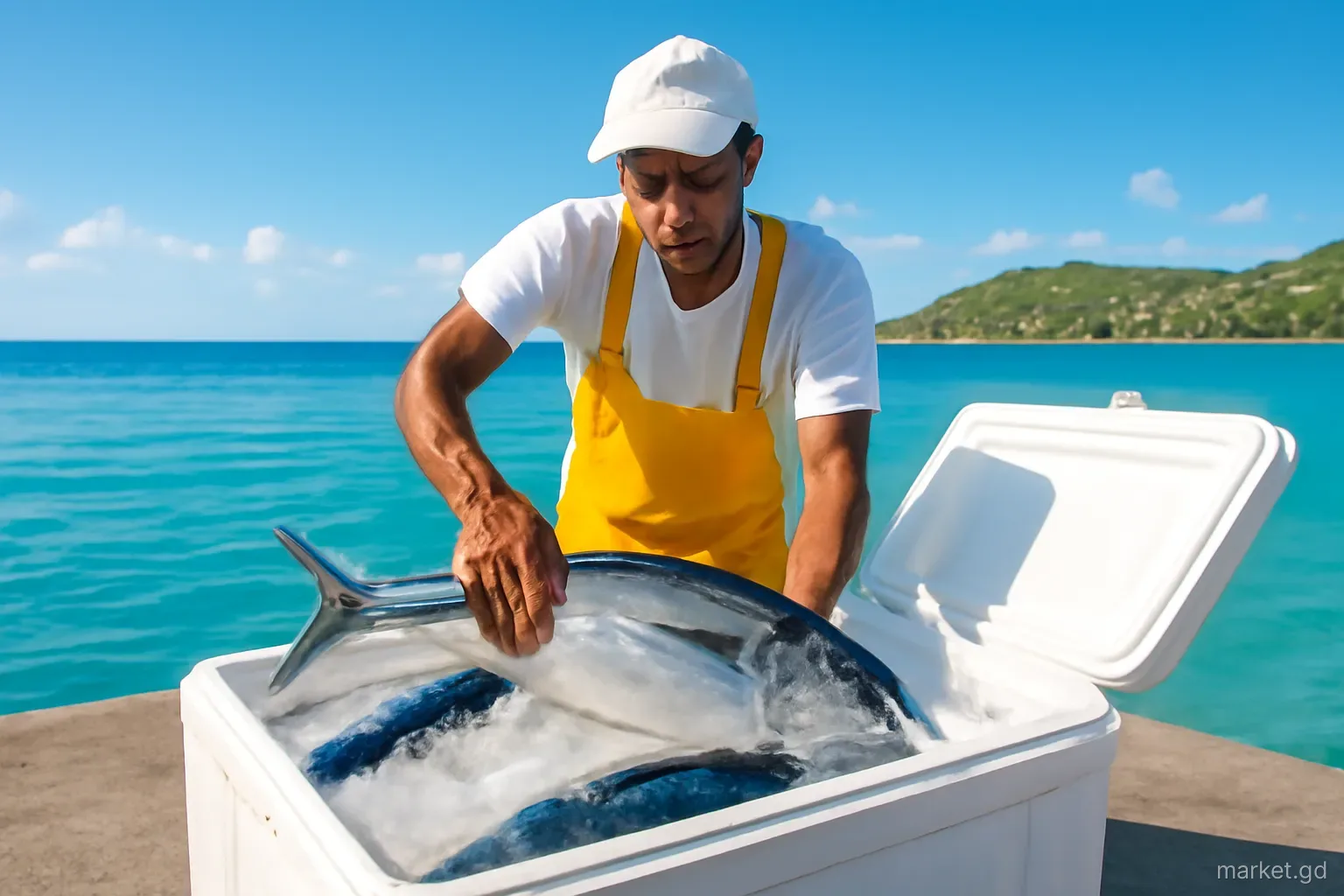
The fish most often involved are tuna, dolphin, mackerel, jacks and other fish with dark, oily flesh, which are exactly the species that fill Grenadian markets. That does not mean these fish are dangerous; it means they must be chilled quickly and kept cold all the way from boat to kitchen.
Symptoms come on fast, often within minutes to an hour: flushing of the face and neck, a peppery or metallic taste, headache, palpitations, sweating, rash or hives, nausea and diarrhoea. It can resemble an allergic reaction. It usually passes within hours, and antihistamines are often used in treatment, but people with asthma or heart conditions can react more severely and should seek medical help quickly.
Reporting a case and helping others
Fish poisoning is a public health matter as well as a personal one. When several people fall ill after eating fish from the same source, health officials can trace it, warn the public and work with vendors or fishers to stop the problem spreading. If a doctor diagnoses ciguatera or scombroid, it is helpful to tell them exactly where the fish was bought or eaten, the species if known and roughly when it was caught.
In Grenada, food safety and environmental health fall under the Ministry of Health, and fisheries matters under the Fisheries Division. A clinic or hospital will usually know how to pass information on. If you bought the fish from a market vendor or a restaurant, telling them politely is also worthwhile: a reputable seller will want to know if a batch caused illness, and a fisher will want to know if a particular area is producing toxic fish.
Habits that keep you safe
Most of the protection lies in buying well and keeping fish cold. These habits cover both ciguatera and scombroid.
- Buy pelagic fish from vendors who keep it on ice or in coolers, and avoid fish that has been lying warm in the sun.
- Take a cool box with ice to the market and go straight home after buying.
- Refrigerate or freeze fish immediately, and never leave it out on the counter for long.
- Be wary of tuna or dolphin with a peppery taste or tingling sensation in the mouth. Stop eating.
- Avoid eating barracuda and very large reef predators, especially if you do not know where they were caught.
- Choose smaller reef fish over large ones, and listen to local advice about species and areas to avoid.
- If someone gives you a big reef fish they caught, ask where it came from and whether local people eat that species from that area.
- Do not rely on lime, vinegar, boiling or freezing to make suspect fish safe. None of them work against these toxins.
Mistakes and myths
Myth: cooking makes any fish safe. Neither ciguatoxin nor histamine is destroyed by cooking. Safety depends on the fish and its handling, not the cooking method.
Myth: you can test fish with a coin or by watching flies or ants. Folk tests such as placing a silver coin in the pot or seeing whether flies avoid the fish are unreliable. They give false reassurance.
Mistake: assuming a restaurant fish is risk-free. Restaurants buy from the same sources. Reputable kitchens handle fish well, but if a dish tastes peppery or causes tingling, stop and tell staff.
Mistake: ignoring symptoms. Tingling, temperature reversal, flushing or palpitations after eating fish are reasons to seek medical care, not to sleep it off.
Myth: a fish that made no one sick last time is always safe. Ciguatoxin levels vary between individual fish of the same species from the same area. One safe meal does not guarantee the next, which is why size and species guidelines matter more than past luck.
Mistake: refreezing thawed tuna several times. Each warm spell gives histamine-forming bacteria another chance. Freeze tuna and dolphin in meal-sized portions so each pack is thawed once and cooked.
Frequently asked questions
Is ciguatera common in Grenada?
Grenada is generally considered lower risk than some islands further north, but ciguatera can occur anywhere with reefs. Large barracuda and big reef predators carry most of the risk. Open-ocean fish like tuna and dolphin do not typically carry ciguatoxin.
Can ciguatera be destroyed by cooking or freezing?
No. Ciguatoxins survive cooking, freezing, smoking, salting and marinating. Washing fish with lime does not remove them either. The only protection is avoiding high-risk fish, especially large barracuda, big groupers and large jacks from reef areas.
What does scombroid poisoning feel like?
Symptoms usually appear within minutes to an hour and include flushing of the face and neck, a peppery or metallic taste, headache, palpitations, sweating, hives and stomach upset. It can look like an allergic reaction. Seek medical help, especially if breathing is affected.
Which fish cause scombroid poisoning?
Fish with dark, oily flesh, such as tuna, dolphin, mackerel and jacks, are most commonly involved. The problem is not the species itself but poor chilling after catch, which allows histamine to build up. Well-iced fish from a good vendor is very low risk.
Is it safe to eat barracuda in Grenada?
It is best avoided, especially large barracuda. It is the fish most often linked with ciguatera across the Caribbean, and the toxin cannot be detected by look, smell or taste or removed by cooking. Many local fishers and vendors avoid selling it for food.
What should be done if fish poisoning is suspected?
Seek medical care promptly, mention what fish was eaten and where it came from, and keep any leftovers. In an emergency, especially with breathing difficulty, chest pain or an irregular heartbeat, call 911. Do not wait for symptoms to pass on their own.