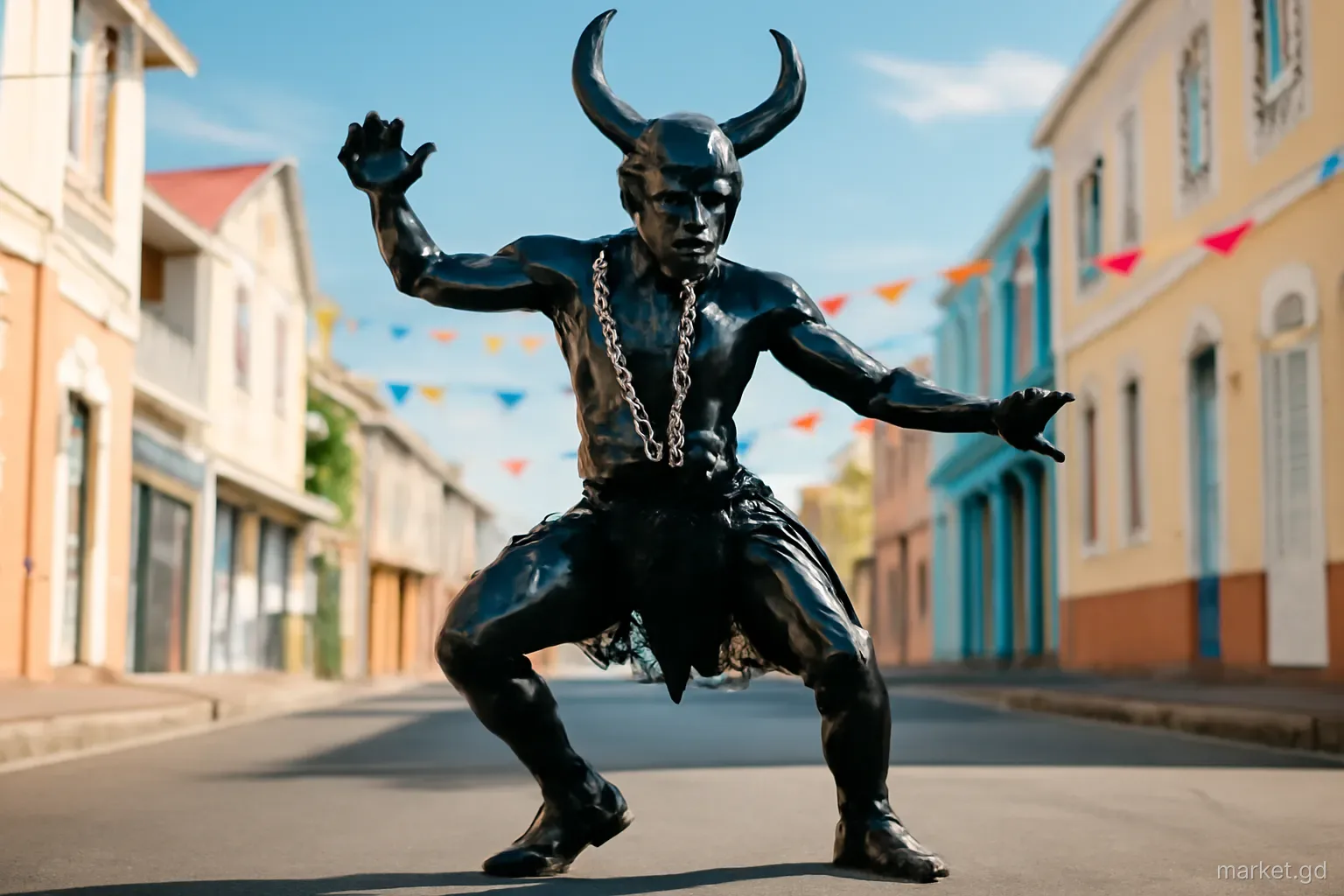
A fridge magnet with a nutmeg on it and the word Grenada across the top tells you where it was sold, not where it was made. Walk the stalls around the cruise terminal in St George's on a ship day and much of what is on display is the same stock seen from Aruba to Antigua: resin turtles, printed shot glasses, carved masks in a style that has nothing to do with the Eastern Caribbean. None of it is fraudulent, and plenty of visitors are happy with it. The problem only starts when you are paying for something handmade and local, and getting something else.
Telling the two apart is not difficult once you know what Grenadian makers actually work with and how they sell. This guide covers the material clues, the questions that get straight answers, the places where makers tend to sell their own work, and the mistakes that cost buyers money. It is about crafts rather than food products: spice baskets, art and batik each have their own guides on this site.
Why so much "Grenada" merchandise comes from somewhere else
Souvenir retail across the Caribbean runs largely on imported wholesale stock. A shop orders magnets, keyrings, mugs and T-shirts in bulk, with the island name added at the factory or printed locally on a blank. It is cheaper and more predictable than buying from dozens of small makers who cannot always deliver a hundred identical pieces before cruise season. The result is that the most visible souvenirs in any port are often the least local.
Grenada is a small market. The country has a population of a little over 110,000 across Grenada, Carriacou and Petite Martinique, and craft production is mostly a part-time activity for people who also farm, fish, teach or work in tourism. That means genuine local work is real but limited in volume, and you rarely see it stacked in identical rows.
None of this is a reason to avoid shops that sell imported goods. Many of them also carry a shelf of local work, usually smaller, less uniform and a little more expensive. The skill is in finding that shelf, and in recognising when a piece described as handmade in Grenada does not match what Grenadian makers produce.
Material clues that point to local work
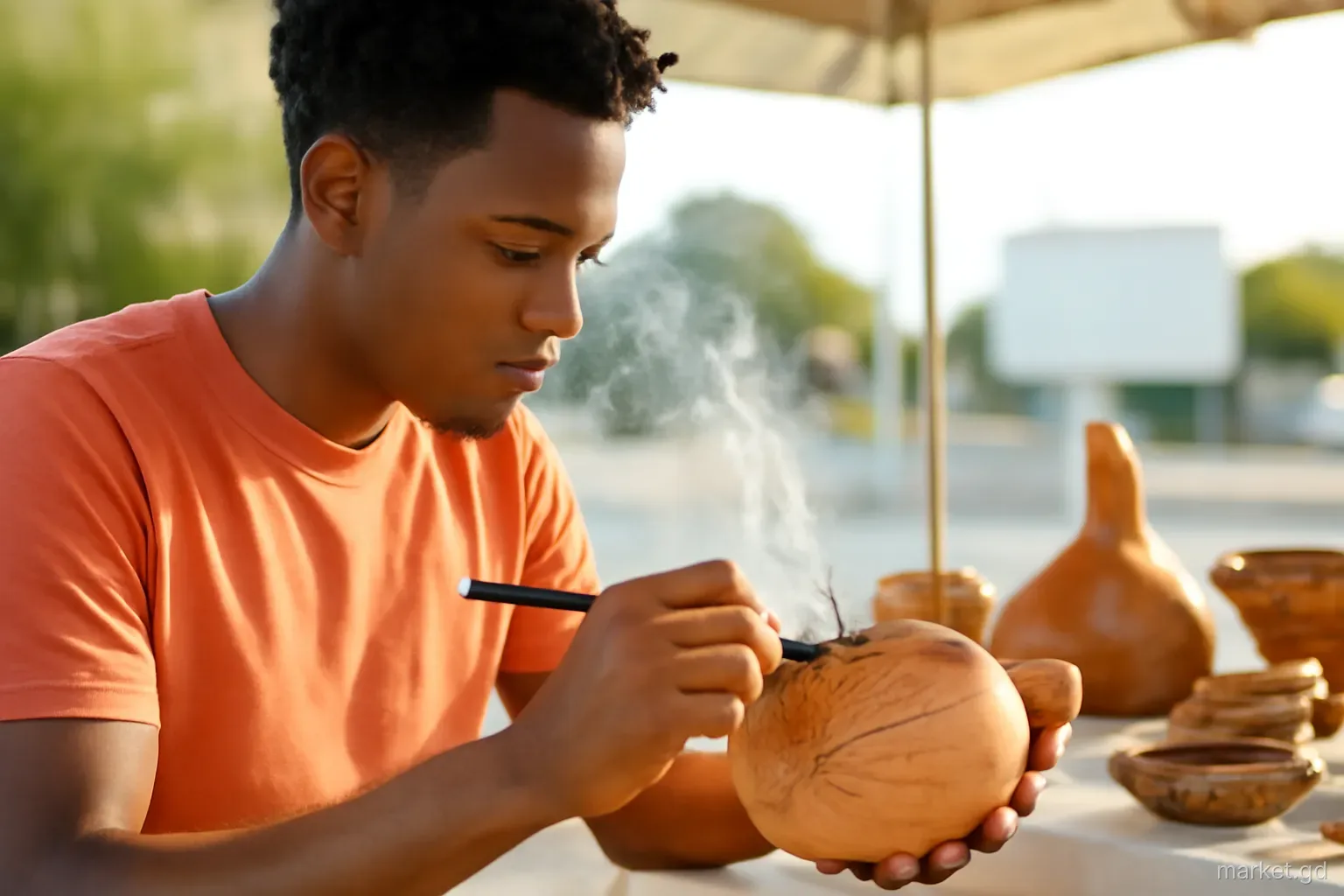
Calabash and coconut shell. The calabash tree grows widely in Grenada, and dried calabash bowls, cups and carved or burnt-design pieces are a long-standing rural craft. Coconut shell is used the same way. Look for natural variation in thickness and colour; a perfectly even surface suggests a mould, not a gourd.
Palm, straw and fibre. Woven palm-frond and straw baskets, hats and mats are made locally, often by older weavers. Hand weaving shows slight irregularities in the plait, and the ends are usually tucked or bound rather than glued.
Local timber. Woodworkers use what grows on the island and what is salvaged after storms, including mahogany and cedar. Hand-finished wood shows tool marks, uneven oil and grain that does not repeat from piece to piece.
Seeds and natural beads. Seed jewellery made from local trees and plants is common at beach and roadside stalls. The seeds vary in size and shade, and are often strung on simple cord.
Resin, polystone and plastic. These are the clearest signs of imported stock. They feel heavier or more uniform than they look, often carry a moulded seam, and repeat exactly across a shelf.
Questions that get you a straight answer
Most makers are happy to talk about their work, and most resellers will not pretend if asked directly. These questions tend to separate the two without awkwardness:
- Who made this? A maker will tell you it was them, a relative or a named craftsperson in a particular village. A reseller usually says it came from a supplier.
- Where was it made? Answers like "up in St John's" or "my cousin in Carriacou" are good signs. "Local" with nothing further is not proof of anything.
- How long does one take? People who make things know this instantly. Hesitation is telling.
- Can you make one in a different size or colour? A maker can often take an order for a day or two later. A reseller cannot.
- Do you have more at home or at the workshop? Small producers often bring only part of their stock to a stall.
- Ask in a relaxed, curious tone. Interrogating a vendor rarely gets you better information, and many stallholders sell a mix of their own work and bought-in goods for perfectly practical reasons.
Where makers tend to sell their own work
In St George's, craft and spice stalls cluster close to the cruise terminal and the Esplanade, along the Carenage and around Market Square. Ship days bring the widest choice of stalls and the most imported stock; quieter weekdays are better for conversation with the people behind the tables. At Grand Anse, a government-built craft and spice market near the beach has long housed vendors, and beach vendors walk the sand with jewellery and spice baskets.
Outside town, local work turns up at roadside stands, at estate visitor centres, in hotel gift shops that buy directly from artisans, and at events. Festival periods such as Spicemas in August and the Carriacou Regatta usually bring out more makers, along with community fairs and craft exhibitions at Christmas. Galleries in the south of the island sell original art and some craft, generally with clear information on who made each piece.
Which particular stalls and shops are operating changes from season to season, so it is worth asking at your hotel or guesthouse which makers they know personally. In Carriacou and Petite Martinique, many small businesses were damaged by Hurricane Beryl in July 2024; check before you go rather than assuming a craft shop is still trading.
What the price tells you, and what it does not
Price is a weak signal on its own, but it helps. A carved bowl selling for the same price as a printed mug is almost certainly not hand carved. Handmade woodwork, batik and original art cost more because they take hours, sometimes days, and because makers produce small quantities. If something heavy and detailed is suspiciously cheap and there are ten identical copies on the table, you are looking at factory stock.
The reverse is not always true. Some genuine local items are inexpensive because the materials are close at hand and the techniques are quick for an experienced maker. A woven spice basket or a strand of seed beads can be authentic and still cost very little. Expensive does not prove local either: imported souvenirs in an air-conditioned shop may carry a higher mark-up than a maker's own work at a stall.
Pay in Eastern Caribbean dollars where possible; the EC dollar is pegged at EC$2.70 to US$1, and most vendors accept US dollars too, though change usually comes back in EC. Small makers often prefer cash. Polite discussion of price is normal for larger pieces or multiple purchases, but hard bargaining over a few dollars with someone selling their own work is widely seen as bad manners.
Mistakes buyers make
The most common errors are easy to avoid once you know them:
- Assuming everything at a craft market is local. Most markets mix local and imported goods on the same table.
- Buying the first piece you see on a ship day. Stalls further from the terminal and shops in the side streets often have better local work.
- Ignoring import rules at home. Natural materials such as seeds, untreated wood and shell may be inspected or restricted; keep pieces clean and declare them if asked.
- Buying anything presented as an old Amerindian artefact. Archaeological objects are protected heritage, and genuine ones should not be leaving the country with a tourist.
- Forgetting fragile items need packing. Calabash and thin wood can crack in a suitcase; carry them in hand luggage wrapped in clothing.
- Not asking for the maker's name. A name makes a piece more meaningful, and makes it easier to find that person again or recommend them to friends.
Frequently asked questions
Are the souvenirs at the St George's cruise terminal made in Grenada?
Some are and many are not. Stalls near the terminal carry a mix of imported wholesale souvenirs and local work. Ask who made a piece and where, and look for natural materials and small variations between items rather than identical rows.
What crafts are traditionally Grenadian?
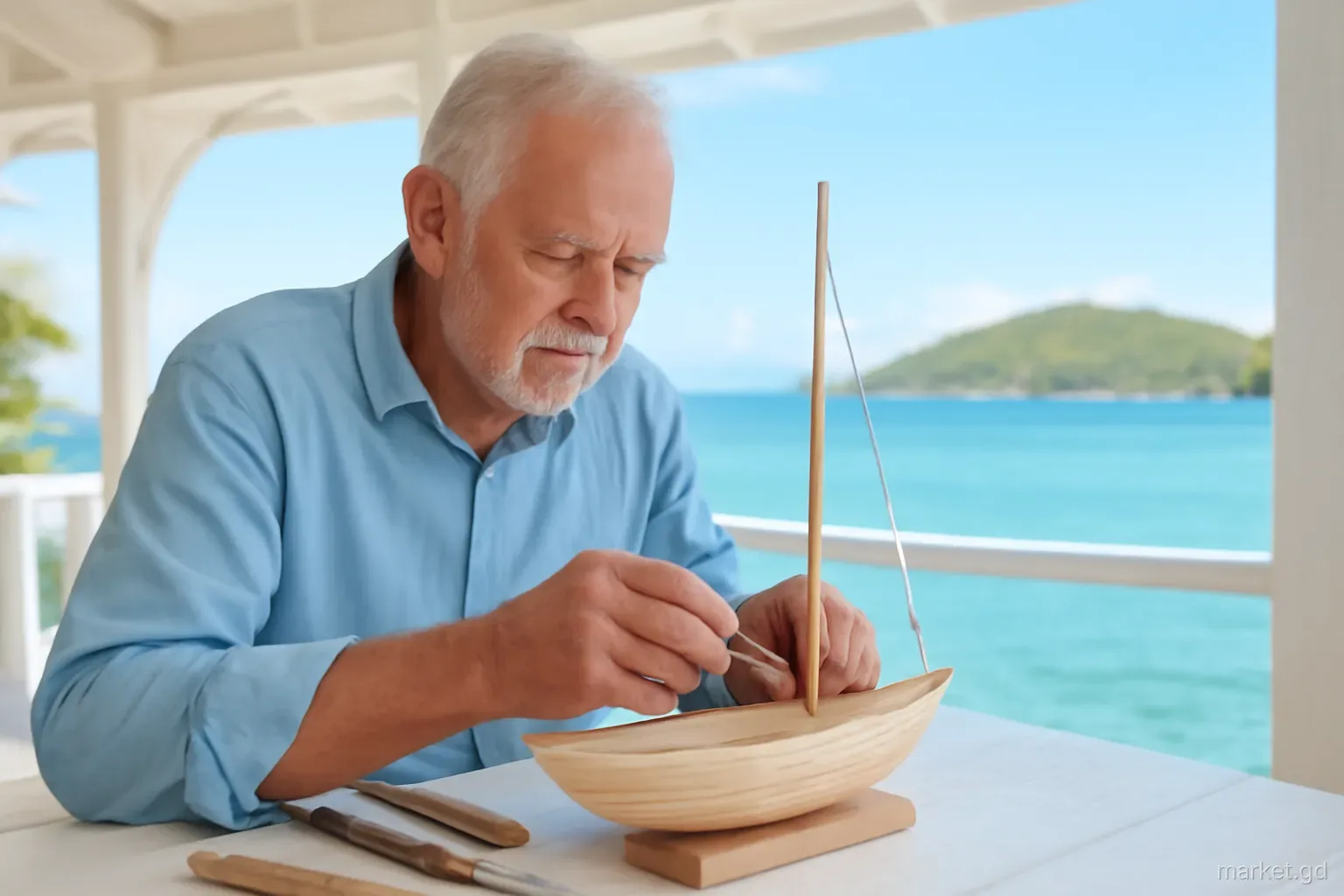
Woven palm and straw baskets, calabash and coconut-shell pieces, woodwork from local timber, seed jewellery, batik and hand-painted fabric, original paintings and, on Carriacou, model boats linked to the island's wooden boatbuilding tradition.
Is it rude to ask a vendor whether something is handmade?
Not if you ask with genuine interest. Makers usually enjoy explaining their work. A relaxed question such as who made it or how long it takes is better received than a blunt challenge about authenticity.
Can you pay for crafts with US dollars?
Usually, yes. Most vendors accept US dollars as well as EC dollars, at or near the fixed rate of EC$2.70 to US$1, but change is normally given in EC dollars. Small makers often prefer cash to cards.
Will customs at home stop natural-material souvenirs?
It depends on the country and the item. Seeds, untreated wood, plant fibre and shell can attract inspection. Clean, dry, finished items are usually fine, but check your home country's rules and declare anything you are unsure about.