Many Grenadian souvenirs carry the same handful of images: a nutmeg, seven stars, a small brown dove, a pot of oil down, a black-painted devil with horns and chains. Visitors often buy them without knowing what they stand for, which is a missed opportunity. Each symbol carries a piece of the country's history, and knowing the story makes a T-shirt, print or carving far more interesting to own and to give.
This guide explains the symbols most often seen on souvenirs, from official national emblems to carnival characters and the cultural traditions of Carriacou. It also points out a few images that carry political or religious weight, where a little awareness avoids an awkward moment, and suggests how to choose items that use these symbols with care.
The national flag: seven stars and a nutmeg
The flag of Grenada, adopted at independence on 7 February 1974, is one of the most recognisable in the Caribbean. A red border surrounds a field divided diagonally into yellow and green triangles. Six yellow stars sit in the red border, three at the top and three at the bottom, and a seventh star sits in a red disc at the centre. Together the seven stars represent the country's seven parishes: St George, St John, St Mark, St Patrick, St Andrew and St David on the main island, plus Carriacou and Petite Martinique.
On the hoist side, in the green triangle, is a nutmeg, a reference to the spice that gave Grenada its name as the Isle of Spice. Grenada was historically one of the world's leading nutmeg producers, and the crop remains a powerful national symbol even after the damage Hurricane Ivan caused to nutmeg trees in 2004.
The colours are commonly explained as red for courage and vitality, yellow for wisdom, warmth and sunshine, and green for the land and agriculture. The flag appears on everything from keyrings to beach towels, and on Independence Day in February the whole country wears it.
National emblems you will see on souvenirs
The nutmeg. On its own, usually shown split open with the red mace wrapped around the brown seed. It stands for Grenada's spice heritage and is the single most common souvenir image.
The Grenada dove. The national bird, a shy ground-dwelling dove found only in Grenada, mostly in the dry forests of the south-west and west coast. It is critically endangered, which makes images of it a quiet conservation message as well as a national emblem.
Bougainvillea. The national flower, with papery bracts in magenta, orange and white, grown in gardens and over walls across the island.
Oil down. The national dish: breadfruit, salted meat or fish, dumplings, callaloo and other provisions cooked slowly in coconut milk with turmeric and herbs until the liquid is absorbed. A pot of oil down on a souvenir signals home cooking, community and the cook-ups held at gatherings and on beaches.
The coat of arms. Featuring an armadillo and a Grenada dove as supporters either side of the shield, and the motto "Ever Conscious of God We Aspire, Build and Advance as One People". It appears more often on official items than on everyday souvenirs.
Carnival characters: Jab Jab, Shortknee and more
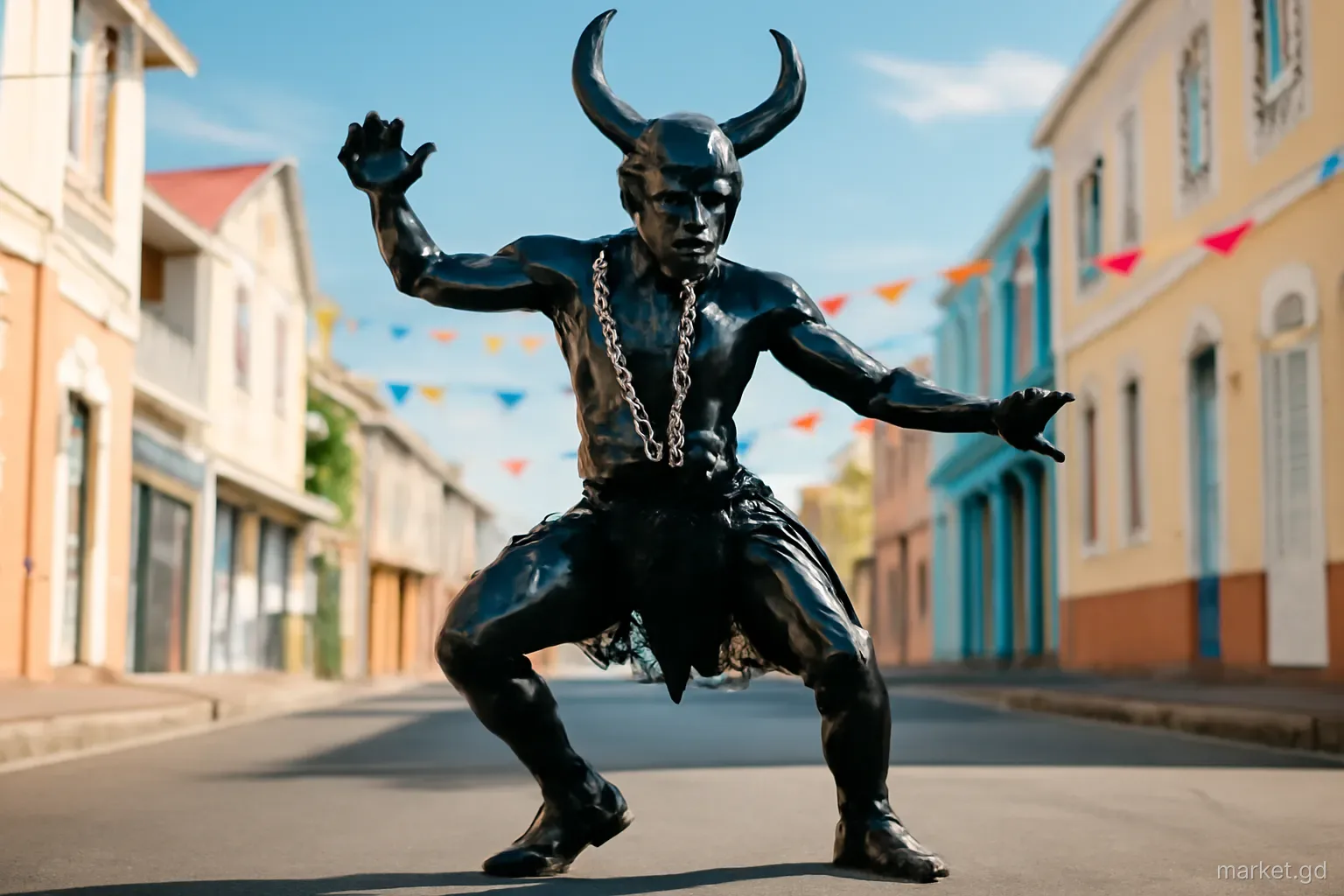
Spicemas, Grenada's carnival, peaks in August, and its traditional characters are a rich source of souvenir imagery. The most striking is the Jab Jab, from the French patois word for devil. On J'ouvert morning, masqueraders cover their bodies in black oil, molasses or mud, wear horns, carry chains and sometimes snakes or other props, and move through the streets in a show of menace and celebration. The tradition is widely interpreted as a commentary on slavery and its overthrow, turning the image of the chained, blackened figure into one of power.
The Shortknee is another traditional character, wearing a loose, colourful costume with knee-length trousers, a mask and decorations that can include small mirrors, and throwing powder as the band moves. Grenada has other traditional mas characters too, but Jab Jab and Shortknee are the two that dominate souvenir art.
Prints, figurines, T-shirts and paintings of Jab Jab and Shortknee are popular and generally made by local artists and printers. They are a good way to bring something home that shows a side of Grenada beyond beaches.
Carriacou and Petite Martinique traditions
Carriacou has its own cultural identity, and some souvenirs refer to traditions that are distinct from mainland Grenada:
- Big Drum. Also called the Nation Dance, a ceremonial drum and dance tradition with songs and dances associated with the African nations from which ancestors were taken. It is performed at important occasions such as boat launchings, weddings and memorial feasts.
- Shakespeare Mas. A Carriacou carnival tradition in which masqueraders recite passages from Shakespeare, especially Julius Caesar, and challenge one another; a forgotten line can earn a blow with a stick.
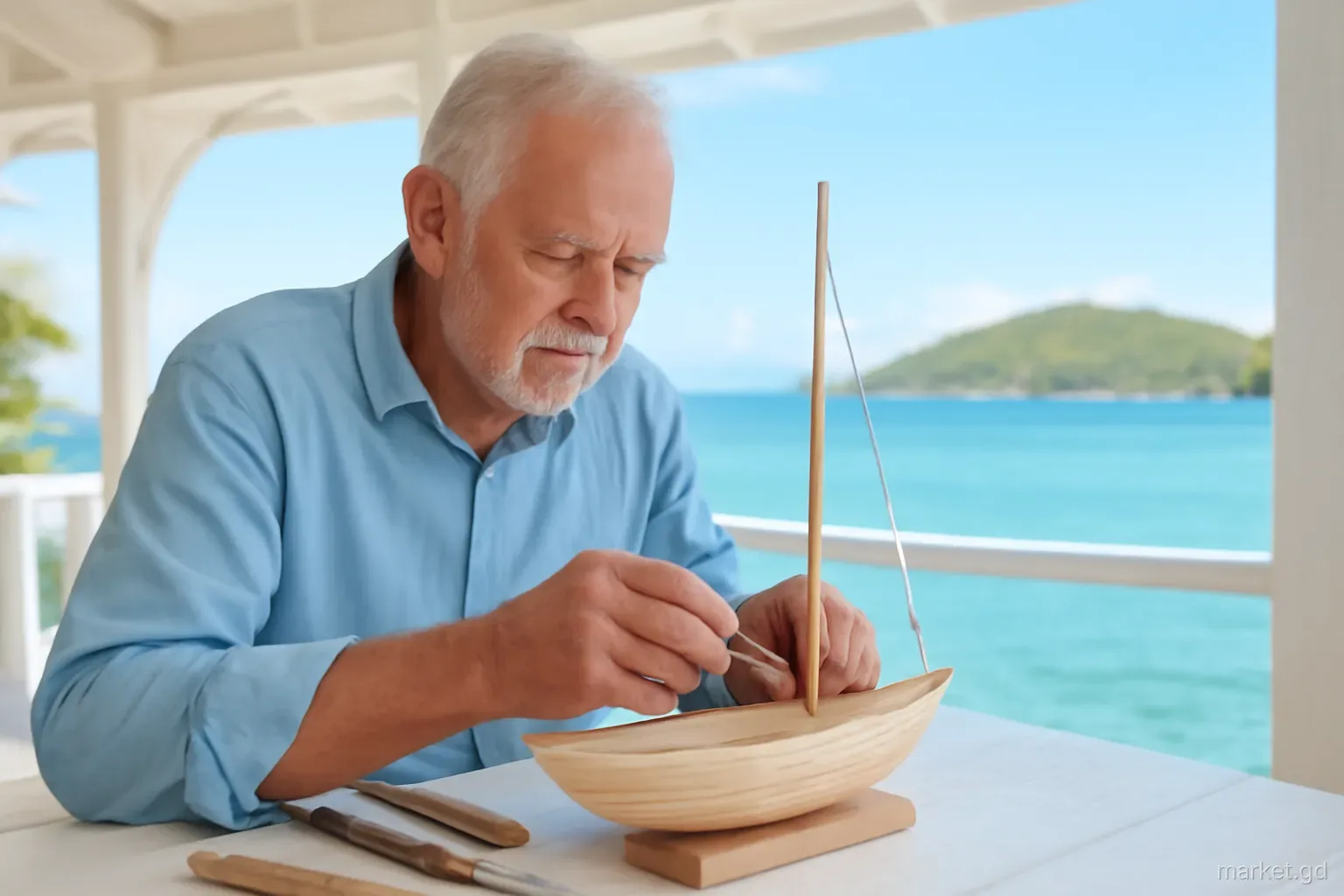
- Boats. Images and models of the wooden sloops built on Carriacou's beaches represent the island's maritime heritage.
- Parang. A December festival of string band music and topical songs, often referenced in Christmas-themed crafts.
- Saraka. A community feast and offering associated with Big Drum and other ceremonies, sometimes shown in naive paintings of Carriacou life.
- These traditions were affected by the disruption of Hurricane Beryl in 2024, but they remain central to identity on both islands.
Monkeys, sculptures and harbour views
A second group of images comes from places rather than official emblems. The mona monkey, a small West African species brought to Grenada centuries ago, lives in the forests around Grand Etang in the island's interior and appears on postcards, carvings and children's souvenirs. Visitors often see monkeys near the Grand Etang forest centre, though feeding them is discouraged.
The Underwater Sculpture Park in the Moliniere-Beausejour Marine Protected Area, begun in 2006 by sculptor Jason deCaires Taylor, produced one of the most photographed images associated with Grenada: a ring of life-size figures of children holding hands on the seabed, known as Vicissitudes. Photographs and prints of the sculptures, covered in coral and sponges, are widely sold.
Finally, the horseshoe harbour of the Carenage in St George's, with red fish-scale roof tiles climbing the hills and Fort George above, is the classic Grenadian townscape and the subject of countless paintings at every price level.
Images that need a little care
Some images carry more weight than a nutmeg. The period of the People's Revolutionary Government from 1979 to 1983, led by Maurice Bishop, and its violent end followed by the US-led intervention in October 1983, remain sensitive for many Grenadians. Bishop is widely remembered, and the international airport bears his name, but opinions about the revolution differ sharply, and some families still carry the losses of that time. A T-shirt with revolutionary imagery may be received very differently by different people.
Religious imagery deserves similar respect. Grenada is a largely Christian country with strong Catholic and Anglican traditions, alongside other faiths, and items mixing sacred images with jokes can cause offence.
Jab Jab imagery is celebratory in its carnival context. Out of context, especially on items made abroad, it is sometimes used carelessly. Buying Jab Jab art from Grenadian artists keeps the image tied to its meaning.
Choosing symbol-based souvenirs well
With symbols, the difference between a thoughtful souvenir and a throwaway one is often who made it and how. A few pointers:
- Look for items printed or made locally. Many T-shirt printers and artists in St George's produce original designs using national symbols.
- Check that the flag is correct. Imported items sometimes have the wrong number of stars, the nutmeg in the wrong place or the colours reversed.
- Choose items that explain themselves. A print with a short note about the Grenada dove or Shakespeare Mas makes a far better gift than an unexplained image.
- Consider buying around Independence in February or Spicemas in August, when there is more locally produced symbolic merchandise.
- Support artists who depict Carriacou traditions accurately, ideally those with roots on the island.
- Remember that a flag on clothing worn at home is also a statement; it is generally seen as a compliment, but wear it respectfully.
Frequently asked questions
Why is there a nutmeg on the Grenada flag?
The nutmeg represents Grenada's identity as the Isle of Spice and its long history as one of the world's major nutmeg producers. It sits in the green triangle on the hoist side of the flag adopted at independence in 1974.
What do the seven stars on the flag stand for?
They represent the seven parishes: St George, St John, St Mark, St Patrick, St Andrew and St David on the main island, plus Carriacou and Petite Martinique, which together count as one.
What is a Jab Jab?
A traditional Spicemas carnival character. Masqueraders cover themselves in black oil, molasses or mud and wear horns and chains on J'ouvert morning. The name comes from the patois for devil, and the tradition is widely linked to the memory of slavery and emancipation.
What is Grenada's national dish?
Oil down, a one-pot dish of breadfruit, salted meat or fish, dumplings, callaloo and provisions cooked in coconut milk with turmeric and herbs until the liquid is absorbed. It is a staple of community gatherings and beach cook-ups.
Is the Grenada dove easy to see?
No. It is critically endangered, shy and found mainly in dry forest on the south-west and west coast. Organised birding trips with local guides offer the best chance, and seeing one is considered a privilege.