Before plastic and imported tableware reached every village, rural Grenadians made bowls, cups, ladles and storage containers from what grew around them. The calabash tree supplied hard-shelled gourds, coconut palms supplied shell and fibre, and the forest supplied timber and seeds. Much of that everyday practicality has turned into craft: calabash bowls with burnt or carved designs, coconut-shell cups and jewellery, necklaces of local seeds and carved pieces of local hardwood.
These are some of the most genuinely local souvenirs available, because the raw materials cannot easily be imported in the same form. They are also the items most likely to crack, split or attract attention at a customs desk if they are not properly prepared. This guide explains each material, what good workmanship looks like, how to look after the pieces, and what to check before packing them.
Calabash: from village utensil to craft
The calabash tree, a small tree with large round green fruit growing straight from the trunk and branches, is common across Grenada in yards and along rural roads. When the fruit is harvested, the pulp is scooped out and the shell is dried until hard. Cut in half, it becomes a bowl; cut differently, a cup, dipper or container. Calabash bowls were once standard kitchen equipment in Caribbean rural homes and are still used by some families for serving food or washing rice.
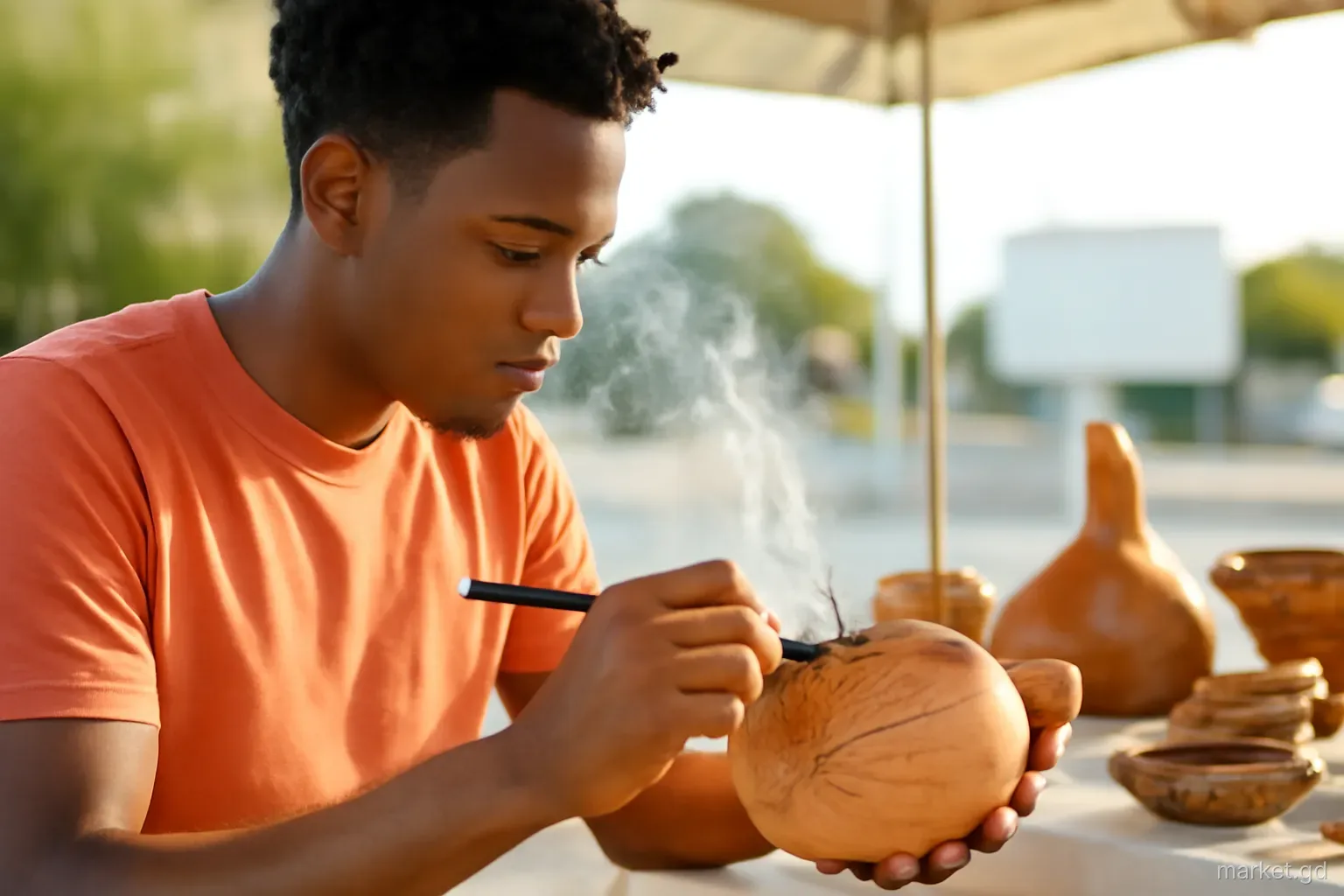
As a craft item, the dried shell is cleaned, sanded and decorated. Common techniques include carving shallow patterns into the surface, burning designs with a heated metal tool, staining, and varnishing. Motifs range from leaves, fish and birds to geometric patterns and the name of the island. Larger shells are made into lampshades or hanging planters, smaller ones into bowls, rattles and ornaments.
A good calabash piece has a smooth, even rim, a shell thick enough not to flex under gentle pressure, and decoration that follows the curve cleanly. Shells that feel paper-thin or have soft spots are more likely to crack. A slightly irregular shape is normal and a sign that it grew on a tree rather than came out of a factory.
Calabash pieces are usually among the cheaper handmade items on a craft table, because the material is close at hand. That makes them a good choice when you need several small gifts. Decorated pieces with fine burnt or carved work take much longer and are priced higher; it is reasonable to ask the maker how a design was done, and many will happily show you a half-finished shell to explain the process.
Coconut shell and fibre
Cups and bowls. Halved coconut shells, polished inside and out, make small bowls and cups. The best are sanded smooth with a deep brown sheen and no rough fibre left on the outside.
Jewellery and buttons. Shell is cut into discs, rings and pendants, sometimes combined with seeds or beads. Pieces are light and durable but can have sharp edges if not well finished; run a finger around them before buying.
Decorative carving. Some makers carve faces, animals or patterns into whole shells. Detail is limited by the hardness of the shell, so very fine, perfectly regular carving may indicate a moulded copy.
Fibre. Coconut husk fibre is used in rope, mats and brushes. Fibre products are less common as souvenirs but appear at craft fairs.
Food safety. Coconut-shell cups finished with varnish or lacquer are decorative. If you want to drink from one, ask whether the finish is food-safe or buy an unvarnished, oiled piece.
Seed jewellery: what the seeds are
Seed necklaces, bracelets and earrings are sold at beach stalls, craft markets and roadside stands. The seeds come from trees and plants that grow in Grenada and the wider Caribbean. A few worth recognising:
- Job's tears. Shiny grey, white or brown teardrop-shaped seeds from a tall grass, naturally hollow and easy to string. Common in simple necklaces.
- Red bead tree seeds. Small, bright red, rounded seeds without a black spot, from a tree sometimes called red sandalwood. Confusingly, these are also called jumbie beads in parts of the Caribbean, a name shared with the toxic rosary pea below.
- Large brown seeds. Various large, hard seeds from forest and roadside trees are polished and used as pendants or centre pieces.
- Rosary pea. Small glossy red seeds with a distinct black spot. They are highly toxic if broken or chewed, can be dangerous around children and pets, and some countries restrict them. Many careful makers avoid them; if you see them, choose a different piece.
- Dyed seeds. Some seeds are dyed bright colours. Check whether the dye rubs off on a damp finger, as it may stain skin and clothing.
- Ask the maker what each seed is. Most can tell you the tree or plant, and knowing what you are wearing is part of the appeal.
Local woodwork
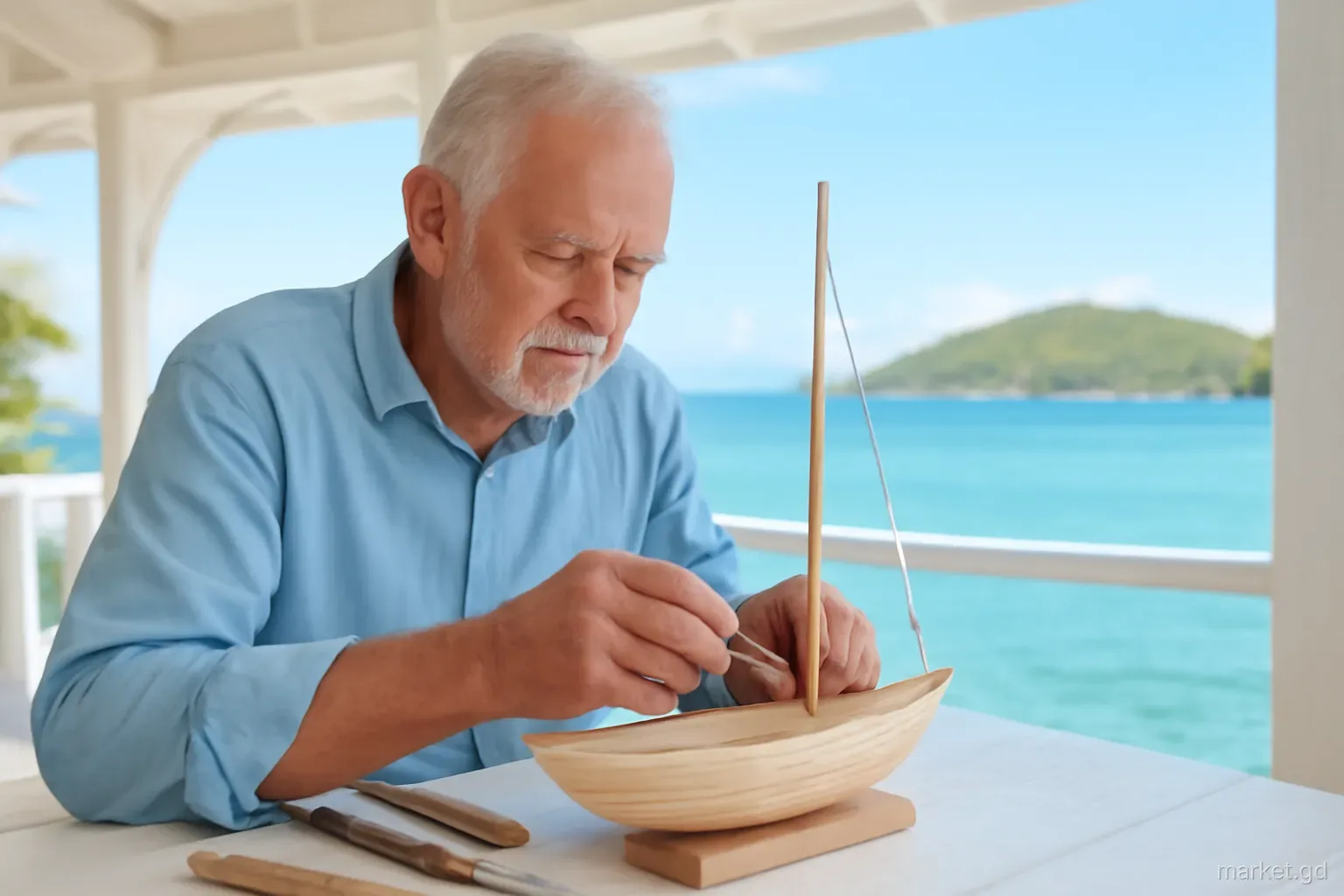
Grenadian woodworkers use local timber including mahogany and cedar, plus wood from fruit trees and timber salvaged after storms. Hurricanes such as Ivan in 2004 and Beryl in 2024 brought down large numbers of trees, and some craftspeople have turned fallen wood into bowls, boards and carvings. Products include serving bowls and platters, cutting boards, carved fish, turtles and birds, walking sticks, small furniture and boxes.
Good woodwork has a smooth finish without rough patches, joints that fit tightly, and an oiled or waxed surface that brings out the grain. Check the base of bowls and boards for cracks; wood that was not properly dried before carving can split later, especially when it moves from humid Grenada to a dry, heated home. A small hairline crack at the end grain may be acceptable on a decorative piece but not on a cutting board.
Bamboo is also used for cups, wind chimes and decorative pieces. As with all wood, insect holes or fine powder around a piece are a warning sign of borers, which customs officers in some countries will look for.
Caring for natural-material pieces
Natural materials react to climate. A Grenadian calabash or wooden bowl may behave differently once it reaches a heated or air-conditioned home. A few habits help:
- Let pieces adjust gradually. Avoid putting them next to radiators, heaters or in direct sun immediately after arrival.
- Oil wooden bowls and boards occasionally with a food-safe oil such as mineral oil, especially in dry climates.
- Wash food-use calabash, coconut and wood by hand in lukewarm water and dry immediately. Never put them in a dishwasher or leave them soaking.
- Keep varnished decorative pieces dry and dust them rather than washing.
- Store seed jewellery in a dry place; humidity can cause mould on natural seeds, and very dry heat can make some crack.
- Re-string seed necklaces on fresh cord if the original wears; the seeds will outlast the string.
Before you pack: customs and practical checks
Natural materials are the souvenirs most likely to be questioned on arrival. These checks reduce the chances of a problem:
- Make sure all items are completely dry and clean, with no pulp, soil, bark or insects attached.
- Prefer finished, varnished or oiled items to raw or freshly cut ones, which are more likely to be inspected.
- Declare plant and wood products on the arrival form if it asks. Australia and New Zealand are particularly strict; the US, UK, EU and Canada also inspect natural materials.
- Pack calabash and thin wood in hand luggage wrapped in clothing; they crack under pressure in a checked suitcase.
- Keep a receipt or the maker's name, which helps if an officer asks what something is.
- Avoid rosary pea seeds entirely, and leave behind anything you cannot identify.
Frequently asked questions
What is a calabash bowl?
A calabash bowl is made from the dried, hard shell of the calabash tree's fruit, cut, cleaned and often carved, burnt or varnished. Calabash was a traditional kitchen container in rural Grenada and is now a popular handmade souvenir.
Can you eat or drink from coconut-shell and calabash items?
Unvarnished, oiled items are traditionally used for food and drink. Many souvenir pieces are varnished or lacquered for decoration and are not intended for food. Ask the maker whether the finish is food-safe before using one.
Are seed necklaces allowed through customs?
Most finished, dried seed jewellery is accepted, but rules vary and some countries restrict certain seeds, notably the toxic rosary pea. Declare plant products if the arrival form asks, and avoid unidentified seeds.
Why did a wooden bowl crack after arriving home?
Wood absorbs moisture in humid Grenada and shrinks in dry, heated homes. If it was not fully dried before carving, it may split. Oiling the piece and keeping it away from heaters helps prevent cracking.
Where can you buy calabash and seed crafts in Grenada?
Craft and spice markets in St George's and Grand Anse, beach vendors, roadside stalls in rural parishes and craft fairs all sell natural-material pieces. Ask vendors who made them and from which materials.