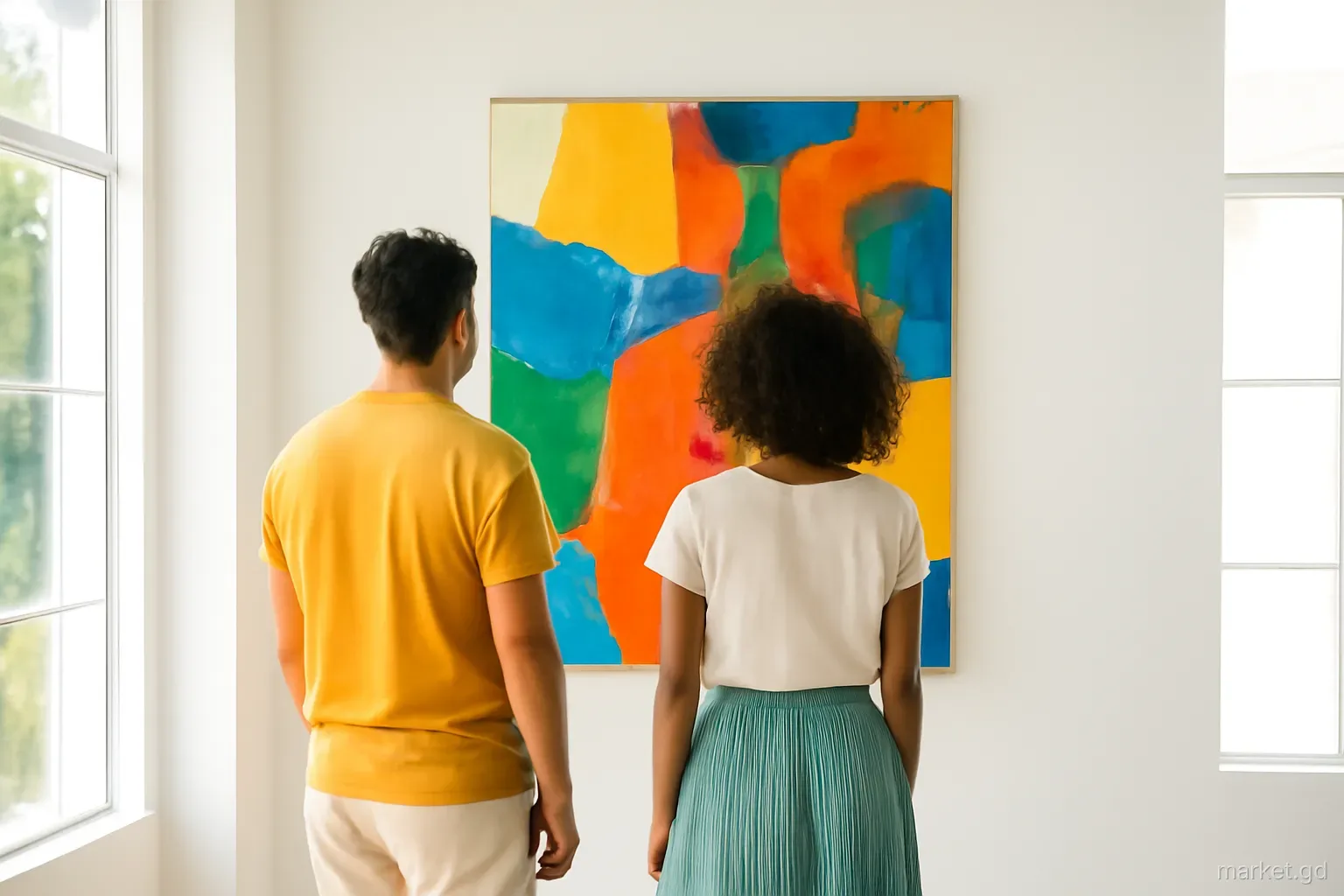
For a small country, Grenada has a lively visual arts scene. Painters work across village scenes, seascapes, abstract and conceptual pieces, and the country has taken part in the Venice Biennale with a national pavilion in recent editions. For visitors, a painting or print can be the most personal thing to take home, and often the best value for money, since buying directly from a Grenadian artist puts the whole price into the hands of the person who made it.
Buying art abroad raises practical questions that a spice basket does not: how to judge an original, whether a print is worth its price, what a fair figure looks like, and how to get a canvas back without it being crushed. This guide covers where art is sold, the names and styles you will come across, the difference between originals and reproductions, and the logistics of carrying or shipping work home.
Where Grenadian art is sold
Most original art is sold through small galleries and artists' studios, concentrated in and around St George's and the south of the island near Grand Anse, Morne Rouge and Lance aux Epines. Some hotels and restaurants hang work by local painters with prices attached, and several resorts run small exhibitions. Group shows, open studios and art fairs take place through the year, often linked to Independence in February or the Christmas season.
Craft markets and beach vendors sell smaller paintings, often bright scenes of fishing boats, markets and hillsides, at lower prices. These are usually genuine local work, painted quickly for the visitor market. They are a fair purchase if you like them, but they are a different category from gallery work.
The Grenada National Museum in St George's and the cultural programme around the Grenada Arts Council and the national pavilions have helped raise the profile of contemporary artists. Galleries open and close, and opening days often depend on the season, so ask your accommodation which spaces are currently showing work and call ahead through them rather than relying on old listings.
Names and styles you will come across
Canute Caliste. The best-known Grenadian folk painter, from L'Esterre on Carriacou, who died in 2005. His naive paintings of island life, boatbuilding, Big Drum dances, mermaids and local legends are instantly recognisable. Originals are scarce and valuable; prints and reproductions are widely sold, and should be priced as reproductions.
Naive and village-scene painting. Bright, flat-perspective paintings of markets, churches, fishing and festivals are a strong popular tradition. Quality ranges from careful and distinctive to quick and formulaic.
Seascapes and landscapes. Harbour views of the Carenage, beaches, mountain rainforest and the Grenadines appear in every price bracket, from small watercolours to large oils.
Contemporary and conceptual work. A newer generation of Grenadian and Grenada-based artists works in installation, photography, mixed media and abstract painting, with themes of history, migration, the sea and identity. This is where the Venice Biennale participation has drawn attention.
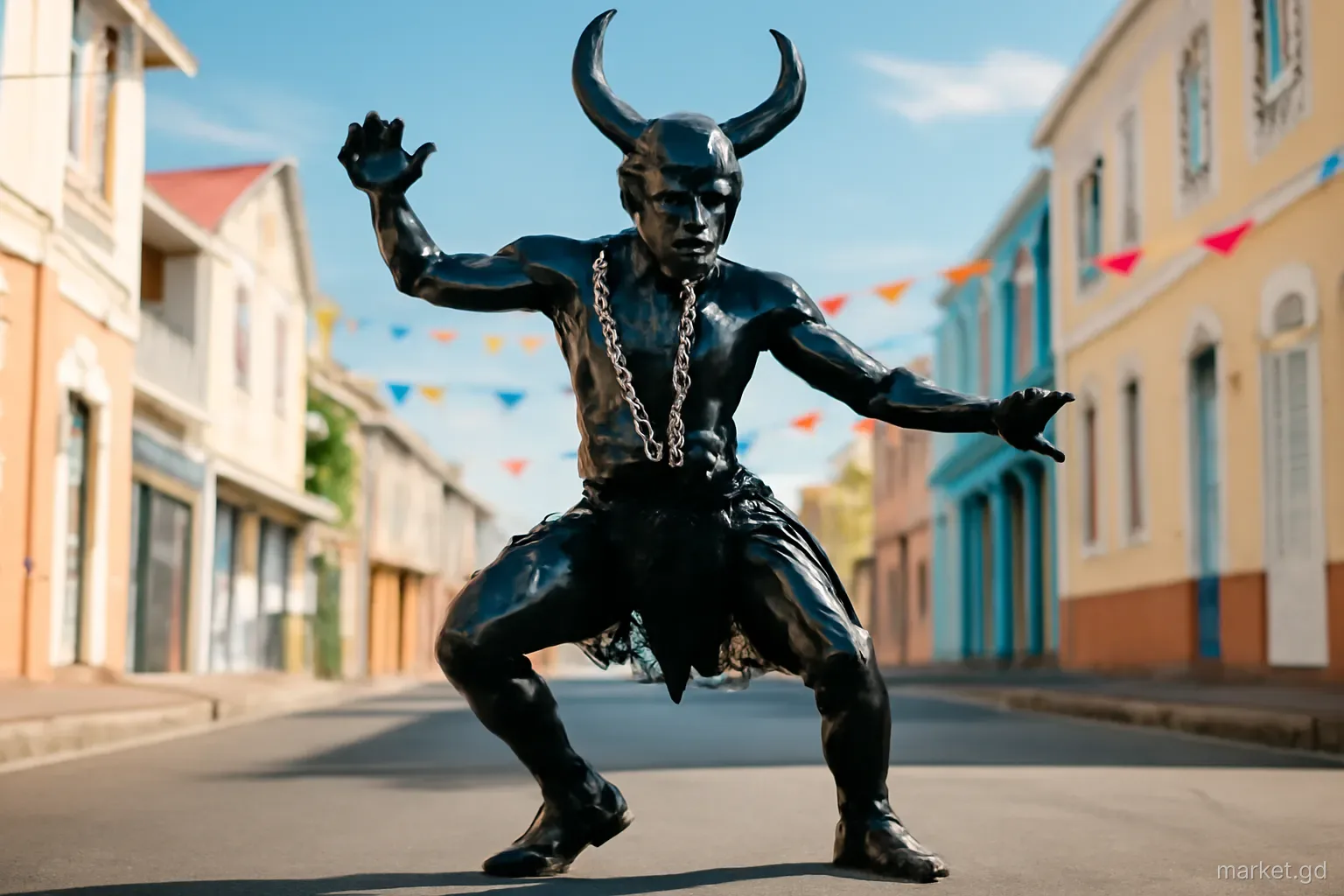
Carnival and mas imagery. Jab Jab figures, Shortknee costumes and Spicemas scenes are a popular subject, ranging from documentary photography to expressive painting.
Originals, limited prints and reproductions
An original is a unique work: a painting on canvas, board or paper, or a one-off mixed-media piece. It should be signed, and the seller should be able to tell you the artist, the medium and roughly when it was made. Ask for a simple receipt that names the artist and describes the work, which matters for insurance, resale and customs.
A limited-edition print is a reproduction made in a stated number, ideally signed and numbered by the artist, for example 12 of 50. Limited editions sit between originals and posters in value. An open-edition reproduction is printed without a limit and should cost far less. Problems arise when a reproduction is sold at an original's price, or when a print of a famous artist such as Canute Caliste is presented as more than it is.
Look closely. Paint on an original has texture, brushstrokes and slight irregularity at the edges; a print is flat, and under close inspection may show a fine dot pattern. If a shop has several identical copies of a painting, it is a reproduction. There is nothing wrong with buying one, provided the price and description match what it is.
What shapes the price of a painting
There is no published price guide for Grenadian art, and figures vary widely. A small painting from a market vendor and a large canvas by an artist with an exhibition record are different purchases, and both can be fairly priced. The main factors are the artist's reputation and exhibition history, the size, the medium (oil and large acrylic usually cost more than watercolour or drawing), and the complexity of the work.
Galleries typically take a commission on sales, which is part of the price you pay and covers the space, staff and exhibitions that bring artists to buyers. Buying from an artist's studio can sometimes be cheaper, but the gallery route often gives you better information, a proper receipt and help with packing. Neither is wrong.
Ask whether prices are in EC or US dollars before you start comparing; a figure that looks reasonable in EC can be a surprise if it was meant in US. Many galleries take cards, while individual artists may prefer cash or bank transfer. If you are seriously interested in a piece but undecided, it is normal to ask whether it can be held for a day.
Pitfalls when buying art
Most purchases go smoothly, but these are the situations that lead to disappointment:
- Paying an original's price for a reproduction, particularly for work attributed to well-known names.
- Buying a large framed piece without thinking about how it will travel. Glass and heavy frames are the main cause of damage and excess baggage fees.
- Assuming a painting is dry. Thick oil paint can take weeks or months to cure fully; a recently finished oil can smudge if rolled or packed face to face.
- Not getting a receipt that names the artist, title and medium. Without it, insurance claims and customs declarations are harder.
- Buying anything described as an antique, historical document or Amerindian object without asking about export rules. Heritage items can be protected, and genuine archaeological pieces should not be sold to visitors at all.
- Negotiating too hard. Gallery prices are often set with the artist; modest discounts for multiple works are sometimes possible, but heavy bargaining over original art is generally unwelcome.
Getting a painting home
The right method depends on size, medium and whether the work is framed. In general:
- Ask whether the work can be taken off its stretcher and rolled. Many acrylic and dry oil paintings on canvas can be rolled paint side out around a wide tube, then re-stretched at home.
- If rolling is not suitable, ask the gallery to pack the piece between rigid board with corner protectors, and carry it on board if the airline allows its size as cabin baggage.
- Leave framing until you are home. Frames, and especially glass, add weight, cost and risk.
- For large or valuable work, ask the gallery to arrange professional packing and air freight or courier shipping, and get the cost in writing before you agree.
- Keep the receipt with you and declare the work if your home country requires it. Original art is often treated favourably by customs, but declaration rules and allowances vary.
- Photograph the work and the packing before it leaves, in case of damage in transit.
Frequently asked questions
Who is Canute Caliste?
Canute Caliste was a self-taught naive painter from L'Esterre, Carriacou, who died in 2005. His colourful scenes of island life, boatbuilding, Big Drum and mermaid legends are among the best-known images of Grenadian art. Originals are scarce; most work on sale is reproduction.
Where can you see Grenadian art without buying?
The Grenada National Museum in St George's, gallery exhibitions in the south of the island and works hung in hotels and restaurants all give a sense of the scene. Ask locally which galleries are open, as hours and exhibitions change.
Does Grenada take part in the Venice Biennale?
Yes. Grenada has had a national pavilion at the Venice Biennale in several recent editions, showing work by Grenadian and international artists. It has helped bring contemporary Grenadian art to a wider audience.
Is it safe to roll a painting for travel?
Often, yes, for acrylic and fully dry oil paintings on canvas, rolled paint side out around a wide tube. Thick or recently painted oils, works on board and pieces with heavy texture should be flat-packed instead.
Do you pay duty on art bought in Grenada?
It depends on your home country. Many countries treat original artworks favourably, but allowances, declaration thresholds and rules vary. Keep a receipt naming the artist and work, and check your own customs authority's guidance.