Most of the fresh fish eaten in and around St George's passes across the concrete counters of the fish market on Melville Street, on the seaward side of town between the Carenage and the bus terminus. It is not a tourist attraction and it is not trying to be one. It is a working building where fishers and vendors sell the morning's catch by the pound, clean it on the spot and move on to the next customer. Knowing how the place runs makes the difference between a quick, satisfying purchase and a confused half-hour of standing in the wrong spot.
This guide explains when to go, how fish is priced and handled, what to ask before you pay, and how to get your fish home in good condition. It covers the St George's market specifically; the other fish markets around the island follow a similar pattern but run to their own rhythm, and the town of Gouyave has a character all of its own.
Where the market sits and how it is laid out
The market occupies a purpose-built, open-sided building on Melville Street, facing the water on the western edge of St George's. Like several fish markets and landing facilities around Grenada, it was built with development assistance from the government of Japan, which is why the design feels more modern and utilitarian than the old Market Square up the hill. Boats can come in close by, and much of the catch arrives directly from vessels working the west coast and the deeper water offshore.
Inside, the space is organised around long counters and tiled work surfaces, with sinks and running water for cleaning. Individual vendors hold their own spots, and regular customers tend to buy from the same person week after week. Ice is part of the routine, but how much ice a given vendor has on a given day varies. Expect wet floors, the sound of cutlasses on boards and a fair amount of good-natured shouting. Closed shoes are more sensible than flip-flops, and anything you would hate to splash with fish water is better left in the car.
Best times to go
The general rule at any Grenadian fish market is simple: early is better. The best choice of whole fish is usually in the morning, once the first boats have landed and before the restaurants and regular buyers have taken the pick of the tuna and dolphin. Mid-morning still works on a good day, but by early afternoon the counters can be thin, and what remains may be the smaller fish or the less popular cuts.
Days are not all equal. Friday and Saturday are busy, partly because many households plan a weekend fish meal and partly because people in town for other shopping drop in. Supply also depends on the sea. After a run of rough weather, when the small open boats cannot safely go out, there may be little on offer and prices rise accordingly. During the Christian season of Lent, demand for fish goes up noticeably, especially on Fridays and around Easter, so arrive earlier than usual if you want a particular species.
Exact opening hours and days are not formally published in a way that can be relied on, and they can shift around public holidays. If you are planning around a specific day, ask a regular or check locally before making a special trip.
How fish is sold and priced
By the pound, not the kilo. Grenada still sells fish in pounds. Vendors weigh on scales at the counter, and the price is quoted in Eastern Caribbean dollars. Large fish such as yellowfin tuna, dolphin and kingfish are usually cut into steaks or chunks and weighed per piece, while smaller fish are sold whole.
Small fish often go by the bunch or string. Jacks, robins and other small schooling fish are commonly sold in bunches or strings of a set number, at a set price, rather than weighed. Ask how many come in a bunch before you agree.
Price follows supply and species. Tuna and dolphin typically cost more per pound than jacks or other small fish, and every species becomes cheaper when the boats have done well. Prices shift with the weather and the season, so any figure heard from a friend last year is only a rough guide.
Cash is normal. Bring Eastern Caribbean dollars in small notes. Card payment is not something to count on at a fish counter, and vendors appreciate not having to break a large note at seven in the morning.
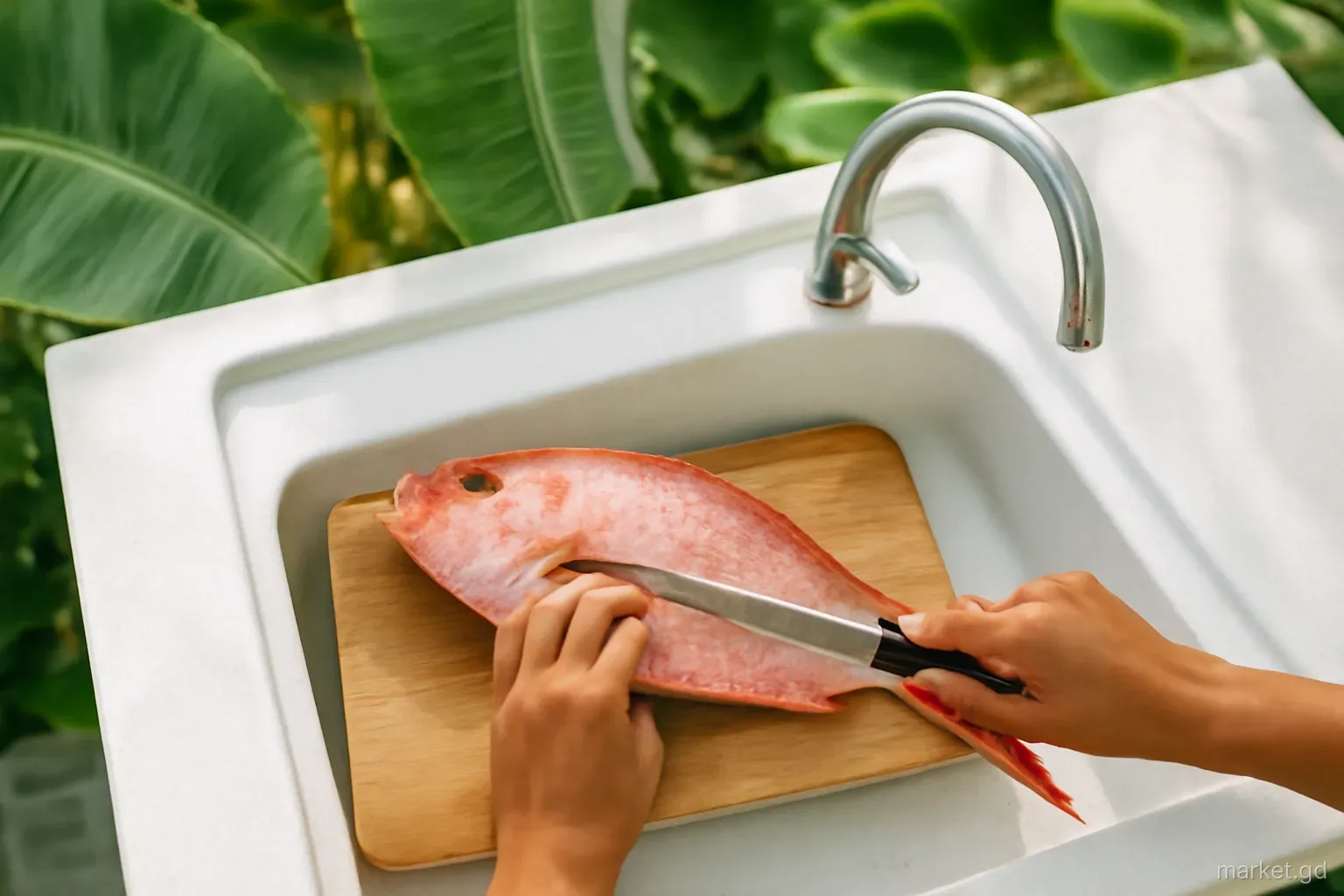
Cleaning may be included or charged separately. Many vendors will scale, gut and cut fish for you. Sometimes this is part of the price, sometimes there is a small extra charge. Ask before they start rather than afterwards.
What to ask before you pay
A few short questions save disappointment, and vendors expect them. Grenadian buyers ask freely, and asking marks you as someone who knows what they are doing rather than as a nuisance.
- When was it caught? Most fish here is from the same morning or the previous night. If it came in yesterday, you want to know.
- What is it called locally? Names differ from those in North America or Europe. Dolphin here means mahi-mahi, not the mammal, and the word kingfish can mean different species depending on who is speaking.
- Can you cut it into steaks, fillets or pieces for frying? Say how you plan to cook it. A vendor who knows you want to grill will cut thicker steaks than one who thinks you are making a stew.
- Could you keep the head and bones for me? Fish heads make excellent broth. Vendors will often discard them unless you speak up.
- How much for the whole fish versus a piece? Buying an entire medium fish is sometimes better value than buying cut pieces of a large one.
Getting your fish home in good condition
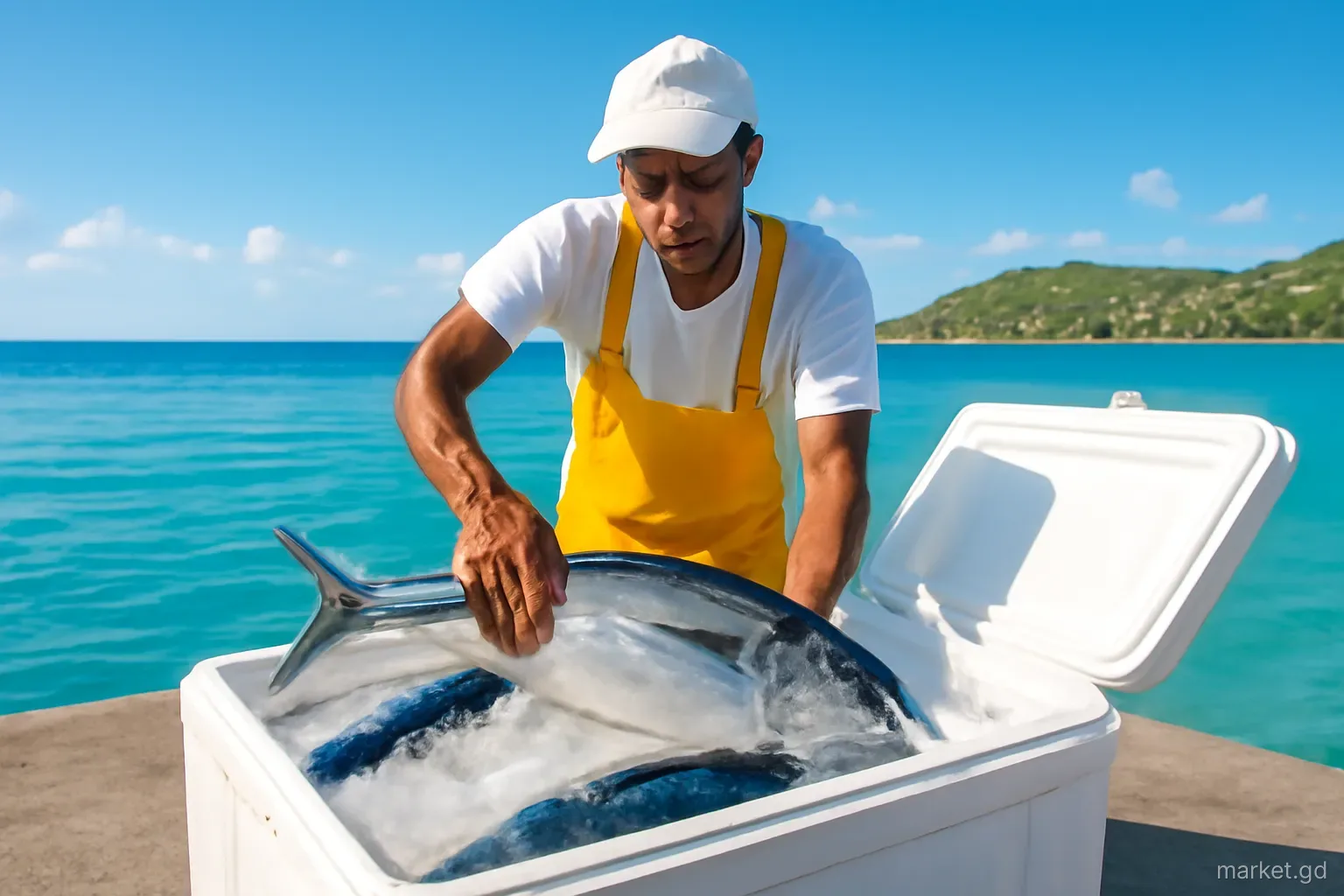
Heat is the enemy of fresh fish. A tuna steak left in a car parked in the sun on the Carenage for an hour can begin to deteriorate quickly, and with tuna and dolphin in particular, poor chilling can lead to scombroid poisoning, which cooking does not prevent. The safest habit is to bring a cool box with ice packs or a bag of ice and go straight home once you have bought.
Many households keep a cool box in the boot specifically for market mornings. If you do not have one, ask the vendor for some crushed ice in a separate bag and keep the fish in the shade. At home, rinse the fish briefly, pat it dry and refrigerate it immediately, or portion and freeze anything you will not cook within a day. Grenadian cooks commonly wash fish with lime or lemon juice and water before seasoning; this is a flavour and cleaning step, not a substitute for proper chilling.
Common mistakes at the fish market
Arriving at midday and expecting choice. By lunchtime the best of the catch has usually gone. Late visits are fine for whatever is left, not for specific requests.
Pointing without asking the price. Prices are per pound and vary. Confirm the rate and the approximate total before the vendor cuts, especially with large fish.
Forgetting about bones. Many local favourites, such as jacks, are bony. They are delicious fried crisp, but they are not ideal for a child or a guest who expects a boneless fillet.
Buying more than you can store. A great price on a whole tuna is no bargain if the fridge is full. Think about freezer space before you buy in bulk.
Treating it as a photo stop. This is a workplace. Ask before photographing vendors or their stalls, and step aside when people are trying to buy.
Frequently asked questions
What days is the St George's fish market open?
It generally trades through the week, with Friday and Saturday the busiest days, and some quieter trading on Sundays and public holidays. Hours are not formally published, so ask a regular or check locally before making a special trip around a particular day.
Is the fish at Melville Street fresh?
Most of it comes in the same morning or the night before, often straight from boats working off the west coast. Freshness still varies by vendor and day, so check the eyes, gills and smell, and ask when the fish was caught before paying.
Will vendors clean and cut the fish?
Usually, yes. Many vendors will scale, gut and cut fish into steaks or pieces on the spot. Some include this in the price and some charge a small extra amount, so ask before the work begins.
Can you pay by card at the fish market?
Do not count on it. The fish market is very much a cash business, and Eastern Caribbean dollars in small notes are the easiest way to pay. US dollars may be accepted by some vendors at the fixed rate, but change will normally come back in EC dollars.
What fish is cheapest at the market?
Small schooling fish such as jacks and robins are usually the most affordable, often sold by the bunch rather than by weight. Tuna and dolphin cost more per pound. Every species gets cheaper after a good run of catches, and dearer after rough weather.
Is it worth visiting as a tourist?
Yes, if you go early, respect the working atmosphere and ideally buy something. Self-catering visitors get the best value from it. Ask before taking photographs, wear closed shoes and step aside for regular customers who are trying to shop.