In Grenada, the freshest fish often has no packaging, no date and no label. It is lying on a counter, hanging from a string at the roadside or sitting in a cooler at the back of a van, and the only guide to its quality is what your eyes, nose and fingers tell you. Most Grenadians learn to judge fish as children, watching a parent or grandparent lift a gill flap or press a flank. Newcomers usually have to learn it quickly.
This checklist covers the signs that matter, how they differ between whole fish, steaks and small fish sold by the bunch, and the situations where it pays to be extra careful. None of it requires expertise, only the confidence to look closely before you hand over your money.
The whole-fish check, in order
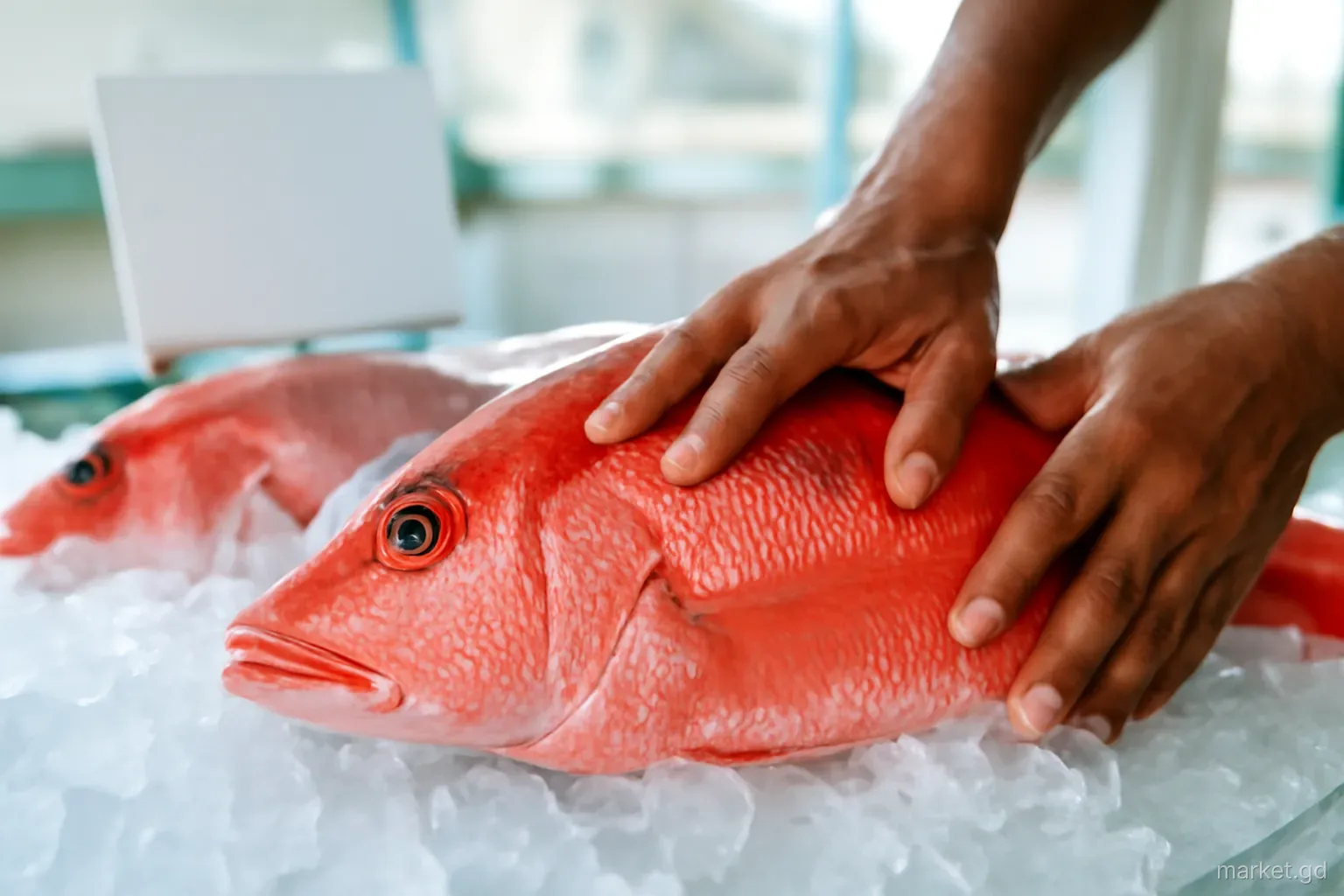
With a whole fish, run through these checks in sequence. It takes less than a minute, and vendors are used to buyers doing exactly this.
- Look at the eyes. They should be clear, bright and slightly bulging. Cloudy, grey or sunken eyes mean the fish has been out of the water for some time or has been poorly chilled.
- Lift a gill cover. The gills underneath should be bright red or deep pink and moist. Brown, grey or slimy gills are a warning sign. Most vendors will lift the gill for you if you ask.
- Smell it. Fresh fish smells of the sea: clean, briny and mild. A sour, ammonia-like or strongly fishy smell means it is past its best. Trust this test above all the others.
- Press the flesh. Push a finger gently into the thickest part of the body. Fresh fish springs back. If the dent stays, the flesh has begun to soften.
- Check the skin and scales. The skin should be shiny, with colours that look vivid rather than faded, and scales should cling firmly. A thin, clear layer of natural slime is normal; thick, milky slime is not.
- Look at the belly. It should be intact and firm. A belly that is soft, torn or discoloured suggests the fish was not gutted promptly and has started to spoil from the inside.
Steaks and cut pieces: tuna, dolphin and kingfish
Large fish such as yellowfin tuna, dolphin and kingfish are usually sold cut, which removes the eyes and gills from the equation. With steaks and chunks, the colour and texture of the flesh do the talking. Good yellowfin tuna is a deep, glossy red to pinkish-red, firm and moist without being wet. Tuna that has turned brown or rainbow-sheened on the surface has been exposed to air for a while; it may still be safe if it has been kept cold, but it is not at its best.
Dolphin, the fish also known as mahi-mahi, has pale pinkish-white flesh that should look translucent and feel firm. Kingfish and similar fish should be bright, with no gaps opening between the muscle flakes. Liquid pooling under a cut piece is a sign it has been sitting or has been frozen and thawed.
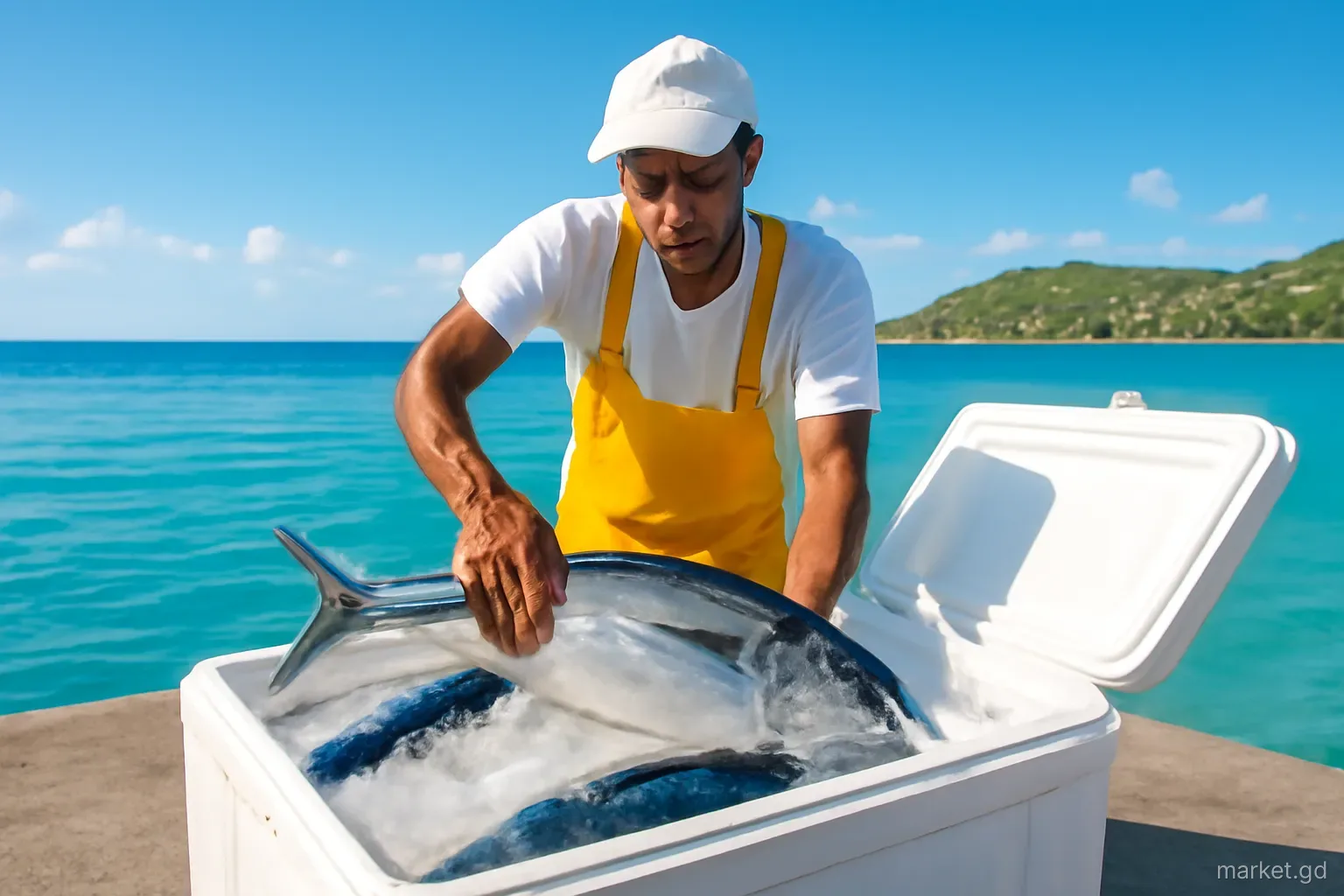
Because tuna and dolphin can cause scombroid poisoning if they have been left warm, the handling matters as much as the look. Fish that has been on ice is a better bet than fish that has been lying on a bare counter in the sun, even if both look similar at the moment you buy them.
Small fish sold by the bunch or string
Jacks, robins, ballahoo and other small schooling fish are sold by the bunch or on a string, often at the roadside or from a vendor with a cooler. They are some of the best-value fish in Grenada, but they spoil faster than large fish because of their size and oil content. The same rules apply in miniature: bright eyes, red gills, firm bodies and a clean smell.
Look at the whole bunch, not just the top layer. Fish on the inside of a pile can be softer than those on top, and a bunch with a mix of firm and limp fish has probably been sitting. Small fish that bend easily and stay bent, rather than springing back, are past their prime.
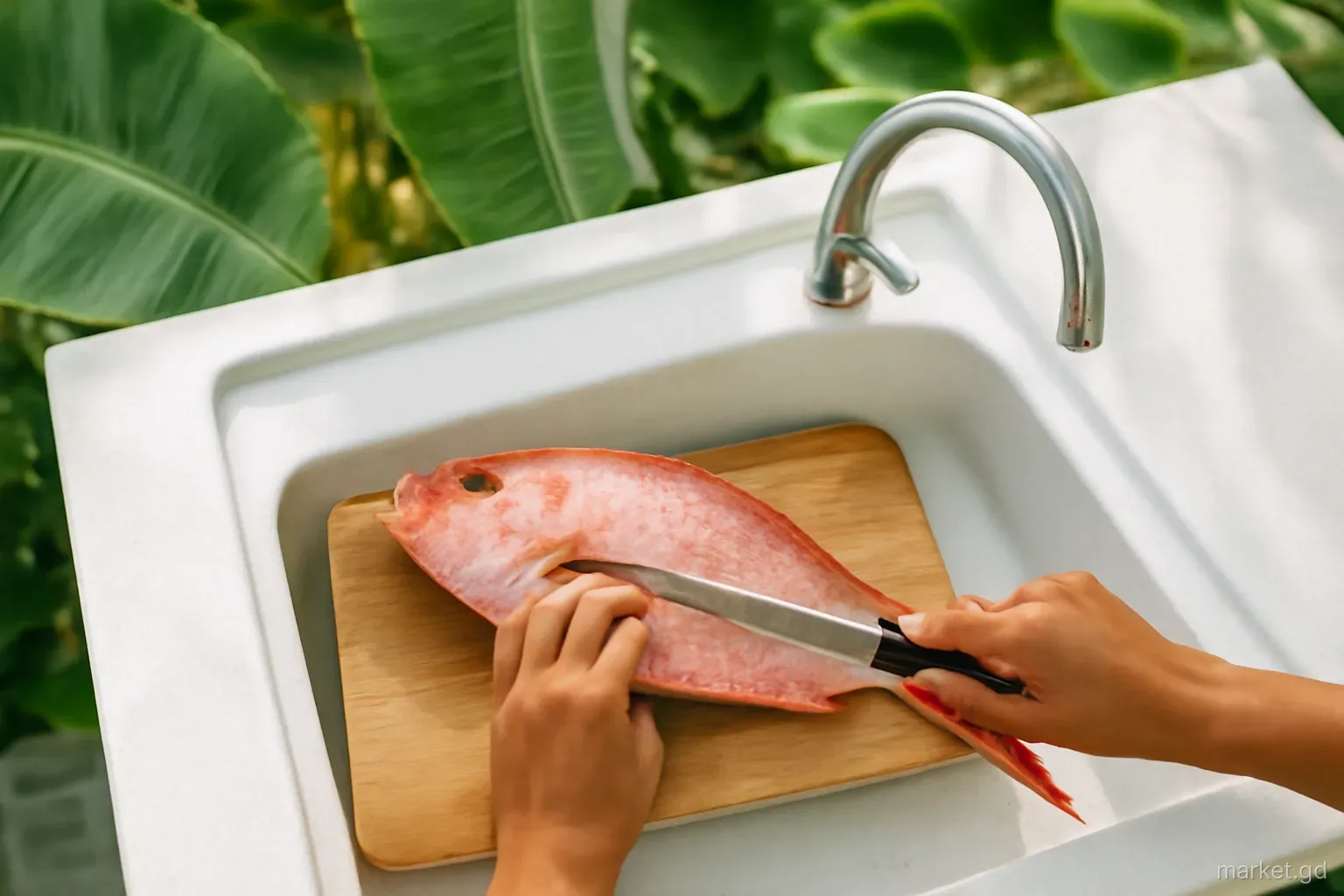
Small fish are usually cooked whole or scored and fried until crisp, so they are rarely filleted. Ask the vendor to scale and gut them if you prefer not to do it at home; the job is quicker for someone with practice and a good knife.
Where freshness is most likely to slip
Late in the day. Fish that has been on display since early morning has had hours in the heat. Late-day bargains are fine if the fish has been iced, risky if not.
Roadside sales without a cooler. Fish sold from the side of the road can be superb, landed an hour earlier. It can also be fish that has been carried around in the sun. Look for ice, and buy from vendors who keep their fish covered and cold.
After a public holiday or rough weather. When boats have not gone out for a few days, some of what is on offer may be older stock or frozen fish that has been thawed. Ask directly when it was caught.
Pre-frozen fish sold as fresh. Imported or locally frozen fish has its place, but it should be sold as such. Thawed fish tends to look duller and wetter, with flesh that separates more easily.
Judging frozen fish in supermarket freezers
Not every fish purchase in Grenada happens at a market. Supermarkets sell frozen fish, both imported fillets and locally caught fish that has been frozen, and these are useful when the boats have not gone out. The freshness signals are different, because eyes, gills and smell are hidden behind plastic and frost.
Look for packs that are frozen solid, with no soft spots and no sign that they have thawed and refrozen, such as a block of ice pooled at one end of the bag. Heavy frost or white, dry patches on the flesh indicate freezer burn, which makes fish tough and tasteless even if it is still safe. Vacuum-sealed packs hold quality better than loosely bagged pieces. Check any date on the pack, and pick from the back of the freezer chest, where the temperature tends to be steadier. Carry frozen fish home in a cool bag, thaw it in the fridge rather than on the counter, and cook it within a day of thawing.
Mistakes buyers make
Most bad fish purchases come from rushing or from embarrassment about inspecting the goods. The fixes are simple.
- Judging only by price. A cheap fish that has been sitting in the heat is not a bargain, and a slightly dearer fish from an iced counter is usually better value.
- Feeling awkward about smelling or touching the fish. Grenadian buyers do this routinely, and vendors with good fish are happy for you to check.
- Ignoring how the fish is stored. Ice, shade and a cover matter as much as how the fish looks right now.
- Leaving fish in a hot car. Even the freshest fish deteriorates quickly once it leaves the counter, so bring a cool box and go straight home.
- Rinsing with lime and assuming that makes old fish safe. Washing with lime is a traditional cleaning and flavouring step. It does not reverse spoilage or remove toxins.
- Buying a whole large fish without a plan. If you cannot cook or freeze it within a day, buy steaks instead.
Building a relationship with a vendor
The single best way to buy good fish consistently in Grenada is to find a vendor you trust and keep going back. Regular customers tend to get honest answers about what came in today and what is better left alone, plus a heads-up when a species they like has arrived. Vendors also remember how you like fish cut and may set aside pieces for you on a busy morning.
This applies whether you buy at the Melville Street market in St George's, in Grenville or Gouyave, or from a fisherman who passes through your village with a cooler. Pay fairly, be on time when you say you will come, and say thank you. The relationship is worth more than any checklist, because a vendor who knows you will tell you what the checklist cannot.
Frequently asked questions
What is the quickest way to check if fish is fresh?
Smell it and look at the eyes. Fresh fish smells clean and briny, and its eyes are clear and slightly bulging. If the smell is sour or strongly fishy, or the eyes are cloudy and sunken, choose something else.
Is fish sold at the roadside in Grenada safe?
Often it is very fresh, landed that morning. Safety depends on handling. Choose vendors who keep fish on ice, covered and out of the sun, ask when it was caught, and avoid fish that has clearly been sitting warm for hours.
Why does tuna sometimes look brown on the outside?
Tuna flesh oxidises when exposed to air, turning brown on the surface. If it has been kept cold, it may still be safe, but it is not at its best. Deep red, glossy flesh is the sign of a recently cut, well-handled piece.
Does washing fish with lime make it safer?
No. Washing fish with lime or lemon juice is a traditional cleaning and flavouring step in Grenadian cooking. It does not reverse spoilage, kill all bacteria or remove toxins such as histamine or ciguatoxin. Proper chilling is what keeps fish safe.
How long does fresh fish keep in the fridge?
As a general guide, fresh fish is best cooked within a day or two of purchase if kept properly chilled. If you will not cook it that quickly, portion and freeze it as soon as you get home rather than waiting.
Is it rude to inspect fish before buying?
Not at all. Grenadian shoppers routinely look at gills, smell fish and press the flesh. Ask the vendor first if you want to handle the fish yourself, and most will happily lift a gill cover or turn the fish for you.