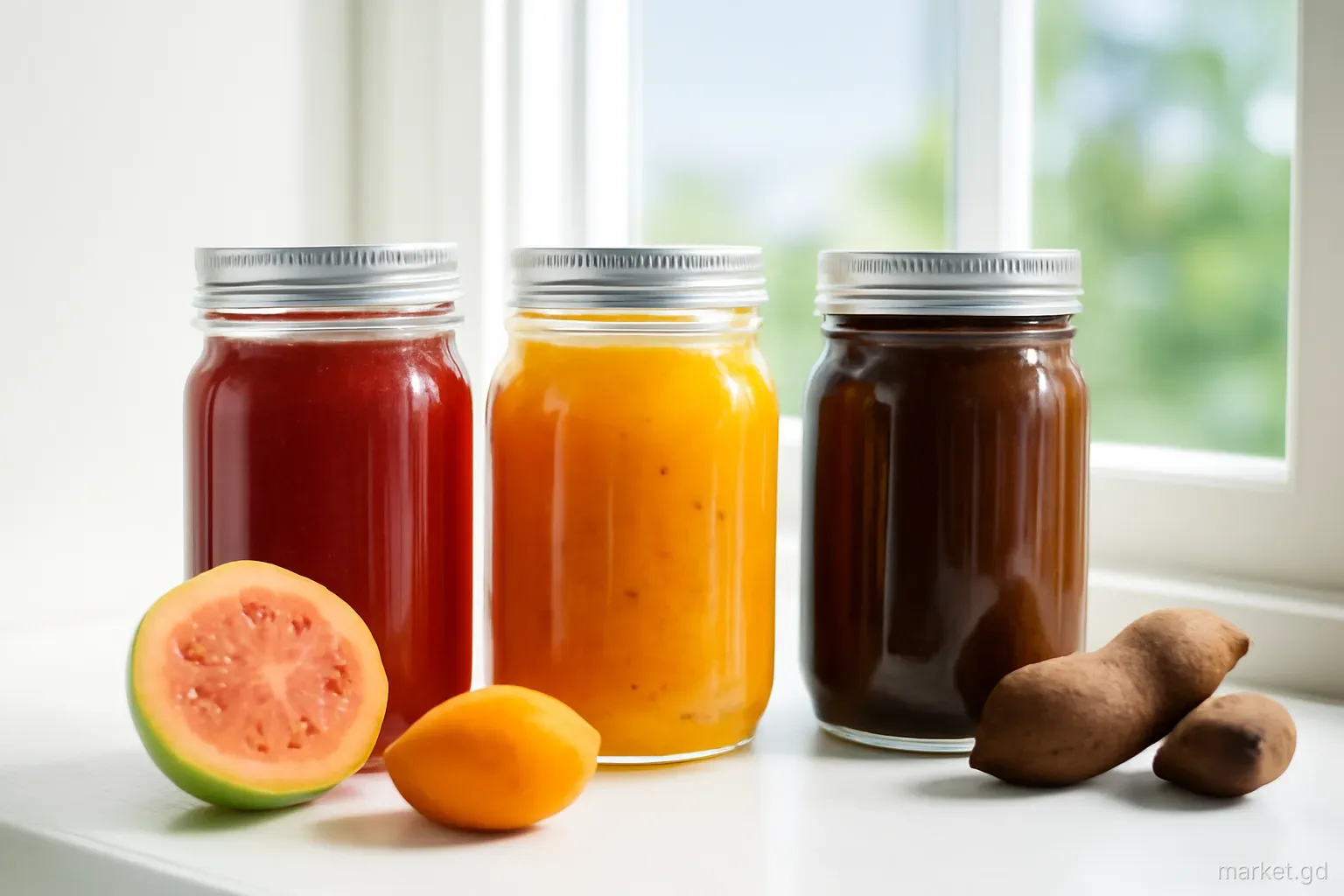
Many of Grenada's best-known local products started as a recipe someone made for family and friends: a pepper sauce praised at every lime, a guava jelly the neighbours kept asking for, a seasoning blend made in a church kitchen for fundraisers. Turning that recipe into a product that sits on a supermarket shelf is a different task. It involves food safety, consistent quality, packaging, labelling, costing and selling, and each step has its own traps.
This guide outlines the path for a small producer in Grenada moving from home kitchen to shop shelf. It focuses on the product side; registering a business, tax and employment are separate subjects. Requirements and procedures change, so confirm details with the agencies named before investing, but the logic below holds for most small food businesses.
Start with the product, not the label
Before printing anything, make sure the recipe can be made the same way every time. Home cooking relies on judgement: a handful of this, a splash of that, peppers that vary in heat. A product needs written quantities, measured by weight, and a method that anyone trained can follow. Make several test batches and keep notes on what changes.
Test with people who are not friends or family. Ask shopkeepers, market vendors and strangers to taste and comment on flavour, heat, texture and price. Their reaction is closer to what a customer will do with money in hand.
Think early about what the product competes with. If imported sauces sit on the same shelf at a lower price, the local product needs a clear reason to be chosen: flavour, freshness, a local ingredient, a gift-friendly size or a story that matters to buyers.
Consider the size of the product, too. Small jars suit visitors buying gifts and customers trying something new; larger bottles suit households and restaurants. Offering both can broaden the market, but each extra size adds packaging and labelling costs, so start with the size buyers ask for most.
Food safety and permits
Premises. Food for sale is generally expected to be produced in premises that meet health requirements, not an ordinary domestic kitchen used for family meals. Environmental health officers from the Ministry of Health inspect and approve food premises; ask them what applies to your situation before you start selling.
Food handlers. People handling food for sale are normally expected to hold a food handler's permit or certificate, which involves training and a health check. Ask the environmental health department about current requirements.
Process safety. Sauces, chutneys and preserves rely on acidity, sugar or heat treatment for safety. Learn how your product is preserved and, where possible, have it tested. Low-acid products sealed in jars carry particular risks if processed incorrectly.
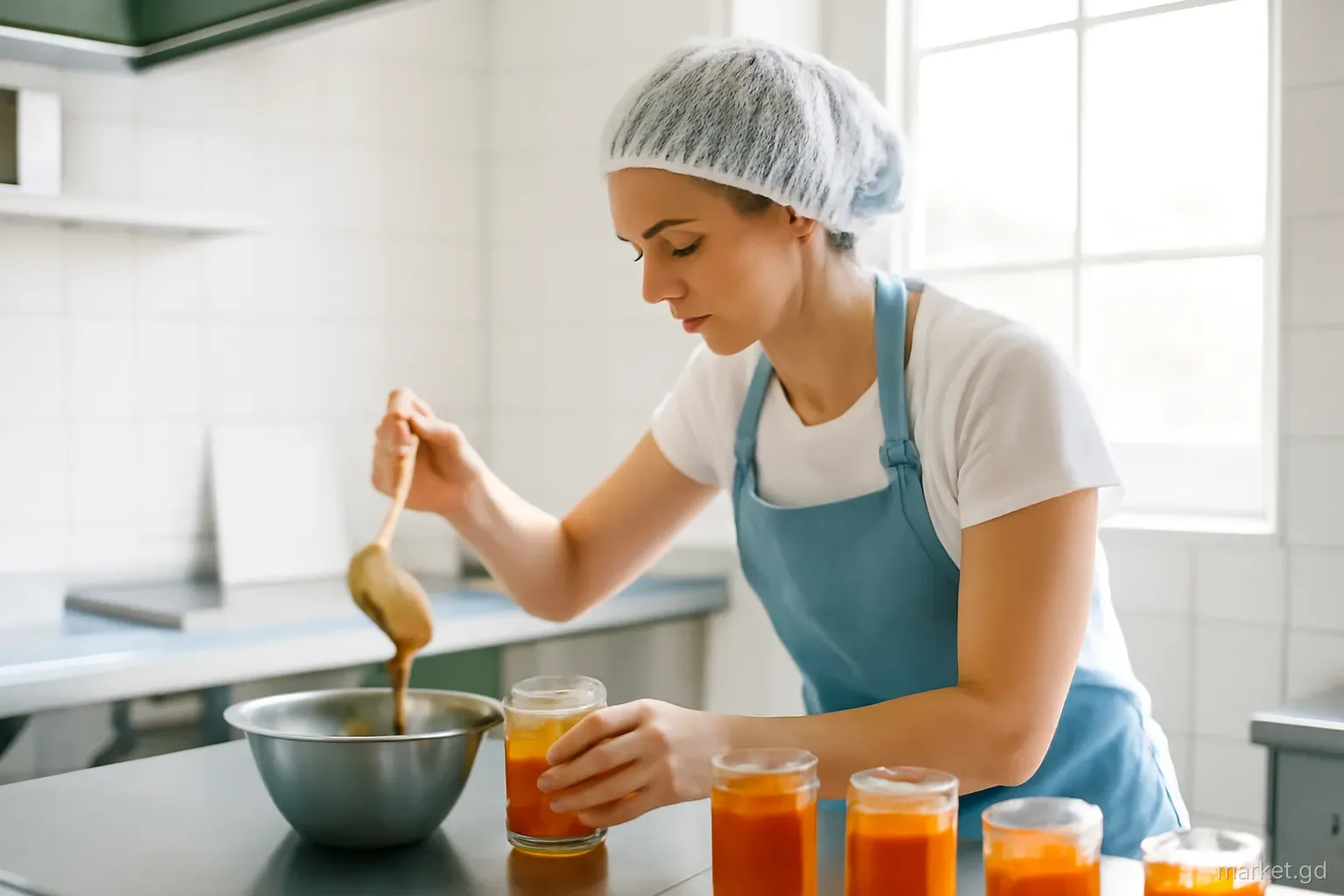
Hygiene routine. Clean water, sterilised jars, clean surfaces, protective clothing and separate storage for raw materials and finished goods are basics that inspectors and serious buyers will look for.
Packaging and labelling
Packaging is one of the biggest costs and headaches for Grenadian processors. Glass jars, bottles, lids and pouches are mostly imported, minimum order quantities can be large, and shortages of a particular size can halt production. Some producers band together to order packaging in bulk; others work with local distributors who keep stock. Choose a container you can source reliably, not just one that looks good.
Labelling should follow the standards promoted by the Grenada Bureau of Standards for prepackaged food. At minimum, expect to show the product name, ingredients in descending order, net quantity in metric units, producer name and address, country of origin, date marking and storage instructions where needed. Allergens such as mustard, nuts or milk should be clear.
Supermarkets often require barcodes, and export buyers will want nutrition information. Barcodes are issued through a GS1 member organisation; ask the Grenada Bureau of Standards or the Grenada Investment Development Corporation which office currently serves Grenadian businesses.
A practical sequence from recipe to retail
Producers who have made the transition successfully tend to follow a similar order:
- Standardise the recipe by weight and run test batches until results are consistent.
- Talk to environmental health officers about premises and food handler requirements, and fix any issues before scaling up.
- Choose packaging you can buy reliably, and work out the cost per unit including the lid and the label.
- Design a label that meets the standard, and have it checked before printing a large run.
- Establish shelf life by keeping samples under normal conditions and, where possible, getting them tested.
- Cost the product properly, then approach a few shops or a market outlet with samples and a clear price list.
- Collect feedback and sales data for a few months before investing in larger equipment or bigger packaging orders.
Costing so the product actually pays
Many small processors sell busily at a loss because they count only ingredients. A realistic cost per jar includes raw materials, sugar, vinegar and spices, the jar, lid and label, gas or electricity, water, cleaning materials, labour, transport to shops, breakage and unsold stock, and a share of fixed costs such as equipment and permits.
Retailers take a margin, often a substantial one, and supermarkets may expect consignment terms, paying only for what sells. Add VAT if your business is registered. Work backwards from the price a customer will pay on the shelf to see what you will actually receive, then compare that with your full cost.
Seasonal raw materials complicate costing. Fruit that is cheap and plentiful in season may be scarce later. Some producers process and freeze pulp in season, or buy through cooperatives, to stabilise both supply and cost through the year.
Revisit the costing every few months. Packaging, sugar and transport prices change, and a margin that worked last year can disappear quietly. Small, regular price adjustments are easier for shops and customers to accept than a sudden large increase.
Where small producers can find support
Several organisations work with small agro-processors in Grenada. Their programmes change, so ask what is currently available:
- Grenada Investment Development Corporation (GIDC), which supports small business development, export readiness and investment.
- Grenada Development Bank, which has offered financing aimed at small businesses and agriculture.
- Grenada Bureau of Standards, for labelling standards and quality guidance.
- Ministry of Agriculture, for raw material supply, farmer links and agro-processing programmes.
- Marketing and National Importing Board (MNIB), which buys and sells local produce and has stocked locally made products in its outlets.
- Grenada Chamber of Industry and Commerce and regional bodies, for networking, training and trade fairs.
When approaching any agency, bring samples, a costing sheet and a clear question. Officers can help far more with "what labelling does my chutney need for supermarket sale?" than with a general request for help.
Pitfalls to avoid
The same mistakes appear again and again among new food businesses:
- Scaling up before the recipe and process are consistent.
- Printing thousands of labels before testing whether the product sells.
- Underpricing to win shelf space, then being unable to raise prices later.
- Relying on one packaging size that suddenly becomes unavailable.
- Ignoring shelf life, so products spoil on shelves and damage the brand.
- Selling only through one shop and losing everything if that relationship ends.
Most of these come down to moving faster than the evidence. Small, steady steps, each tested with real sales, cost less than a large launch that has to be rescued later.
Another quiet risk is the producer's own health and time. Many small processors work alone or with family, and a single illness can stop supply. Writing down the recipe and process, and training at least one other person, protects the business and the shop relationships it depends on.
Frequently asked questions
Can you sell homemade food products legally in Grenada?
Food sold to the public is subject to health requirements, including approved premises and food handler permits, overseen by the Ministry of Health's environmental health officers. Requirements depend on what you make and how you sell it. Ask them before you start, especially if you plan to sell through shops rather than occasional events.
Where can a small producer buy jars and bottles in Grenada?
Some local distributors and hardware or packaging suppliers stock jars and bottles, but choice is limited and many producers import packaging, sometimes in group orders with other processors. Agencies such as the GIDC and producer groups can sometimes point to suppliers. Plan packaging supply before committing to a container size.
How do you work out the shelf life of a sauce or jam?
Start by understanding how the product is preserved, through acidity, sugar or heat. Keep sample jars under normal storage conditions and check them over time, and where possible have samples tested for acidity and spoilage. Set a conservative best-before date at first and extend it only with evidence.
Do supermarkets in Grenada stock small local brands?
Many do, and some actively promote local products, but they expect consistent supply, proper labels, reliable delivery and often barcodes. Terms may include consignment, where you are paid only for what sells. Start with one or two stores, deliver reliably and use the sales record to approach others.
Is there funding for agro-processors in Grenada?
Programmes come and go, but the Grenada Development Bank, the GIDC and the Ministry of Agriculture have all supported small agro-processing at various times, sometimes with regional or international partners. Ask each about current schemes and prepare a simple business plan with costings, as most support depends on one.