Grenada grows two of the best-known raw materials in natural skincare: cocoa and coconut. Fine flavour cocoa from estates and small farms is pressed into cocoa butter, coconuts from coastal groves become virgin coconut oil, and both turn up in soaps, balms and lotions made by small producers across the island, often scented with nutmeg, cinnamon, lemongrass or bay leaf.
This guide explains the main local skincare products, how to tell a pure product from a blend, how to store them in tropical heat, and which marketing claims deserve a sceptical eye. It is a buyer's guide to products, not medical advice; anyone with a skin condition should take advice from a doctor or pharmacist.
Cocoa butter: from bean to block
Cocoa butter is the natural fat in cocoa beans. When fermented and dried beans are roasted, ground and pressed, the liquid fat separates from the solids. Chocolate makers use it to give chocolate its texture; skincare producers use it because it melts at around body temperature and leaves a rich, protective layer on the skin.
Unrefined cocoa butter is pale yellow to cream and smells of chocolate. Refined, deodorised versions are whiter and almost odourless, which suits products where the cocoa scent is not wanted. Both have a place: unrefined butter appeals to buyers who want the natural aroma; refined butter suits blends with other fragrances.
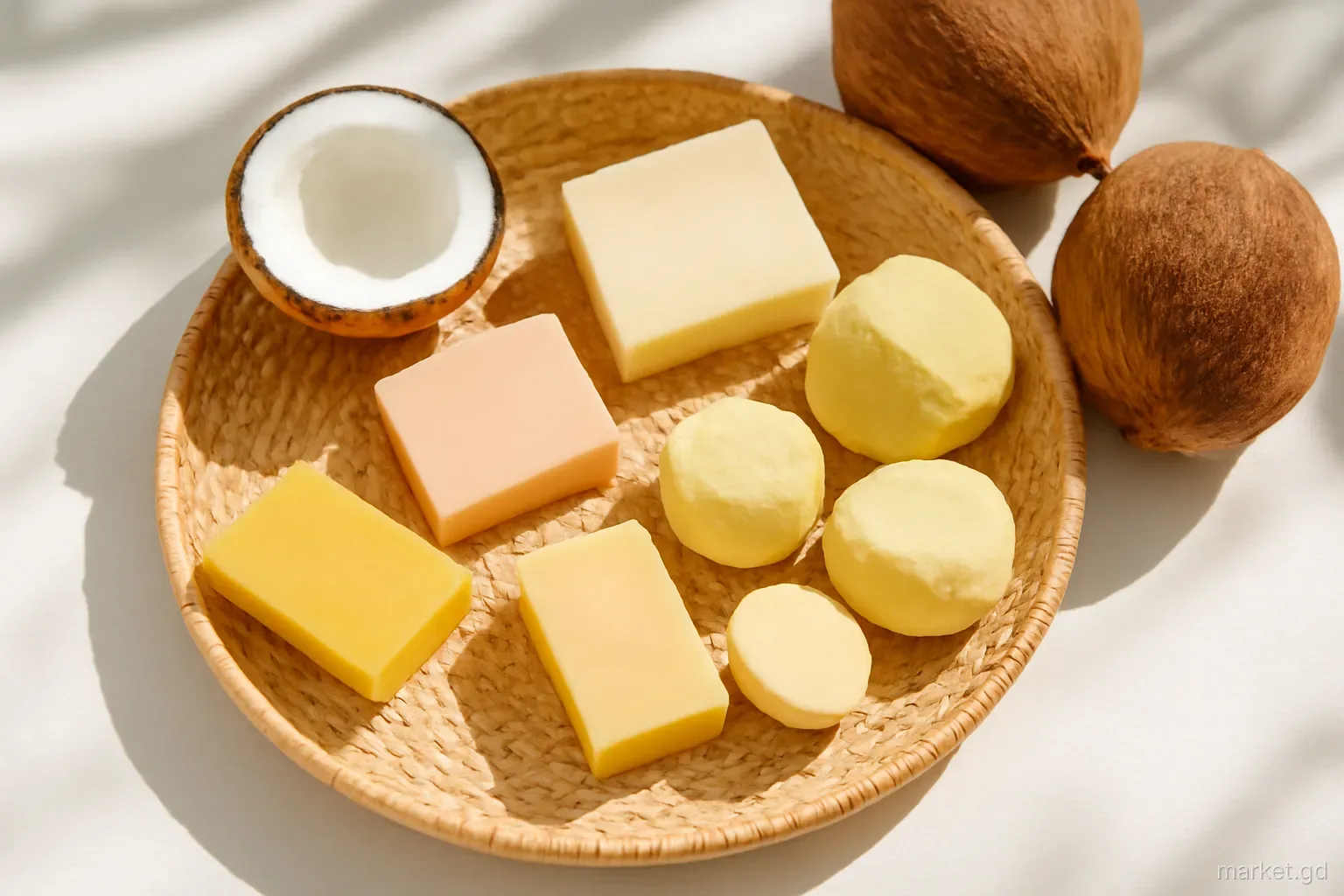
In Grenada, cocoa butter is sold in solid blocks and balls, in sticks for lips and in creams and lotions mixed with other oils. Grenadians traditionally rub cocoa butter on dry skin, scars and stretch marks, and many grandmothers keep a block in the bathroom. Whether it actually prevents stretch marks is not well supported by research, but as a moisturiser it is effective.
Virgin coconut oil and other local oils
Virgin coconut oil is pressed from fresh coconut meat without high-heat refining. It is clear when liquid and white when solid, and smells gently of coconut. In Grenada's heat it is usually liquid; in an air-conditioned room it may solidify, which is normal and not a sign of spoilage.
Traditional coconut oil, made by boiling grated coconut and skimming the oil, has a toastier smell and darker colour. Both are used on skin and hair, and in cooking, though a product sold for skin should not be assumed food-safe unless it says so.
Other local ingredients appear in small-batch products: aloe vera grown in many yards, castor oil, lemongrass, bay leaf, turmeric and nutmeg oil. Sea moss gels are also sold for skin and hair. Their quality depends entirely on the producer, so look for clear ingredients and production details.
Because coconut oil is also a kitchen staple, many local producers sell the same oil for both uses. If you plan to cook with it, buy a product clearly described as food-grade, made under food safety conditions, rather than one intended for hair and skin.
Telling a pure product from a blend
Read the ingredients. A pure cocoa butter or coconut oil product should list a single ingredient. Lotions and creams will list water, emulsifiers and preservatives, which is normal but means the product is not pure butter or oil.
Check the smell. Unrefined cocoa butter smells clearly of chocolate; virgin coconut oil smells of fresh coconut. A strong perfume may be masking a blend or a refined base.
Watch the texture. Pure cocoa butter is hard at room temperature in an air-conditioned shop and softens in the hand. A soft, creamy "cocoa butter" at room temperature is almost certainly a blend.
Look for the producer. A named producer with a Grenadian address is a good sign. Many imported cocoa butter creams are sold in Grenada too, and their packaging can look local.
Consider the price. Pure cocoa butter takes a lot of beans to produce; if a large pot of "pure cocoa butter" is very cheap, check the ingredients carefully.
Handmade soaps and spice scents
Handmade soap is one of the most popular local skincare products, made by small producers using coconut oil, cocoa butter, shea or other oils with lye, then cured for several weeks. Spice-scented soaps with nutmeg, cinnamon, clove or bay are popular gifts, as are soaps with turmeric, oats, honey, coffee grounds or local clay for texture.
Good handmade soap should be firm, well cured and free from oily patches or white crystals on the surface. It will soften if left in a wet dish, so keep it drained. Strongly spiced soaps can irritate sensitive skin; try a small bar first if you are unsure.
Producers usually sell at craft markets, through small shops, at hotel boutiques and online to local customers. Prices vary with size, ingredients and presentation; gift-wrapped bars in decorative boxes cost more than plain bars, and you are partly paying for the packaging.
Storing natural skincare in the tropics
Heat and humidity are hard on natural products. Simple storage habits extend their life:
- Keep cocoa butter and balms out of direct sun and away from car dashboards, where they melt and can turn rancid.
- Close lids tightly to keep out moisture and insects; ants find coconut oil quickly.
- Use clean, dry fingers or a spatula when scooping from jars, so water and bacteria do not get in.
- Store soaps on a draining dish, and keep spare bars wrapped in a cool cupboard.
- Check for a sour or crayon-like smell, which signals rancid oil; discard the product if it appears.
- Use products without preservatives within a few months of opening.
If you buy a large block of cocoa butter, cut it into smaller pieces and keep most of them wrapped in a cool, dark place, using one piece at a time. This keeps the bulk away from the warmth and handling that speed up rancidity.
Claims to treat with caution
Natural skincare is often marketed with promises that go beyond the evidence. Be careful with these:
- Cures for skin conditions. Eczema, psoriasis, acne and infections need medical assessment. A moisturiser may help comfort, but it is not a cure.
- Guaranteed stretch-mark or scar removal. Moisturising helps skin feel better; dramatic results are not reliably supported.
- "Chemical-free". Everything is made of chemicals, and soap itself is made with lye. The phrase usually means no synthetic preservatives or fragrances.
- Skin-lightening products. Some imported lightening creams contain harmful substances such as mercury or high-strength steroids. Avoid unlabelled lightening products entirely.
- Organic claims without explanation. Ask how the claim is supported; many good local products are natural without being certified organic.
A trustworthy producer will describe what a product does in modest terms, list every ingredient and tell you how to store it. Exaggerated promises on a small handmade product are a reason to look more closely, not a reason to pay more.
Buying as gifts and carrying them home
Cocoa butter, soaps and coconut oil make practical gifts: light, durable and clearly connected to Grenada's crops. Solid products such as soap bars and cocoa butter blocks travel more easily than liquids and are not affected by liquid limits in hand luggage, although very soft balms may be treated as liquids at security.
Coconut oil above the liquid limit should go in checked luggage, sealed in a plastic bag in case the jar leaks when the oil melts in a warm hold. Wrap glass jars carefully. If you are posting products abroad, cosmetics are generally less restricted than food, but some destinations have their own rules on cosmetic imports, so check if sending in quantity.
For gifts, consider the climate the recipient lives in. Cocoa butter and coconut oil will be hard in a cold northern winter, which is fine but surprises people. A short note explaining how to warm and use the product makes the gift more useful.
Frequently asked questions
Is Grenadian cocoa butter pure?
Some is and some is not. Pure cocoa butter lists one ingredient and smells of chocolate if unrefined. Many creams and lotions labelled "cocoa butter" contain only a small proportion mixed with water, oils and emulsifiers. Read the ingredients and producer details, and expect pure cocoa butter to be hard at cool room temperature.
What is the difference between virgin and regular coconut oil?
Virgin coconut oil is pressed from fresh coconut meat without high-heat refining and has a mild, fresh coconut smell. Traditional boiled coconut oil is darker with a toasted smell. Refined coconut oil is processed to remove smell and colour. All can be used on skin, but check whether a skin product is also food-grade.
Why has coconut oil gone solid in the jar?
Coconut oil solidifies below roughly 24°C, so it often turns white and solid in air-conditioned rooms or in cooler climates abroad. This is normal and does not affect quality. Warm the jar gently in your hands or in warm water to liquefy it. Rancid oil, by contrast, smells sour or stale.
Are spice soaps suitable for sensitive skin?
Strongly spiced soaps with cinnamon, clove or nutmeg can irritate sensitive skin. Unscented or lightly scented soaps based on cocoa butter or coconut oil are usually gentler. Try a small bar first, avoid using spiced soap on the face if you react easily, and stop using any product that causes redness.
Can cocoa butter go in hand luggage?
Solid cocoa butter blocks and soap bars are generally fine in hand luggage. Soft balms, creams and liquid coconut oil may be treated as liquids at security and must meet liquid limits, so put larger containers in checked luggage, sealed in a plastic bag to contain any leaks.