In a good mango year, Grenada drowns in fruit. Trees along the roadside drop more than anyone can eat, golden apples hang heavy in backyards, guavas ripen faster than they can be picked and tamarind pods dry on the branch. Preserving that surplus is an old habit, and it has grown into one of the island's busiest small-producer trades: jellies, jams, chutneys, sauces and syrups sold at markets, in supermarkets and in souvenir shops.
This guide covers the main fruit preserves made in Grenada, how each is used, how seasons affect what is on the shelf, and how to judge quality. Sweets such as tamarind balls and sugar cake are a separate tradition; the focus here is on preserves in jars.
The main preserves and how they are used
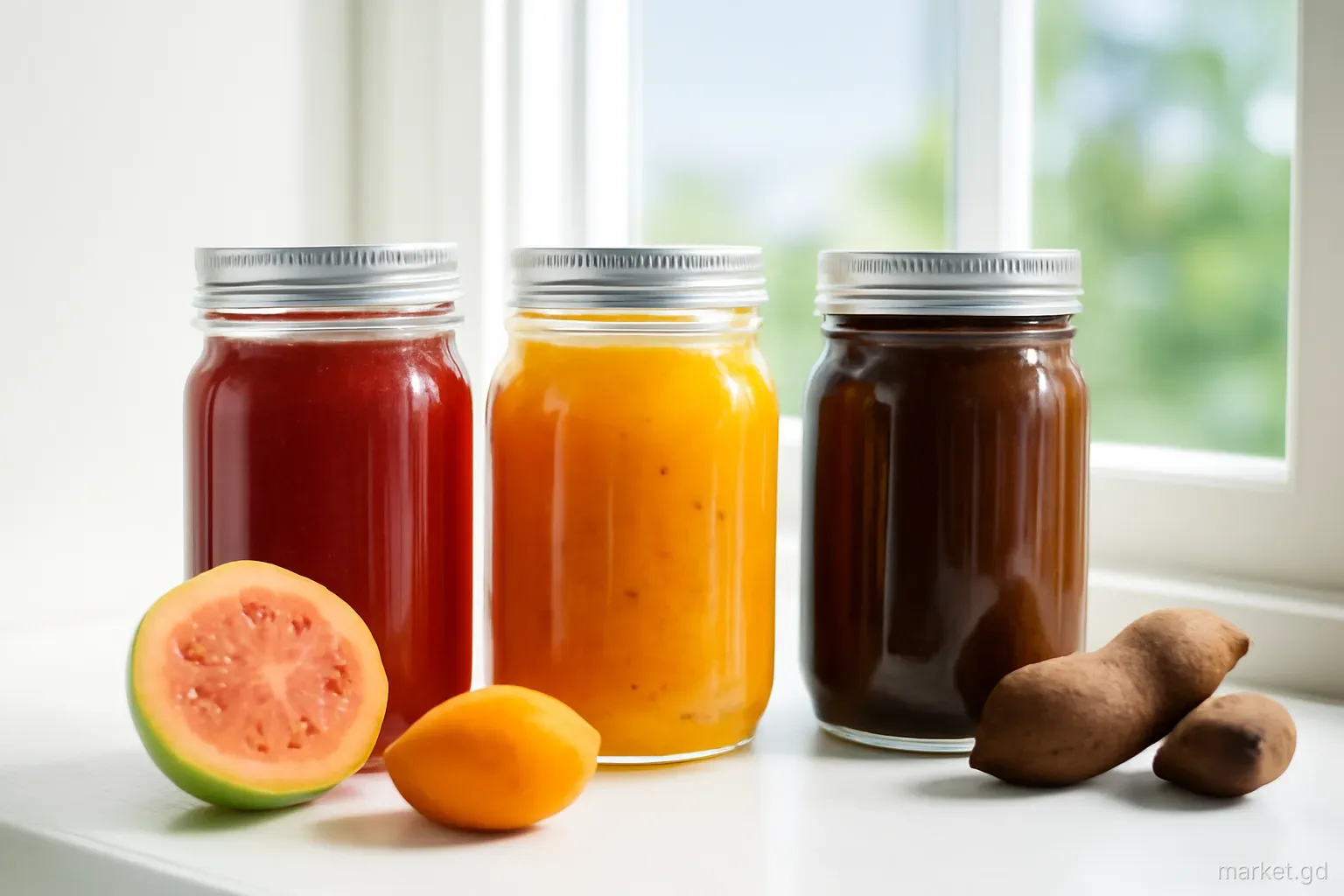
Guava jelly. A clear, deep pink to red jelly made from guava juice cooked with sugar. Guava is rich in pectin, so it sets firmly. Eaten on bread, crackers and with cheese, and used in baking. Guava cheese, a much firmer paste cut into squares, is a related confection.
Golden apple chutney. Golden apple, known elsewhere as June plum or ambarella, is tart and crunchy when green. Cooked with sugar, vinegar, pepper and spices, it makes a sharp, spicy chutney served with curry, rice and roti.
Mango chutney. Green or half-ripe mango cooked with sugar, vinegar, garlic, ginger and pepper. Thick and sweet-sour, a staple alongside curries and grilled meats.
Tamarind sauce. Sour tamarind pulp cooked with sugar, pepper and sometimes garlic or spices. Used as a dipping sauce for fried foods, with doubles-style snacks and with meat.
Soursop, passion fruit and other jams. Soursop, passion fruit, pineapple, carambola and West Indian cherry appear in jams and jellies from small producers, often seasonally.
Sorrel jam and jelly. Made from the deep red sorrel calyces available around Christmas, tart and fruity, sometimes spiced with clove and cinnamon.
How seasons shape the shelf
Fruit preserves follow the fruit. Mango season generally runs from late spring into summer, which is when chutney producers buy in quantity. Golden apple has a long season with heavier periods, and guava fruits through much of the year, with peaks after the rains. Sorrel is a Christmas crop, so sorrel jam appears from around November.
Small producers often make large batches when fruit is cheap and plentiful, then sell through the year until stock runs out. Some freeze pulp to process later, which extends production. That means a favourite product may disappear for weeks between seasons, especially from small brands.
Weather shapes supply too. Drought reduces fruit size and yield; hurricanes can strip trees for a season or more. After a bad year, expect fewer local preserves and higher prices.
For buyers, the practical result is simple: if you find a preserve you love from a small producer, buy a few jars rather than one. It may not be on the shelf next time.
Judging quality in a jar
The first check is the ingredients list. In a good preserve, fruit comes first, then sugar, with acid such as lime juice or vinegar and perhaps pectin. Jams that list sugar, water, colouring and flavouring ahead of fruit are fruit-flavoured spreads rather than real preserves.
Look at the jar against the light. Guava jelly should be clear or slightly cloudy and set firmly; runny jelly may have been undercooked. Chutneys should show recognisable pieces of fruit. Unnaturally bright colours suggest added colouring.
The seal and date matter. A jar should be properly sealed with no rust on the lid, and a best-before or production date shows the producer is tracking stock. At markets, buy from sellers who can tell you when and where the batch was made.
Taste matters most, of course. A good guava jelly tastes of guava, not just sugar; a good chutney balances sweet, sour and heat. Market vendors often have an opened jar for tasting, and it is reasonable to ask.
Using Grenadian preserves at home
Fruit preserves are versatile. A few ways Grenadians and visitors use them:
- Serve guava jelly with cream cheese or hard cheese on crackers, or spread it on hot bakes and coconut bread.
- Pair golden apple or mango chutney with curry chicken, goat, channa and roti.
- Use tamarind sauce as a dip for fish cakes, accra, fried plantain and pholourie.
- Brush guava jelly or mango chutney over grilled chicken, ham or pork near the end of cooking for a sticky glaze.
- Stir passion fruit or soursop jam into plain yoghurt, or use it to fill cakes and tarts.
- Mix a little chutney into mayonnaise for a sandwich spread with a Grenadian edge.
Chutney and tamarind sauce also make good partners for cheese boards and sandwiches abroad, which is why they are among the most popular preserves visitors take home. A jar of golden apple chutney is something most overseas supermarkets cannot offer.
Storage and safety
Preserves keep well when made and stored properly, but heat and humidity are hard on them:
- Store unopened jars in a cool, dark cupboard rather than a sunny window or hot shop display.
- Refrigerate after opening, and use a clean spoon each time to avoid introducing mould.
- Discard any jar with mould, fizzing, a bulging lid or an off smell.
- Homemade preserves low in sugar or acid spoil faster; refrigerate and eat them within a few weeks.
- Reused jars should be thoroughly cleaned and sterilised before filling.
- Wrap glass jars carefully if taking them home, and pack them in checked luggage.
Grenada's humidity is the hidden enemy of opened jars. A jam that keeps for weeks in a cool northern fridge may grow mould faster in a kitchen fridge that is opened often in the heat. Buying smaller jars, and finishing them before opening the next, avoids waste.
Making preserves from your own fruit
If you have a tree, preserving is the natural answer to a glut. Guava jelly needs only guavas, sugar, water and lime; the fruit's own pectin does the setting. Chutneys need fruit, sugar, vinegar and spices, and they are forgiving for beginners. Tamarind sauce starts with pulp soaked from the pods.
Clean, sterilised jars and lids are essential, as is enough sugar and acid for preservation. Fill jars while hot, seal immediately and let them cool undisturbed. Label each jar with the contents and date.
Home preserves make generous gifts, but if you plan to sell them, health and labelling requirements apply. Producers who started this way and now sell in shops usually began by sharing jars with neighbours, then sold at markets, then approached shops once their recipe and supply were steady.
A simple test for setting jelly is to drop a little on a cold saucer: if it wrinkles when pushed with a finger after a minute, it is ready to jar.
Prices and what drives them
Local preserves usually cost more per jar than imported jams from large overseas factories, and the gap surprises some shoppers. The reasons are structural. Glass jars and lids are mostly imported in small quantities at high unit cost. Sugar is imported too. Fruit has to be picked, washed, peeled and cooked by hand, often in batches of a few dozen jars at a time.
Prices also move with the seasons. In a glut year, fruit is cheap and producers may hold prices steady while making more stock. After drought or a storm, fruit becomes scarce and some products vanish or rise in price. Gift shops add their own margin on top.
For the best value, buy at markets and supermarkets rather than gift shops, and consider larger jars of the preserves you use often. For gifts, the smaller jars sold at markets and fairs are often the same product as the beautifully wrapped versions in tourist shops, at a lower price.
Frequently asked questions
What is golden apple in Grenada?
Golden apple is the fruit known in other places as June plum, ambarella or pommecythere. It has a tart, crunchy flesh and a spiny seed. Grenadians eat it green with salt and pepper, juice it, and cook it into chutney, a sharp, spicy preserve served with curry and rice.
How do you use guava jelly?
Spread it on bread, bakes or crackers, pair it with cream cheese or hard cheese, use it to fill cakes and tarts, or brush it over grilled meat as a glaze. Guava jelly sets firmly because guavas contain plenty of natural pectin, and it keeps well when refrigerated after opening.
When is mango season in Grenada?
Mango season generally runs from late spring through summer, with heavy fruiting in many areas around May to August, though timing varies by variety, location and weather. Chutney producers buy most of their green mangoes then, so local mango chutney is often most plentiful in the months that follow.
Do Grenadian jams need refrigeration?
Unopened, properly sealed jars keep in a cool cupboard. Once opened, refrigerate them to prevent mould and fermentation in the island's heat. Homemade or low-sugar preserves are more fragile and should be refrigerated and used within a few weeks. Discard any jar showing mould or fizzing.
Can fruit preserves be taken home from Grenada?
Commercially sealed jams, jellies and chutneys are generally allowed in checked luggage and accepted by many countries as processed food. Wrap jars against breakage and seal them in plastic bags. In hand luggage they count as liquids or gels, so larger jars will be confiscated at security.