Ask a Grenadian cook what makes stew chicken taste right and the answer rarely starts with a spice jar. It starts with seasoning: a green blend of chive, thyme, garlic, pepper and herbs rubbed into meat or fish hours before cooking. Then comes browning, the dark burnt-sugar liquid that gives stews their colour, and for many dishes a spoon of curry. These are the bottled staples that line Grenadian kitchen shelves alongside whole nutmeg and cinnamon.
Many households still make their own, but bottled versions from local and regional producers are widely sold in supermarkets, minimarts and markets. This guide explains what each product is, how it is used in Grenadian cooking and how to choose and store bottled versions.
Green seasoning: the base of everything
Green seasoning is a blended paste or sauce of fresh herbs and aromatics. Typical ingredients include chive (the local scallion-like green onion), fine thyme and broad-leaf thyme, parsley, celery, garlic, onion, seasoning peppers, a little hot pepper, and often culantro, known in the region as chadon beni or shadow benny. Some cooks add ginger, lime juice or vinegar.
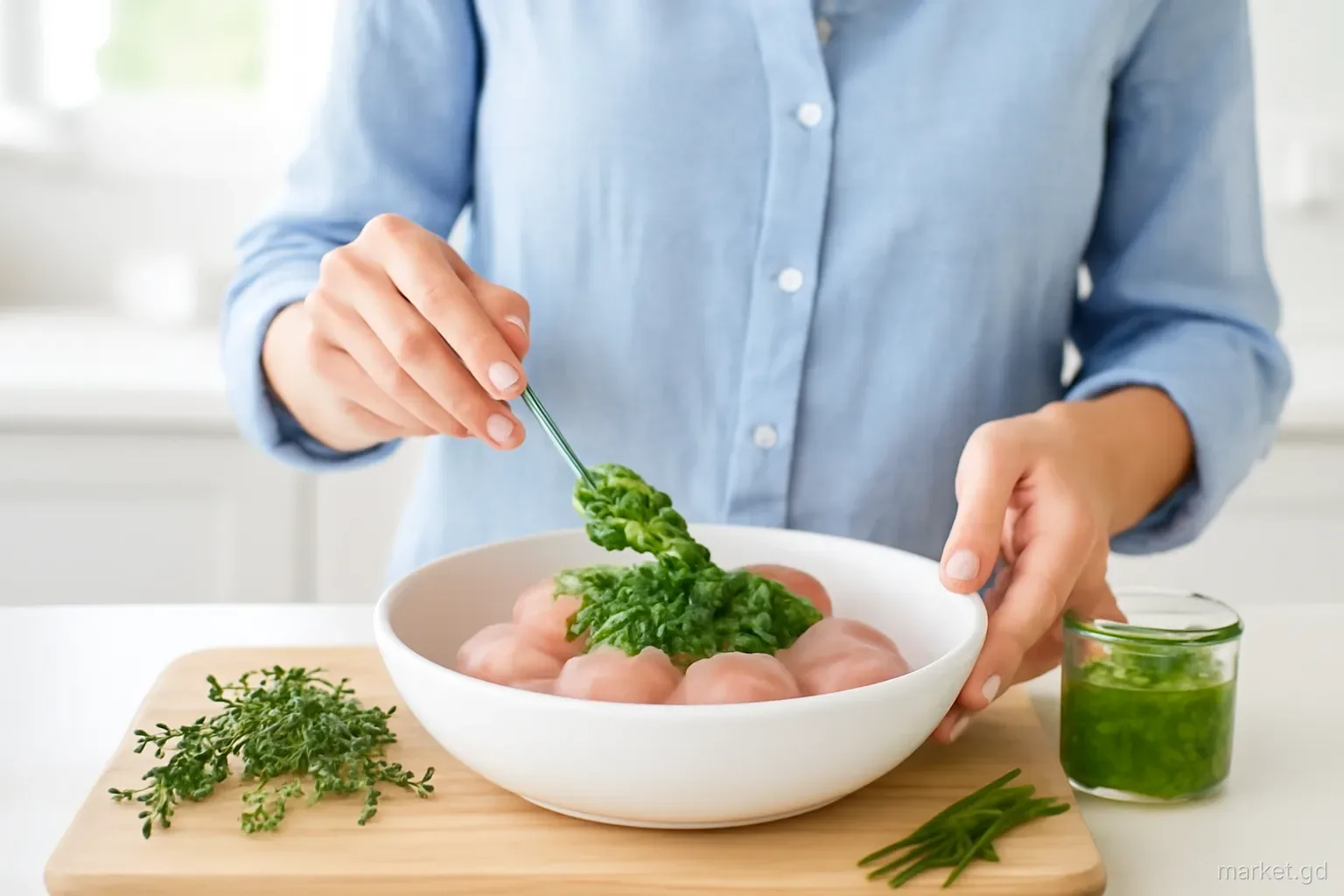
It is used as a marinade for chicken, pork, fish and beef, stirred into stews and soups, mixed into rice and peas and added to oil down. Meat is often washed with lime or vinegar, then rubbed with seasoning and left for several hours or overnight before cooking.
Bottled green seasoning varies widely. Some versions are fresh-tasting and herb-forward, others rely heavily on salt, vinegar and preservatives, and a few are coloured artificially. Homemade seasoning keeps for a week or two in the fridge, or longer frozen in small portions.
Browning: colour and depth
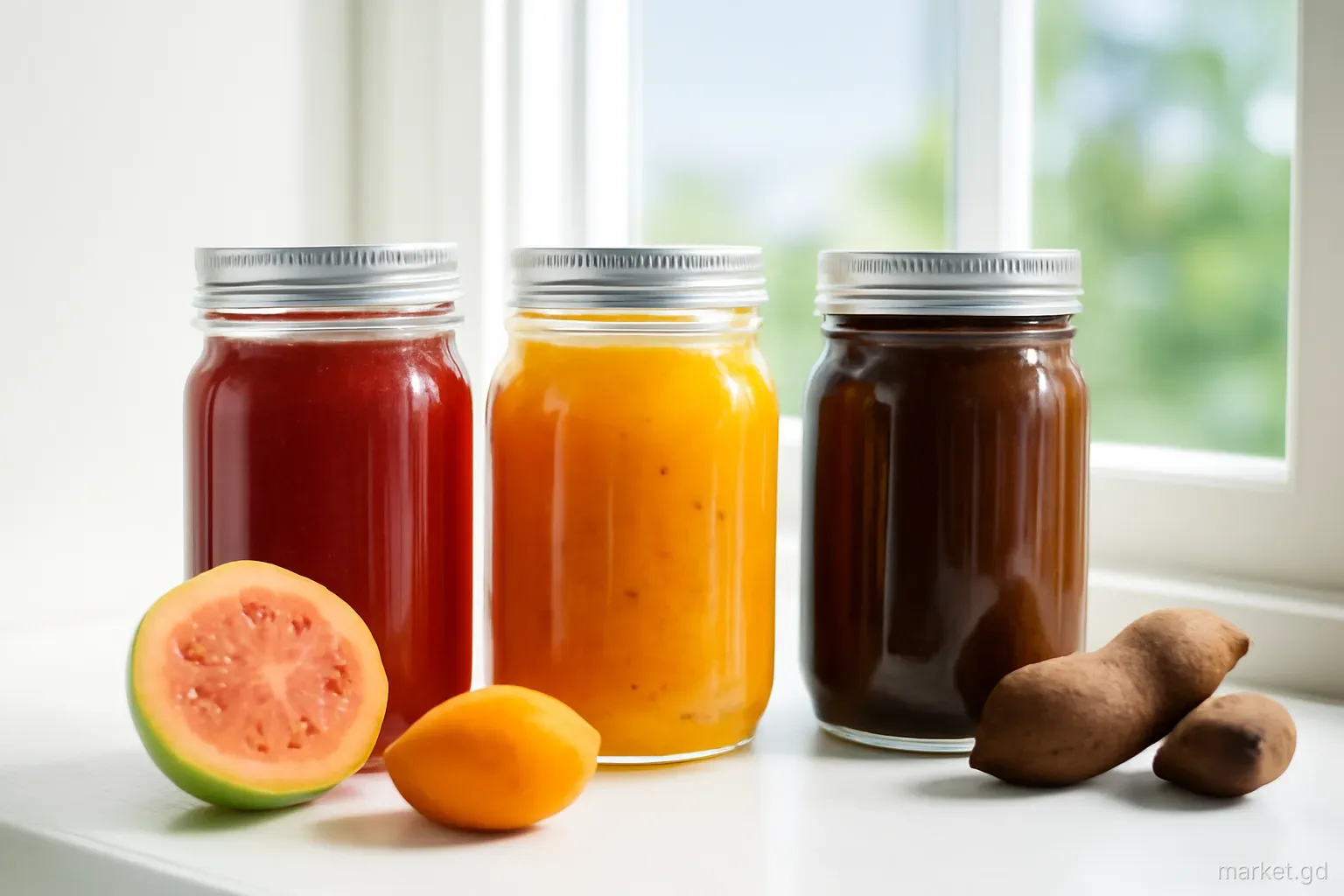
Browning is sugar cooked until very dark and then thinned, giving a bitter-sweet liquid that colours stews and gravies a deep brown. In Grenadian kitchens, many cooks "burn" sugar directly in hot oil at the start of a stew, a technique that takes practice to judge without scorching it. Bottled browning removes the risk and gives consistent colour.
Browning is also used in black cake, the rich Christmas fruit cake, where it gives the characteristic dark colour. A little goes a long way; too much makes food bitter.
When buying, check the ingredients: some products are simply caramelised sugar and water, others contain added salt or colouring. Store at room temperature, tightly closed; browning keeps for a long time.
If you want to learn the burnt-sugar method, start with a heavy pot, a little oil and brown sugar over medium heat. Watch closely as the sugar melts, bubbles and darkens; when it is a deep brown and just starting to smoke, add the seasoned meat at once to stop it burning. Have the meat ready beside the stove before you begin, because the window between perfect and burnt is short.
Curry, spice blends and seasoning salts
Curry powder. Grenada's Indian heritage, dating from indentured labourers who arrived in the nineteenth century, shows in curried chicken, goat, lambi, channa and potato. Curry powders sold locally include Caribbean-style blends rich in turmeric, coriander, cumin and fenugreek, some made in Grenada and many imported from Trinidad and elsewhere.
Turmeric, called saffron. Grenadians commonly call turmeric "saffron". It is grown locally and sold fresh as roots or dried and ground. Local ground turmeric is often brighter and more aromatic than imported powder.
Seasoning salts and all-purpose blends. Salt mixed with garlic, onion, herbs and spices, used on fish, meat and vegetables. Quality varies; some are mostly salt and flavour enhancers.
Baking spice blends. Mixtures of nutmeg, cinnamon, clove and allspice for sweet bread, cakes and cocoa tea. Grenadian-made blends often feature local nutmeg prominently.
Pickling and pepper mixes. Mixes for souse, pickled cucumber and chow, combining pepper, lime, herbs and salt, sold in bottles or packets.
Choosing a good bottled seasoning
With many brands on the shelf, a few checks help separate the useful from the disappointing:
- Read the ingredients: herbs and aromatics should come before salt and water in a good green seasoning.
- Check the colour: a natural green seasoning is olive to deep green, not neon.
- Look for the producer details and date mark, and prefer Grenadian or regional producers if you want local flavour.
- Smell after opening: fresh herbs and garlic should be obvious, not just vinegar.
- Buy small first, try it on a familiar dish and compare with homemade before committing to a large bottle.
- For curry, buy small packs and use within a few months; the aroma fades quickly in the heat.
Price is a useful guide only up to a point. Cheap seasonings often rely on salt and water, while the best bottled versions cost more because fresh herbs are expensive to grow, clean and blend. Compare the ingredients rather than the size of the bottle.
Mistakes that spoil the dish
Seasonings are forgiving, but a few habits lead to disappointing results:
- Over-salting. Many bottled seasonings already contain plenty of salt; taste before adding more.
- Burning curry. Curry powder should be cooked gently in oil, often with a little water, to release flavour without scorching.
- Too much browning. It makes food bitter and unnaturally dark; add a little at a time.
- Keeping green seasoning out of the fridge. Fresh, preservative-free versions spoil quickly at room temperature.
- Storing spices near the stove. Heat and steam dull their flavour; keep jars in a cool cupboard.
Another frequent mistake is using bottled seasoning as the only flavouring. Grenadian cooks typically layer flavours: seasoning in the marinade, fresh herbs and garlic in the pot, a whole pepper for aroma and a squeeze of lime at the end. Bottled products are a shortcut for the first layer, not a replacement for the whole method.
Making your own versus buying
Many Grenadians would say homemade green seasoning is always better, and fresh herbs from the market make it cheap to prepare. A blender, a bunch of chive, thyme, celery, parsley, garlic, onion and peppers, and a little vinegar or lime produce a big batch in minutes. Freezing it in ice-cube trays gives ready portions for weeks.
Bottled products make sense for busy households, for people living abroad who cannot find fresh chive and chadon beni, and for visitors who want to take the flavours home. Grenadian-made bottled seasonings are also a way for small producers to sell herbs from local farms, adding value to crops that would otherwise be sold fresh at low prices.
Whichever route you choose, the market is where ingredients are freshest. Herb sellers at Market Square in St George's and in the Grenville market sell seasoning bundles ready for blending.
One practical tip for anyone living abroad: chive and chadon beni are the hardest herbs to replace, and bottled Grenadian seasoning is often the easiest way to get close. Spring onion and coriander are the usual stand-ins, but the flavour is noticeably different, which is why many diaspora kitchens keep a bottle from home in the fridge.
Seasonings in signature Grenadian dishes
Knowing which staple goes where makes local recipes easier to follow. A quick reference:
- Oil down. Green seasoning, chive, thyme, a whole hot pepper and turmeric with the breadfruit, salted meat, dumplings and coconut milk.
- Stew chicken. Overnight marinade in green seasoning, then browning or burnt sugar for colour, with onion, garlic and tomato.
- Curry chicken or goat. Curry powder cooked in oil, with green seasoning in the marinade and sometimes a spoon of turmeric for colour.
- Fish broth and fried fish. Lime, green seasoning, thyme and pepper; seasoning salt for frying.
- Souse. Lime, cucumber, onion, pepper and herbs, often bottled or packet pickling mixes.
- Black cake and sweet bread. Browning in the cake, and baking spice blends heavy on nutmeg and cinnamon in both.
- Rice and peas or pelau. Green seasoning and chive, with browning or burnt sugar in pelau for colour.
Frequently asked questions
What is in Grenadian green seasoning?
Grenadian green seasoning is usually a blend of chive, thyme, parsley, celery, garlic, onion and seasoning peppers, often with culantro, known locally as chadon beni, and a little hot pepper, vinegar or lime. Recipes vary by family. It is used to marinate meat and fish and to flavour stews, soups and rice.
What is browning used for in Grenadian cooking?
Browning is dark caramelised sugar used to colour and add depth to stews, gravies and black cake. Many cooks burn sugar in oil at the start of cooking stew chicken or beef, while others use bottled browning for consistent colour. Add it sparingly, as too much makes food bitter.
Why do Grenadians call turmeric saffron?
Across much of the Caribbean, including Grenada, turmeric is commonly called saffron, probably because it gives food a similar yellow colour to true saffron, which is far more expensive. Grenadian turmeric is grown locally and sold fresh or ground, and it is used in curries, rice dishes and pepper sauces.
How long does homemade green seasoning keep?
Homemade green seasoning without preservatives usually keeps around one to two weeks in a clean, closed jar in the fridge. Adding vinegar or lime helps it last a little longer. For longer storage, freeze it in small portions, such as ice-cube trays, and use the cubes straight from frozen.
Is Grenadian curry powder different from Indian curry powder?
Caribbean curry powders, including those used in Grenada, are often heavier on turmeric and coriander and are typically cooked in oil before the meat is added. They reflect Indian origins adapted over generations in the Caribbean. Blends differ between brands, so try a few to find the flavour you prefer.