Most of the world knows nutmeg as a hard brown seed grated over eggnog. In Grenada, it is a whole fruit, and almost every part of it ends up somewhere. The seed becomes the spice, its red lacy covering becomes mace, and the yellowish fleshy outer fruit, the pericarp, which farmers once mostly threw away, becomes syrup, jelly, jam, candy and even wine. Oil distilled from the spice goes into rubs and sprays sold in pharmacies and spice stalls.
This guide explains the main nutmeg products made in Grenada, what each one is, how it is used in Grenadian kitchens and homes, and what to look for when buying. It focuses on products rather than the history of the crop, which has been shaped by Hurricane Ivan in 2004 and a slow recovery of the island's nutmeg trees since.
One fruit, several products
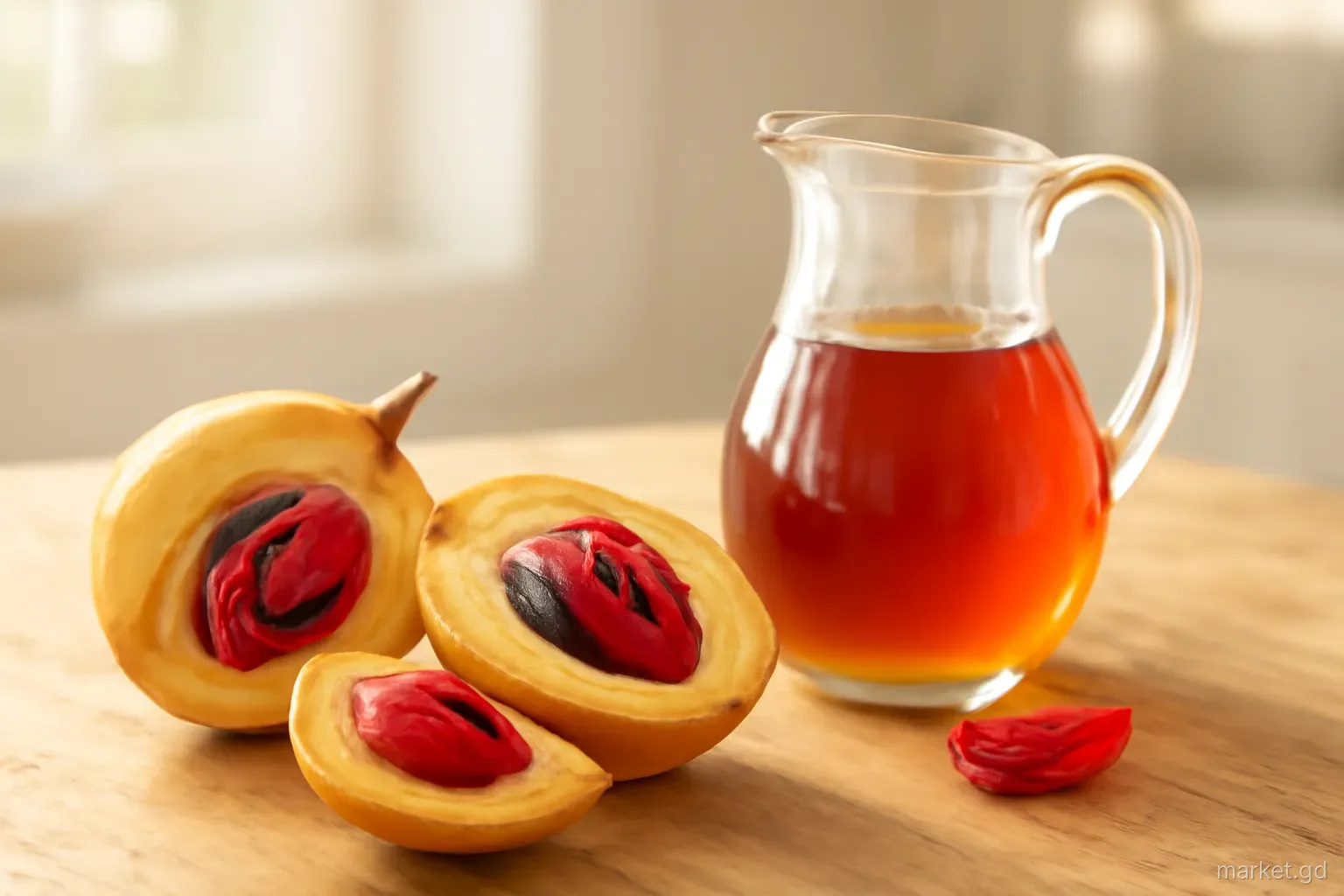
The nutmeg fruit looks a little like an apricot. When ripe, it splits open on the tree to show a dark seed wrapped in bright red mace. Farmers collect fallen and split fruit, separate the mace by hand and deliver seed and mace to the processing stations of the Grenada Cooperative Nutmeg Association, including the well-known station at Gouyave in St John's, where nutmegs are dried, cracked, graded and packed.
The pericarp is the part that varies most in how it is used. It is thick, fibrous and very sour when raw, with a faint nutmeg aroma. Cooked with sugar, it releases pectin and flavour, which is why it makes good jelly and jam. Small processors and home cooks buy or collect pericarp during the harvest, and the season and supply affect how much pericarp product appears in shops.
Nutmeg oil is distilled from the seed, often from lower-grade nuts unsuitable for sale as whole spice. It is used in fragrances, food flavouring and in locally made pain-relief rubs and sprays, which have become one of the island's best-known nutmeg products.
The main products and how they are used
Nutmeg syrup. A sweet, aromatic syrup made from the pericarp or flavoured with nutmeg, poured over pancakes, waffles, ice cream and fruit, stirred into drinks or used to glaze meat. Consistency and sweetness vary widely between producers.
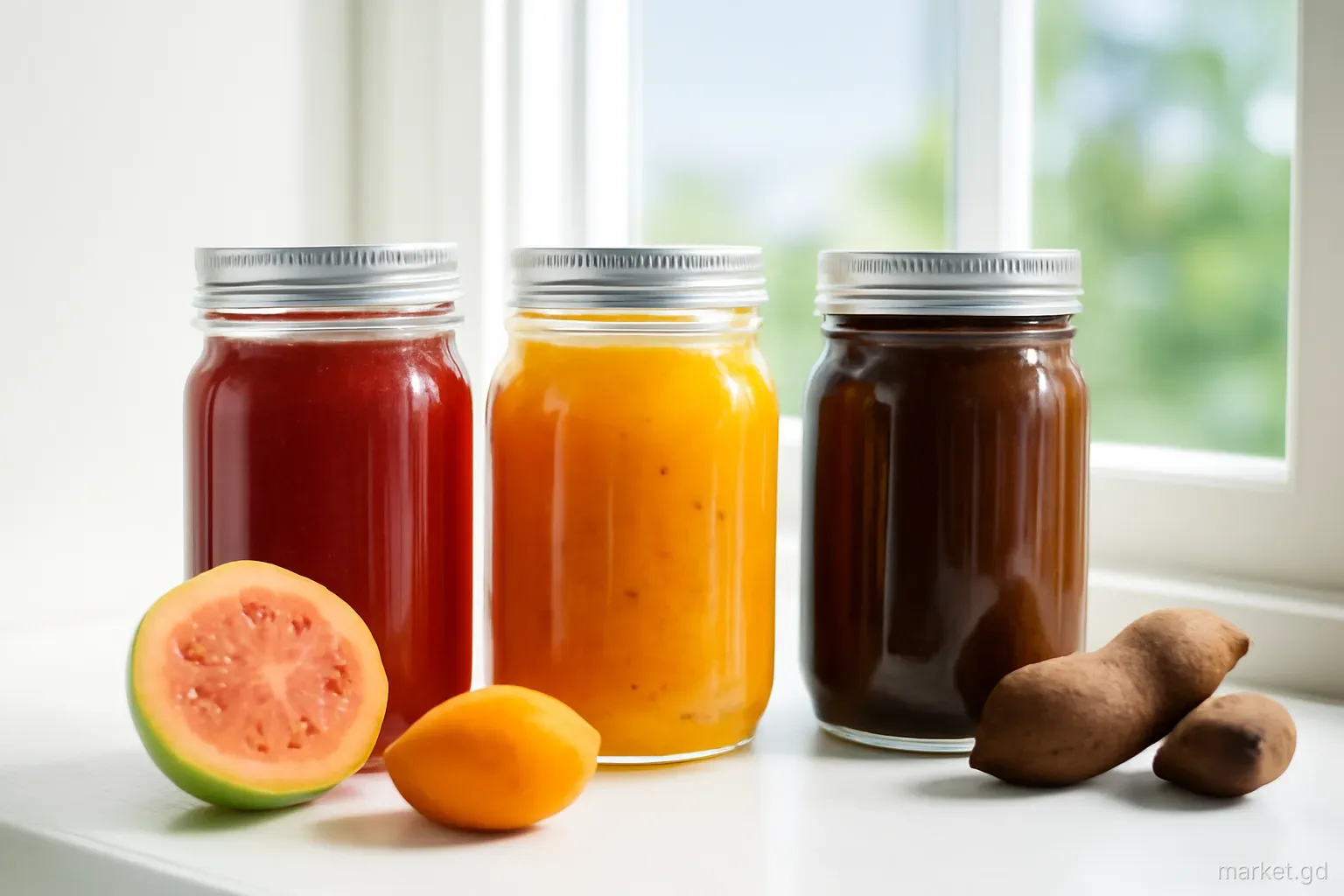
Nutmeg jelly and jam. Clear or slightly cloudy jelly from the pericarp juice, or a thicker jam with pieces of fruit. Eaten on bread, crackers and with cheese, and given as gifts.
Nutmeg candy and sweets. Pieces of pericarp cooked in syrup, sometimes coated in sugar, sold in small bags at markets and by vendors.
Whole nutmeg and mace. The spice itself, best bought whole and grated fresh. Mace has a more delicate, slightly floral flavour and is used in baking and in some savoury dishes.
Nutmeg oil rubs and sprays. Sold as topical products for aches and pains. Treat them like any other over-the-counter product: follow the directions and avoid broken skin and eyes.
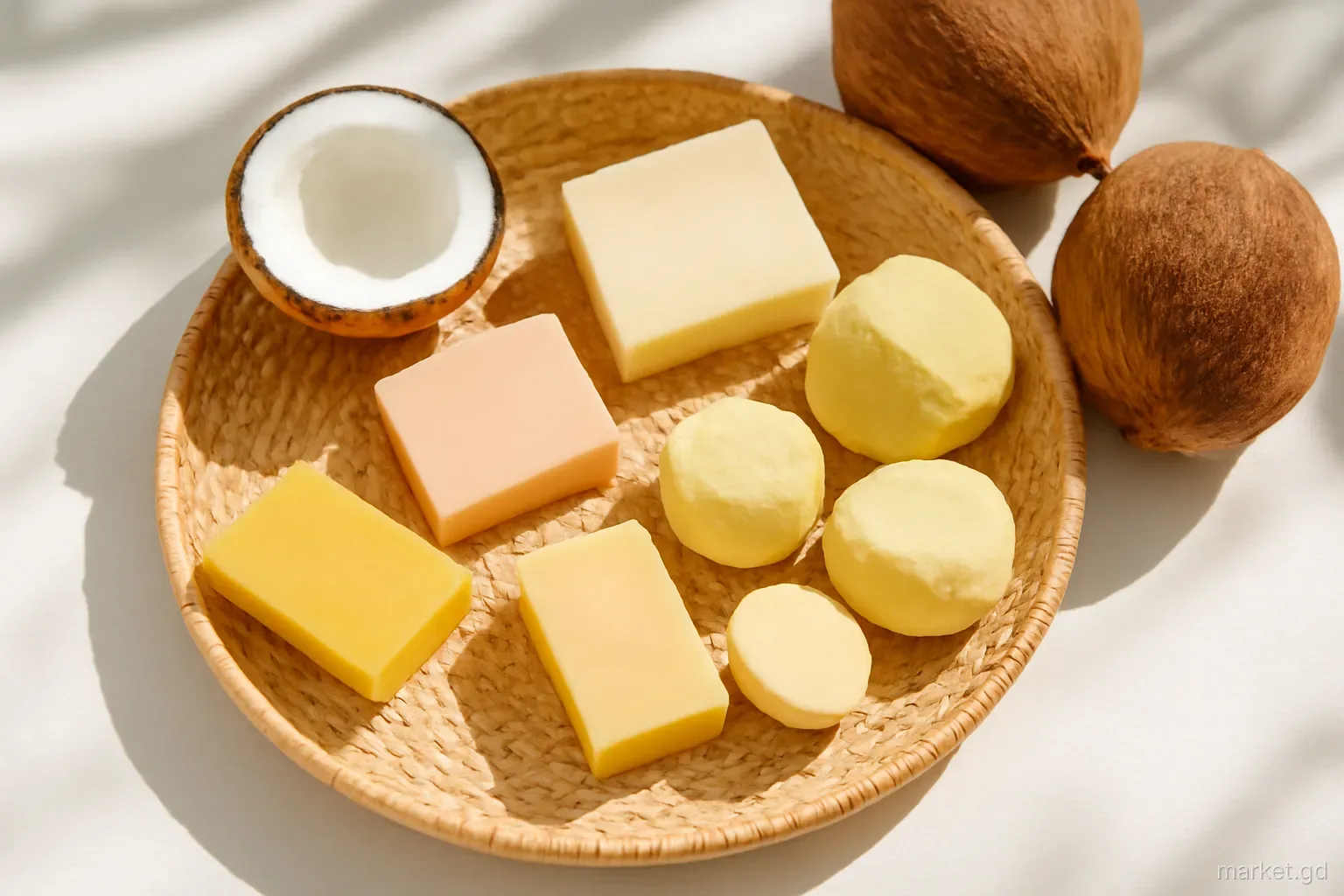
Nutmeg in other products. Nutmeg appears in local soaps, lotions, ice cream, rum punch mixes and chocolate, and is the defining spice in many Grenadian drinks and baked goods.
Look out too for products combining nutmeg with other local crops: nutmeg and cocoa spreads, nutmeg and ginger syrups, and spice blends for baking that pair nutmeg with cinnamon and clove. Their quality depends on the producer, so tasting before buying in quantity is worthwhile.
Nutmeg in the Grenadian kitchen
Grated nutmeg is everywhere in Grenadian cooking: on top of rum punch, in cocoa tea, in eggnog and punch at Christmas, in sweet bread and black cake, and in savoury dishes such as macaroni pie and stewed meats. Most kitchens keep a few whole nutmegs and a small grater rather than ground spice, because the difference in aroma is obvious.
Syrup and jelly are newer additions in many homes, often bought as treats or gifts rather than staples. A spoon of nutmeg syrup in a glass of cold water with lime makes a simple drink; brushed on grilled chicken or pork towards the end of cooking, it gives a sweet, spiced glaze. Jelly works with soft cheese, roast pork or simply on bread.
Mace is used more sparingly, often in baking or with fish. Because it costs more and is harvested in smaller quantities, it is worth buying in small packs and keeping sealed away from light.
For Christmas, nutmeg plays a starring role. It flavours the homemade rum punch, ponche de crème and sorrel served to visitors, and it is grated generously into black cake batter. Many families buy a fresh supply of whole nuts in November for the season's baking.
Buying nutmeg products well
Quality varies between producers and batches. A few habits help:
- Buy whole nutmeg rather than ground, and choose nuts that feel heavy for their size. If still in the shell, shake them: a loose rattle means the nut has dried properly inside.
- Check the ingredients on syrups. Some are made from the pericarp itself, others are sugar syrup flavoured with nutmeg oil or essence; both can be good, but they taste different.
- Look for a production or best-before date on syrups and jellies, and choose stock kept out of direct sun.
- For oil-based rubs, check the producer details and directions, and keep them away from children.
- Ask at the processing station, at Market Square in St George's or at Gouyave whether products are from the current harvest.
- If you are taking products abroad, pack jars in sealed bags and check the destination's food import rules.
Whole nutmeg keeps for a long time in an airtight jar away from heat. A small fine grater, sold at markets and spice stalls, is the one tool needed to use it; many visitors buy one with their first bag of nuts.
Mistakes and misunderstandings
Nutmeg products are easy to enjoy, but a few points are often misunderstood:
- Treating nutmeg as harmless in any quantity. Nutmeg contains compounds that can cause unpleasant effects if large amounts are eaten. Normal culinary use is safe; eating whole nuts or large spoonfuls of powder is not.
- Expecting identical flavour from every syrup. Recipes differ widely, from tart and fruity to very sweet and spicy.
- Assuming nutmeg oil products are medicines. They are sold as topical rubs; serious or persistent pain needs medical advice.
- Storing ground nutmeg for years. It loses aroma within months once ground. Whole nuts keep far longer.
- Leaving opened syrup in the heat. Once opened, refrigerate syrups and jellies unless the producer says otherwise, to prevent fermentation or mould.
Nutmeg oil products, like other concentrated essential oils, are for external use unless the producer clearly states otherwise. Keep them out of reach of children, who may mistake small bottles for something to drink.
Seasonality, supply and price
Nutmeg trees bear for much of the year, with heavier harvest periods that vary by area and year. Pericarp products depend on processors getting fresh fruit, so availability of a particular syrup or jelly can come and go. Prices for whole nutmeg and mace follow the international market and local supply, which has been affected by the long recovery from Hurricane Ivan and by later storms.
Because of that, treat any price you see as a snapshot. In general, nutmeg bought from producers, markets and processing points is better value than decorative souvenir packs, and mace always costs more per gram than nutmeg. Syrups and jellies are priced more like gourmet preserves, reflecting the cost of jars, sugar and labour.
One useful way to judge value is to compare price per gram rather than per jar, especially for whole spices sold in decorative packs. A plain bag of whole nutmeg from a market vendor often costs a fraction of a gift basket containing the same weight, and the spice inside is usually fresher.
Frequently asked questions
What is nutmeg syrup made from?
Grenadian nutmeg syrup is usually made by cooking the nutmeg pericarp, the fleshy outer fruit, with sugar and water, or by flavouring sugar syrup with nutmeg. Recipes vary between producers, so the colour, sweetness and strength differ. The ingredients list on the bottle shows which method was used.
How do you use nutmeg syrup?
Pour it over pancakes, waffles, ice cream or fruit, stir it into cold water with lime for a quick drink, or use it as a glaze for grilled chicken, pork or ham near the end of cooking. Some people add a little to rum punch or tea. Refrigerate once opened unless the producer says otherwise.
What is nutmeg jelly?
Nutmeg jelly is a preserve made from the juice of the nutmeg pericarp cooked with sugar. The pericarp contains natural pectin, so it sets well. It has a sweet, slightly tart taste with a gentle nutmeg aroma and is eaten on bread or crackers, or served with cheese and roast meats.
Where is nutmeg processed in Grenada?
Nutmeg and mace are processed at stations run by the Grenada Cooperative Nutmeg Association, the best known being in Gouyave, St John's, where visitors can often see drying, cracking and sorting. Opening arrangements for visitors can change, so check before you go. Syrups and jellies are made by separate small processors.
Is it safe to eat a lot of nutmeg?
Normal amounts used in cooking and drinks are safe for most people. Very large quantities, such as several teaspoons of ground nutmeg or a whole nut eaten at once, can cause nausea, dizziness and other unpleasant effects. Keep whole nutmegs and nutmeg oil products away from children.