Most people eat chocolate rather than taste it: a square goes in, gets chewed twice and is gone. That works for a supermarket bar built around sugar and vanilla. It wastes a good Grenadian dark bar, where the interest lies in the cocoa itself, in fruity, earthy or spicy notes that only show up when the chocolate is allowed to melt slowly. Grenada's cocoa has long been sold abroad for its fine flavour, and the island's own makers produce bars that are generally darker, less sweet and more distinctive than mass-market chocolate.
Tasting properly takes no special equipment and about ten minutes. This guide sets out a method used by chocolate judges and makers, adapted for a hotel balcony or a kitchen table, explains how to compare several bars side by side, and gives the vocabulary that helps you notice what you are tasting. It also covers the common mistakes that flatten flavour, from eating straight from the fridge to tasting after a rum punch.
Before you start: conditions that matter
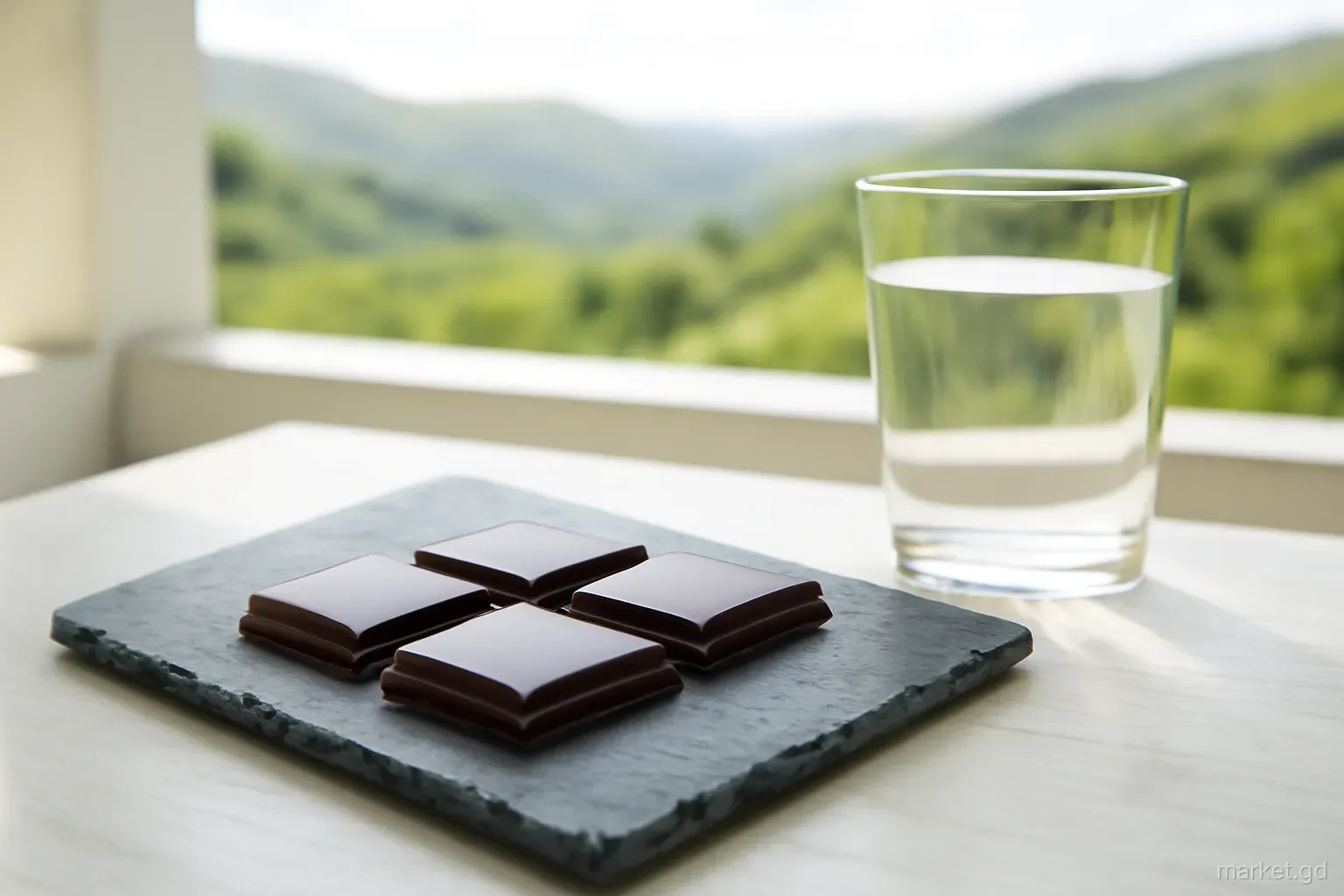
Temperature affects flavour more than anything else. Chocolate tasted straight from a fridge releases very little aroma and melts slowly and waxily. Tasted after sitting in the Grenadian afternoon sun, it is soft, greasy and smeared with bloom. The ideal is room temperature in a cool room, roughly 18 to 22 degrees Celsius, which in Grenada usually means an air-conditioned room or early morning. Take the bar out of the fridge half an hour before tasting, still wrapped, so condensation does not form on the surface.
Your palate needs to be clean and rested. Avoid tasting immediately after a meal, strong coffee, a cigarette, spicy food or alcohol. Mid-morning or mid-afternoon tends to work best. Have room-temperature water to hand, and plain crackers or slices of apple to reset between bars.
Finally, keep portions small. A square of a few grams is plenty for each bar. Tasting more than five or six bars in one session dulls the senses; it is better to taste a few properly than a dozen hurriedly.
The five-step method
Each step tells you something different about the chocolate. Work through them in order with each piece:
- Look. Good dark chocolate has an even, glossy surface and a uniform colour. Grey streaks or a dusty white film are bloom, caused by heat or humidity. Bloom does not make chocolate unsafe, but it signals poor storage and affects texture.
- Snap. Break a square near your ear. Well-tempered dark chocolate breaks with a clean, sharp snap. A dull bend suggests the chocolate is too warm, poorly tempered or high in milk.
- Smell. Rub the broken edge gently with your thumb to warm it, then smell. Note first impressions: roasted, fruity, floral, earthy, nutty, woody. Aroma carries most of what we call flavour.
- Melt. Place the piece on your tongue and let it melt without chewing, pressing it gently against the roof of your mouth. Notice how quickly it melts, whether it feels smooth or grainy, and how flavours change from the first moments to the end.
- Finish. After swallowing, breathe out through your nose and pay attention to what lingers. Fine chocolate leaves a long, pleasant finish; poor chocolate fades fast or leaves a bitter or chalky aftertaste.
The vocabulary of flavour
Fruity. Red fruit, dried fruit, citrus or tropical fruit. Fermentation develops many of these notes, and Grenadian dark chocolate is often described in fruity terms.
Earthy and woody. Notes of forest floor, tobacco, leather or wood. These are common in darker bars and in cocoa from older trees and longer roasts.
Nutty and roasted. Toasted nuts, coffee, malt or bread crust. Roasting brings these out; heavily roasted chocolate can tip into burnt flavours.
Spicy. Hints of warm spice, pepper or vanilla. Some of this comes from the beans themselves, and some bars include actual spices such as nutmeg or cinnamon.
Acidity and bitterness. A bright acidity, like fruit, is a positive quality in fine chocolate. Bitterness is natural in dark chocolate but should be balanced rather than harsh or astringent.
Texture. Smooth or slightly grainy, quick or slow to melt. Small makers sometimes produce a more rustic texture than industrial chocolate, which some tasters enjoy and others do not.
Setting up a home tasting flight
Comparing bars side by side teaches far more than tasting one alone. A flight of four to six bars works well:
- Compare percentages from one maker. Tasting a single maker's bars at, say, around 60, 70 and 80 per cent shows how sugar and cocoa balance change the flavour.
- Compare makers at a similar percentage. Two or three Grenadian dark bars at roughly the same percentage reveal differences in fermentation, roasting and style.
- Include a reference bar. A familiar mass-market dark chocolate from home makes the differences in Grenadian bars much clearer.
- Taste from mildest to strongest. Start with lower percentages and plain bars, and leave flavoured, very dark or 100 per cent bars until last.
- Taste blind if possible. Ask someone to unwrap and number the bars so brand and price do not influence your judgement.
- Take notes. Write down aroma, flavour, texture and finish for each, and which you would buy again. Notes help you remember which bars to bring home.
What Grenadian bars tend to taste like
There is no single Grenadian flavour; it depends on the farm, the fermentation, the roast and the recipe. Still, a few general points hold. Much of Grenada's cocoa is of the Trinitario type, a hybrid valued for combining fine flavour with hardiness, and the island's cocoa has long been classified internationally as fine or flavour cocoa rather than bulk.
Grenadian makers tend to favour dark chocolate with relatively short ingredient lists, often cocoa, cane sugar and cocoa butter, and some offer very high-percentage bars. Tasters often describe fruity, earthy and sometimes spicy notes. Flavoured bars using local ingredients such as nutmeg, sea salt, ginger, coffee or orange are common and can be a good introduction for people who find plain dark chocolate austere.
Because makers are small, batches can vary. A bar tasted in one year may differ slightly from the next, especially after storms or a poor harvest affect the beans. Many enthusiasts see that variation as part of the appeal of chocolate made close to the farm.
Mistakes that flatten flavour
A few habits reliably make good chocolate taste worse:
- Tasting cold from the fridge, or warm and soft from the beach bag.
- Chewing quickly instead of letting the chocolate melt on the tongue.
- Pairing fine chocolate with very sweet drinks or strong spirits during tasting; save pairings for afterwards.
- Tasting too many bars in one sitting, especially very dark ones, which tire the palate quickly.
- Judging a 100 per cent bar like a sweet one. Unsweetened chocolate is intense and bitter by design and suits baking or slow nibbling, not snacking.
- Leaving opened bars uncovered in a humid room, where they absorb odours and bloom within days.
- Tasting next to strong smells, such as perfume, sunscreen, insect repellent or cooking, which interfere with aroma more than most people expect.
- Deciding after one square. Flavour often opens up on a second piece once the palate has adjusted, particularly with very dark bars.
Pairings once the tasting is done
After the serious tasting, pairing is where Grenadian chocolate becomes social. Aged rum is the obvious partner, and Grenada produces both; a small measure of a mellow aged rum alongside a 70 per cent bar brings out caramel and dried-fruit notes in each. Very strong overproof rums overwhelm chocolate and are better left out of the pairing.
Local fruit works well too. Slices of ripe mango, pineapple or golden apple cut the richness of dark chocolate, and roasted cashews or peanuts echo its nutty side. Black coffee, ideally not too heavily roasted, pairs with darker bars, while a cup of Grenadian cocoa tea alongside a bar is chocolate on chocolate, rich but popular.
For a group, a simple board with three bars, fruit, nuts and a small glass of rum makes an easy evening and a good way to decide which bars to buy in quantity before going home.
Frequently asked questions
What percentage should a first Grenadian chocolate bar be?
A bar of around 60 to 70 per cent cocoa is a good starting point. It shows the character of the cocoa without the intense bitterness of very dark bars. Move higher once you are used to less sweet chocolate.
Why does chocolate turn white or grey?
That film is bloom. Fat bloom happens when chocolate gets warm and cocoa butter rises to the surface; sugar bloom comes from moisture. It is safe to eat but affects texture and appearance, and signals poor storage.
Is Grenadian chocolate more bitter than other chocolate?
Grenadian makers mostly produce dark chocolate with less sugar than mass-market bars, so it can taste more intense. Bitterness should be balanced by fruity and earthy notes. Lower-percentage or flavoured bars are gentler.
Does Grenadian chocolate pair well with rum?
Many people enjoy dark chocolate with aged rum, and both are made in Grenada. Taste the chocolate first on its own, then try small sips of rum with it afterwards, as strong spirits can dull the palate during a serious tasting.
How should chocolate be stored in Grenada's heat?
Keep it in a cool, dry, dark place, ideally an air-conditioned room. If you must refrigerate it, wrap it well in an airtight container and let it reach room temperature before unwrapping to avoid condensation.