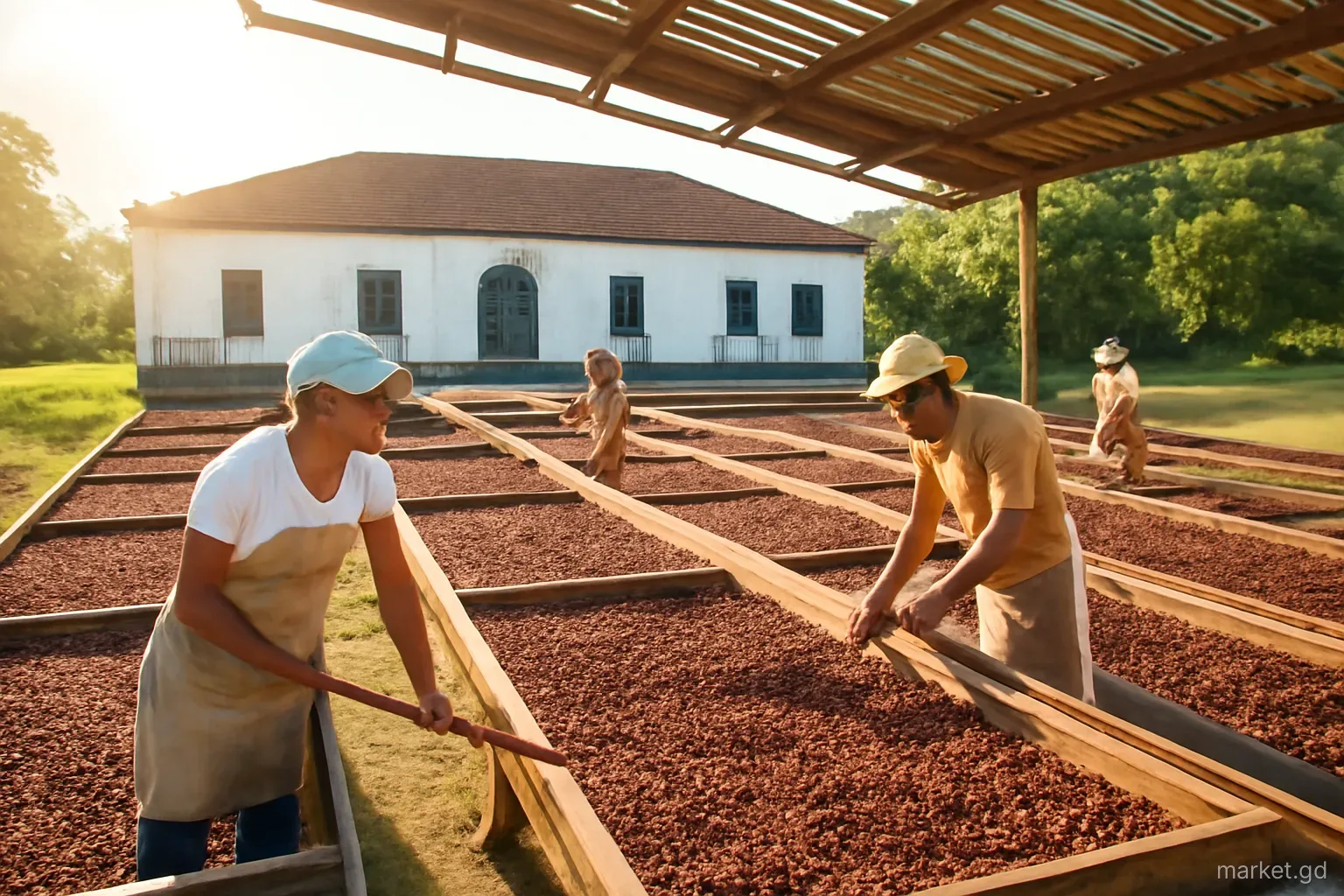
For most of its history, Grenadian cocoa left the island as raw beans in sacks, bound for factories in Europe and North America where it disappeared into blends. It was valued: Grenada's beans were known among buyers for fine flavour and commanded a premium. But almost all the value of the finished chocolate was created somewhere else. Grenadians grew the cocoa and other countries made the chocolate.
That changed at the end of the twentieth century, when a small group of people set out to make fine chocolate in Grenada from Grenadian cocoa. Their company became one of the best-known examples worldwide of chocolate made where the cocoa grows, and it helped inspire a wave of small producers on the island and elsewhere in the tropics. This article traces that story, from colonial cocoa estates to the island's current makers, and explains why the model is harder than it looks.
Cocoa in Grenada before chocolate
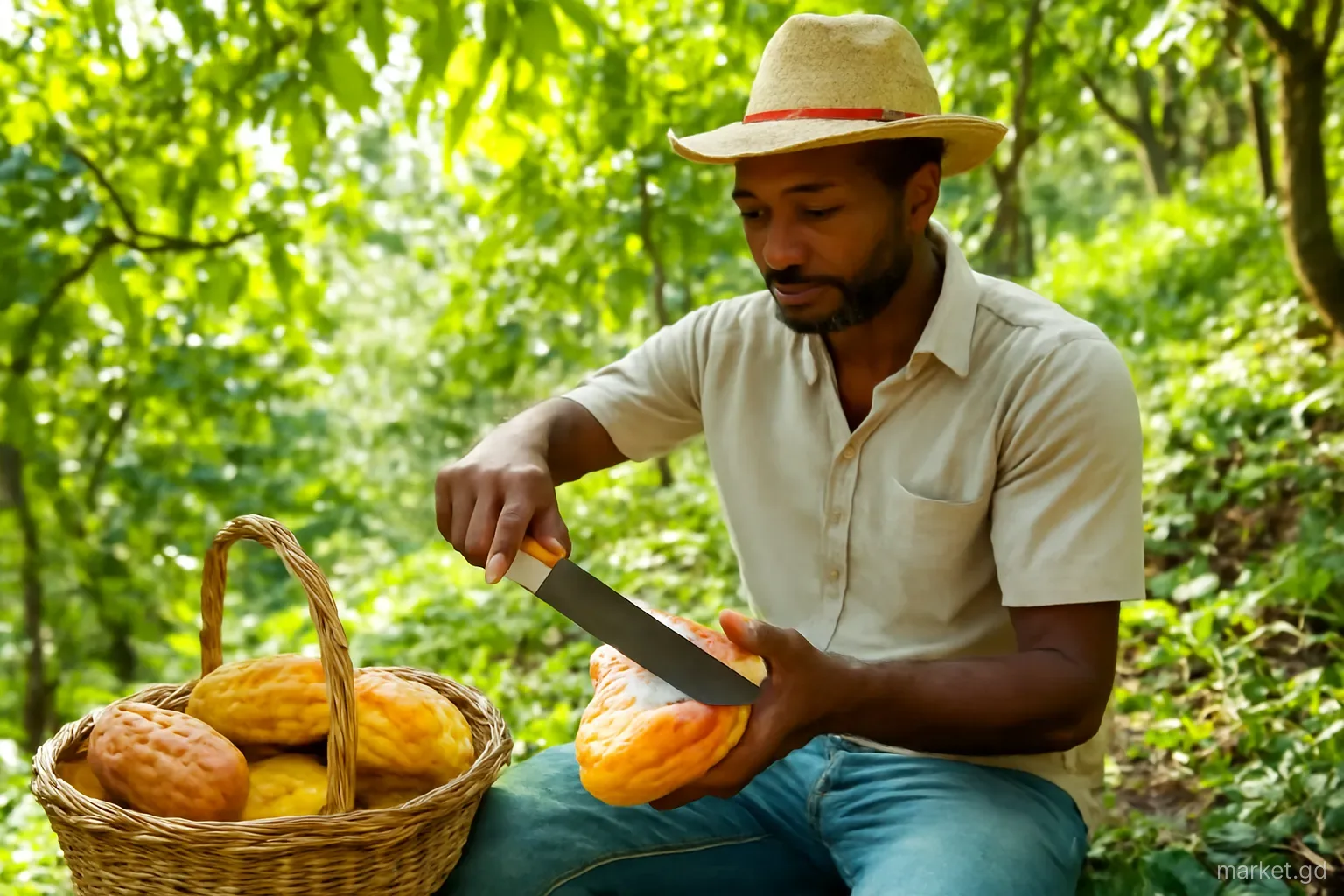
Cocoa has been grown in Grenada since the colonial era, alongside sugar, cotton and later nutmeg. By the nineteenth century, after the decline of sugar, cocoa and spices had become central to the economy, grown both on large estates and on small farms. The island's hilly, well-watered interior, particularly in St Patrick, St Andrew, St John and St Mark, suited the crop.
Grenadian cocoa was largely of the Trinitario type, a hybrid that developed in nearby Trinidad and combines the flavour of the delicate Criollo with the hardiness of Forastero. Buyers prized it for blending into high-quality chocolate. Internationally, Grenada came to be recognised as a producer of fine or flavour cocoa, a small premium category distinct from the bulk cocoa grown in much larger volumes in West Africa.
Marketing was centralised for much of the twentieth century. The Grenada Cocoa Association handled the purchase and export of beans from farmers, and fermentation and drying took place at estates and at central fermentaries. The system gave Grenadian cocoa consistency and a reputation, but it also locked the island into selling raw material.
Traces of that era are still visible. Old estate houses, stone fermentaries, drying floors and the sliding-roof drying sheds that pull out on rails to catch the sun stand on hillsides across the north and east. Some still work; others are ruins in the bush. They are a reminder that cocoa shaped the landscape and the social history of rural Grenada long before anyone thought of making bars there.
The Grenada Chocolate Company
In 1999 the Grenada Chocolate Company was founded by Mott Green, an American-born entrepreneur, together with Grenadian partners Edmond Brown and Doug Browne. The idea was simple to state and difficult to achieve: make fine chocolate in Grenada, from organic Grenadian cocoa grown by local farmers, and share the benefits more fairly with the people who grew it. The company set up a small factory in St Patrick's near Hermitage, close to the farms supplying its beans.
Much of the machinery was old, adapted or rebuilt by hand, and the factory became known for using solar power. The company organised farmers into a cooperative arrangement and worked towards organic certification. Its dark bars won attention among chocolate specialists abroad, and its approach drew journalists and documentary makers.
The model was as important as the product. Instead of buying beans at the bulk price and shipping them away, the company processed them a short distance from the trees, employed local staff in the factory, and sold a finished product with a much higher value. Its founders talked openly about keeping the profits of chocolate in the country that grows the cocoa, an argument that has since been taken up by producers in many other cocoa-growing regions.
The company also became known for shipping chocolate to Europe by sailing ship, using a cargo sailing vessel operated by a Dutch-based company to cut carbon emissions. Mott Green died in an accident in 2013, a significant loss to the Grenadian chocolate community, but the company continued after his death.
The makers who followed
Belmont Estate. A historic estate in St Patrick's that grows cocoa and became closely involved in chocolate making, offering visitors a tree-to-bar experience along with tours, a restaurant and heritage displays.
Jouvay Chocolate. A producer that has operated from the Diamond estate near Victoria in St Mark's, a former industrial site, working with local cocoa farmers; confirm it is open to visitors before making the trip.
Small estates and farm makers. Several small producers, including organic farms in St Mark's and elsewhere, have made chocolate from their own cocoa, often in very small quantities and sold locally or to visitors by arrangement.
Other brands. Further Grenadian chocolate brands have appeared over the years. Some have lasted, others have paused or closed, which is normal for a young industry of very small businesses.
A note on change. Makers open, merge, change names and adjust their visitor arrangements. Check current details before planning a visit around any particular producer.
Hurricane Ivan and the long recovery
In September 2004 Hurricane Ivan struck Grenada directly, damaging or destroying most homes and devastating agriculture. Cocoa and nutmeg trees were flattened across the island. Nutmeg trees take years to come back into production, and cocoa also suffered severe losses. Export volumes fell sharply, and many farmers abandoned their plots or switched to faster-growing crops.
Recovery took years. Replanting programmes, the persistence of small farmers and the demand created by local chocolate makers helped. The chocolate makers gave some farmers a reason to keep cocoa, offering premiums for good fermentation and organic production that the bulk market did not.
Hurricane Beryl in July 2024 caused serious damage again, especially on Carriacou and Petite Martinique and in parts of the north of mainland Grenada. Its full effect on cocoa production may take seasons to become clear. The vulnerability of tree crops to storms is a recurring theme in the history of Grenadian cocoa.
Climate is now part of every conversation about the crop. Stronger storms, longer dry spells and heavier rains affect flowering, disease and drying, and farmers increasingly talk about shade trees, windbreaks and mixed planting as protection. Those choices shape how much cocoa the island can supply its own makers in future.
Why making chocolate at origin is hard
Grenada's example is often held up as a model, but the challenges are considerable:
- Equipment. Chocolate machinery is expensive and mostly designed for large factories. Small-scale equipment has to be imported, adapted or built.
- Climate. Chocolate is easiest to make and store in cool conditions. In a hot, humid climate, tempering, moulding and storage require air conditioning, which is costly where electricity is expensive.
- Packaging and inputs. Wrappers, foil and many ingredients such as sugar are imported, adding cost and delay.
- Markets. A small island has a limited local market. Exporting finished chocolate means shipping a heat-sensitive product long distances and competing with established brands.
- Scale. Small volumes mean higher costs per bar, and makers depend on a small number of farmers and on the weather.
- Storms. A single hurricane can wipe out supply for years.
What the story means for visitors
For visitors, the history explains why Grenadian chocolate is worth seeking out and why it costs more than imported bars on the same supermarket shelf. Buying chocolate made on the island supports a model in which more of the value stays with Grenadian farmers and workers, rather than only the price of raw beans.
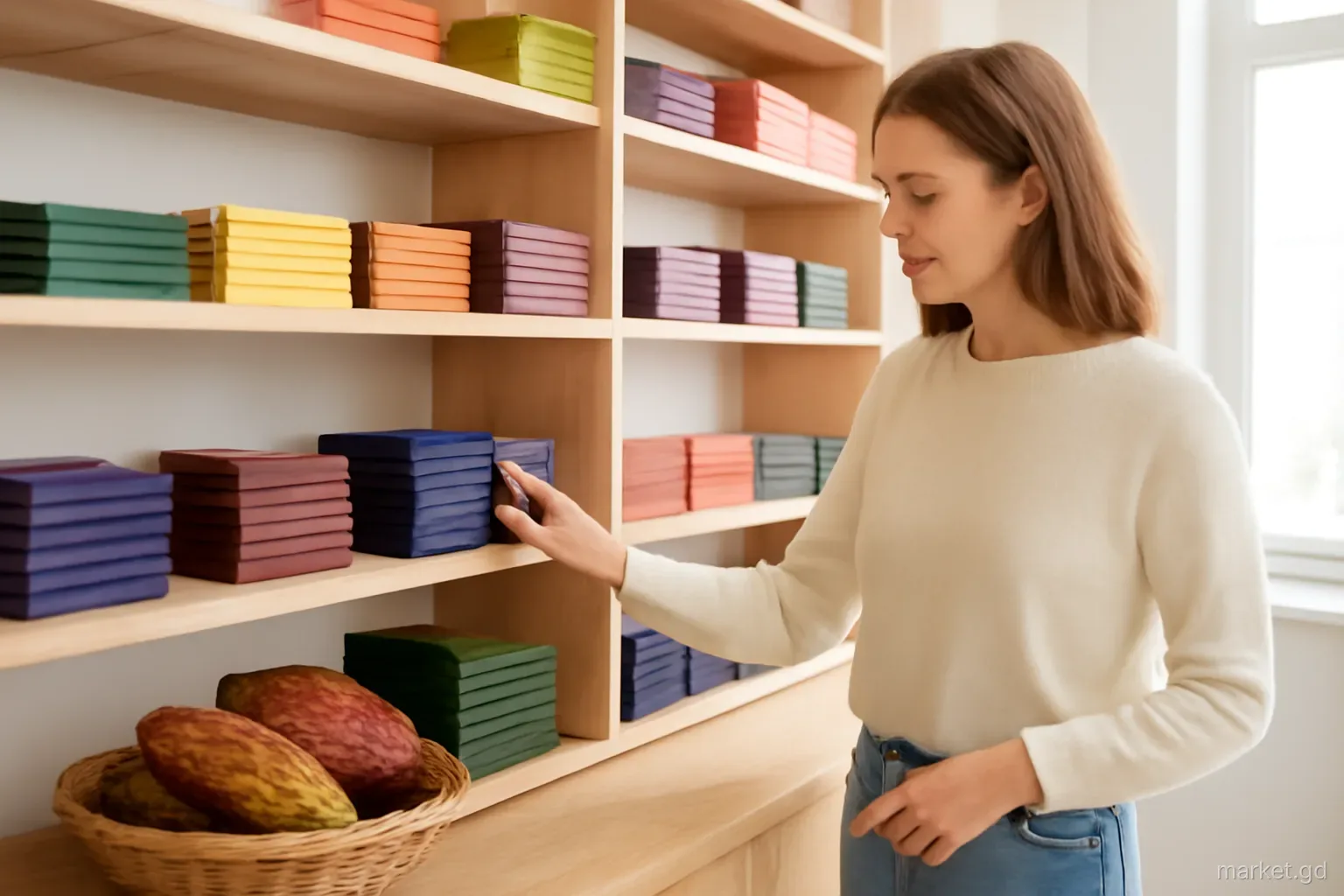
It also explains the character of the bars. Grenadian makers mostly produce dark chocolate with relatively few ingredients, designed to show the flavour of the cocoa. Production is small, so some bars sell out and availability varies.
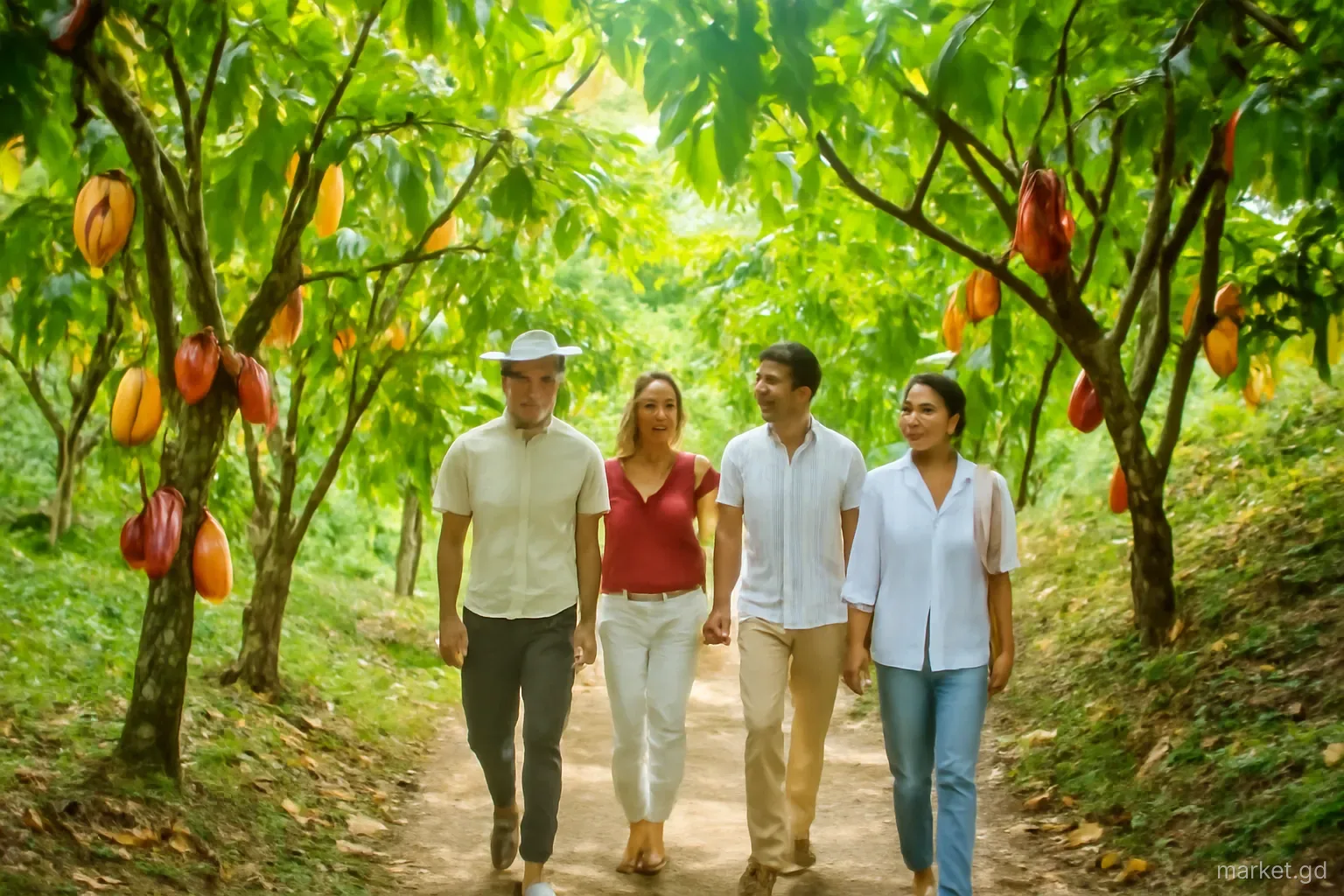
The story is still being written. New makers appear, farmers experiment with fermentation, and the island continues to deal with the effects of storms. Visiting an estate or maker, and asking questions, is the best way to understand where Grenadian chocolate stands today.
Frequently asked questions
Who founded the Grenada Chocolate Company?
It was founded in 1999 by Mott Green together with Grenadian partners Edmond Brown and Doug Browne. The company aimed to make fine organic chocolate in Grenada from local cocoa and share the benefits more widely with farmers.
Why is Grenadian cocoa considered fine flavour?
Much of it is Trinitario-type cocoa, valued for complex flavour, and Grenada has long been recognised internationally as a fine or flavour cocoa producer. Careful fermentation and drying help develop fruity and aromatic notes.
How did Hurricane Ivan affect cocoa in Grenada?
Ivan struck in September 2004 and destroyed or damaged a large proportion of cocoa and nutmeg trees. Production fell sharply and took years to recover, with some farmers abandoning cocoa altogether.
Is Grenada the only country making chocolate where cocoa grows?
No. Producers in several cocoa-growing countries now make chocolate at origin. Grenada became one of the best-known early examples, and its small makers helped show that fine chocolate could be produced on a small island.
Is Grenadian chocolate sold abroad?
Some Grenadian-made bars are exported and sold in speciality shops abroad, and Grenadian cocoa beans are used by craft makers overseas. Availability is limited, so buying on the island is often the easiest way to find a range.