Mangoes get the attention, but Grenada's fruit year is far longer than mango season. Avocados, known locally as zaboca, dominate the later summer; golden apples, plums, soursop, guavas, sapodillas, carambolas and passion fruit each have their moment; and some fruit, such as bananas and coconuts, is around almost all year. Knowing when each arrives means eating it at its best and paying the least.
This guide covers the main fruits found in Grenadian markets beyond mango, roughly when each is in season, how to choose good fruit and how it is usually eaten. Timing varies with rainfall, elevation and individual trees, and many fruits have a main season with scattered fruit at other times. Ask vendors what is coming in; they know which trees are bearing.
Zaboca: the avocado season
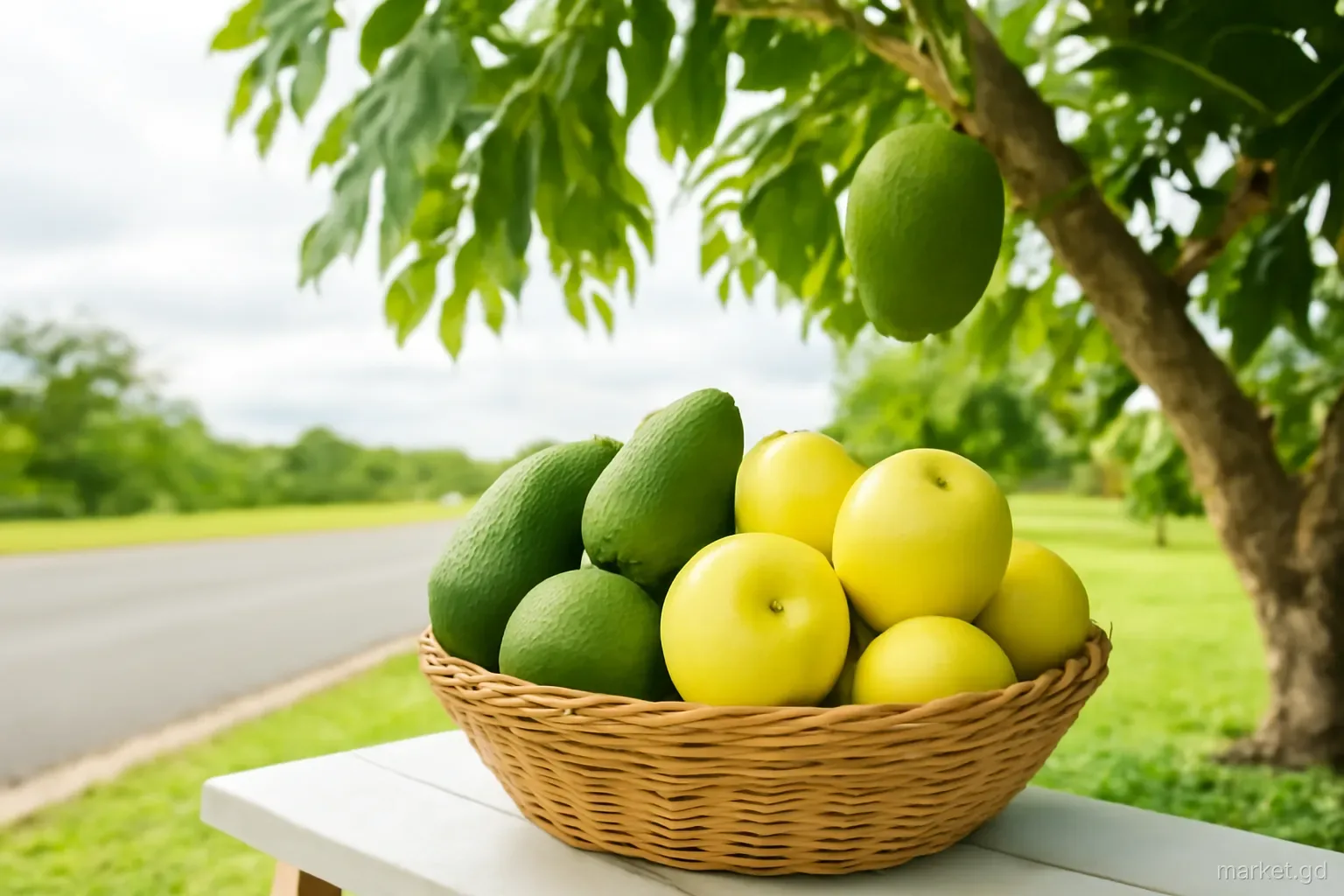
Avocados are among Grenada's most loved fruits, eaten with bread, alongside saltfish, with provisions or simply with salt and pepper. The zaboca season generally runs from around the middle of the year into the autumn, with the peak in the wetter months. During the peak, roadside stands and market tables are piled with large green fruit, and prices fall to the point where one avocado is a cheap addition to almost any meal.
Grenadian avocados are mostly large, smooth-skinned West Indian types, quite different from the small, dark, pebbly Hass avocados sold in North American and European supermarkets. They are lower in oil, milder and more watery, and they do not keep as long once ripe. To choose one, press gently near the stem: it should give slightly. Buy firm fruit if you will eat it in a few days and let it ripen on the counter. Avoid fruit with large soft patches or cracks, which spoil quickly in the heat.
Golden apples, plums and other tangy fruit
Golden apple. Known elsewhere as June plum or ambarella, the golden apple is eaten green and crunchy with salt, made into juice, or cooked into chutney and stewed with sugar and spice. It has a spiny seed in the centre. Golden apples are seen in markets over long stretches of the year, with heavier supply in some months.
Plums. Several types are sold as plums, including hog plum and red or purple Spanish plums. They come in seasonal flushes, often around the dry season and early rains, and are sold in heaps. Eaten fresh or stewed, they are a popular snack.
Tamarind. Brown, pod-like fruit with tangy pulp, used in sauces, balls rolled in sugar and drinks. Tamarind is usually associated with the dry season.
Carambola (five finger). Star-shaped when sliced, tart to sweet. Five finger appears in flushes through the year and is used fresh, in juice and in preserves.
Barbados cherry. Also called West Indian cherry, small and very high in vitamin C. Trees fruit in flushes, often after rain, and the fruit is mostly made into juice.
Soursop, guava, sapodilla and passion fruit
Soursop is a large green fruit with soft spines and creamy white flesh, sweet-sour in flavour, used mainly for juice and ice cream. It is found in varying quantities through the year, without the single sharp peak of mango or avocado. Ripe soursop is soft to the touch and bruises easily, so many vendors sell it slightly firm for ripening at home.
Guavas tend to be more plentiful in the wetter months and are used for juice, jam, jelly and guava cheese, a firm sweet paste. Sapodilla, a brown, rough-skinned fruit with sweet, malty flesh, is eaten when soft and fully ripe; unripe sapodilla is astringent. Passion fruit, used for juice and desserts, is available in seasonal flushes. Pineapples are grown locally in some areas and supplemented by imports. Citrus, including oranges, grapefruit and the mandarin-type fruit known as portugal, is strongest from late in the year into the early months.
Bananas, figs and coconuts: the year-round base
Bananas are central to Grenadian eating in two forms: ripe sweet bananas eaten as fruit, and green bananas, often called figs, boiled as a starch alongside provisions. Several sweet varieties are grown, alongside starchy cooking types such as bluggoe and plantains, and between them they are on sale through most of the year. Supply can drop after storms, since banana plants are easily flattened by wind, but they recover faster than tree crops: new plants can bear within a year, so banana supply after a hurricane usually returns well before nutmeg, cocoa or fruit trees.
Coconuts are equally constant. Dry coconuts are sold for grating and making coconut milk, essential in oil down and many other dishes, while green coconuts are cut open on the spot for coconut water at roadside stands and beaches. Coconut prices tend to be fairly steady, though demand rises during festivals and hot spells, and storms can disrupt supply by damaging palms.
Choosing and storing tropical fruit
Tropical fruit ripens fast in Grenada's heat, and the difference between perfect and past it can be a single day on the kitchen counter. Most loss happens at home rather than at the stall, through buying too much or storing it badly. A few general rules cover most Grenadian fruit:
- Ask the vendor when the fruit will be ready to eat; most will tell you honestly whether to eat today or in three days.
- Ripen fruit at room temperature, then refrigerate only once ripe if it will not be eaten that day.
- Avoid fruit with soft, sunken patches, mould around the stem or a fermented smell.
- Buy small quantities of very soft fruit such as soursop and sapodilla, which spoil quickly.
- Freeze surplus pulp from soursop, passion fruit and guava for juice later in the year.
- Remember that fresh fruit usually cannot be taken home through customs; visitors should eat it in Grenada.
Mistakes newcomers make with local fruit
People new to Grenada, whether visitors or new residents, tend to make the same few mistakes. The first is judging ripeness by colour. Many local fruits, including several mango and avocado types, stay green when ripe, while golden apples are often eaten green on purpose. Touch and smell tell more than colour. The second is buying in quantity on the first day of a stay or a new season, then watching half of it soften in the heat before it can be eaten.
A third mistake is picking fruit from trees that look wild. Almost every tree in Grenada belongs to someone, even on what appears to be open land, and fruit on a neighbour's tree or an estate is not free for the taking. Taking crops without permission counts as praedial larceny, which farmers take very seriously. Ask first; owners are often generous. Finally, some visitors pay supermarket prices for imported fruit when local fruit in season is cheaper, fresher and sold a short walk away at the market or a roadside stand.
Prices and the logic of fruit seasons
Fruit prices follow the same arc as mangoes: high for the first and last of the season, low at the peak. Because so many households have fruit trees in their yards, demand for some fruit drops sharply at the peak, and vendors may struggle to sell it. Zaboca in particular can become remarkably cheap in a heavy season, while early avocados at the start of the season fetch good prices.
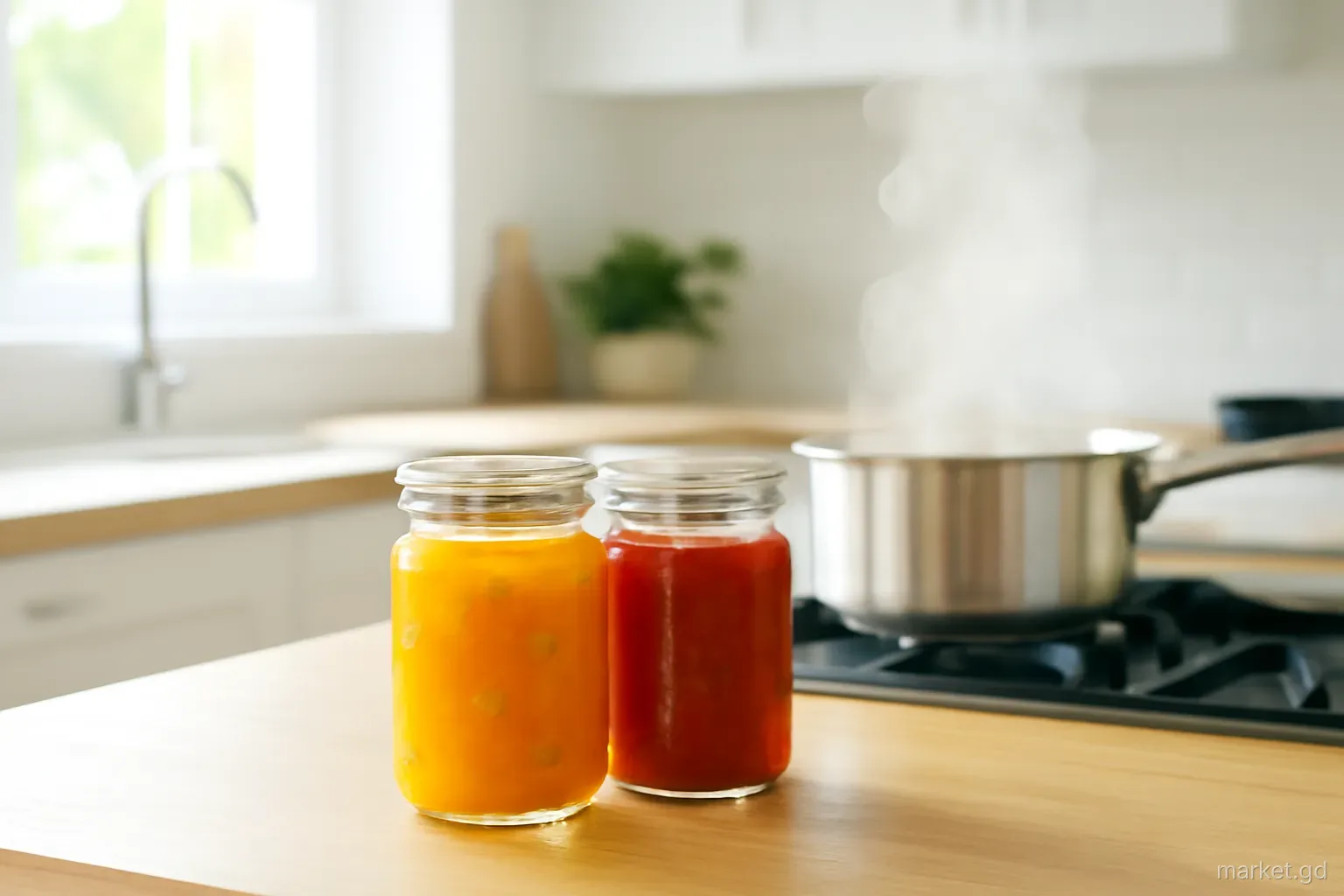
Fruit that is processed into juice, jam or chutney, such as guava, golden apple and soursop, often holds its value better, since small processors and households buy in bulk when it is cheap. Imported fruit such as apples, grapes and pears is priced by world markets and freight rather than local seasons, and usually costs more than local fruit in season. For the best value, buy local fruit at its peak, preserve what you cannot eat, and treat imports as an occasional extra.
Frequently asked questions
When is avocado season in Grenada?
The zaboca season generally runs from around the middle of the year into the autumn, peaking in the wetter months. Early and late fruit costs more; at the peak, avocados are plentiful and cheap at markets and roadside stands across the island.
What is a golden apple?
The golden apple, known elsewhere as June plum or ambarella, is a tangy fruit with a spiny seed. It is eaten green with salt, juiced, stewed or made into chutney. It is common in Grenadian markets over much of the year.
Why are Grenadian avocados so big?
Most avocados grown in Grenada are West Indian types, which are larger, smoother and lower in oil than the Hass avocados common in North American and European supermarkets. They have a milder flavour and softer texture.
Is soursop available all year?
Soursop is found in varying quantities through much of the year rather than in a single sharp season. Supply depends on individual trees and the weather, so availability and price can change from week to week.
Can fruit be taken out of Grenada?
Most countries restrict imports of fresh fruit to prevent pests and diseases. Visitors should eat fresh fruit while in Grenada and choose processed, sealed products such as jams, jellies or chutneys to take home, subject to their own country's rules.