In the weeks before Christmas, Grenada's markets take on a different colour. Bundles of deep red sorrel crowd the stalls, pigeon peas arrive in the pod and shelled, ginger is piled high, and the supermarkets fill with hams, dried fruit and imported treats. Households cook more than at any other time of year, and many Grenadians living abroad come home for the holidays, swelling demand even further.
This guide explains what is in season at Christmas, how prices behave through December, when to buy which ingredients and how to avoid the last-minute scramble. It covers the market side of the season rather than recipes, though it notes how each ingredient is traditionally used. Prices change every year, so the focus is on timing and patterns rather than figures.
Sorrel: the crop that defines the season
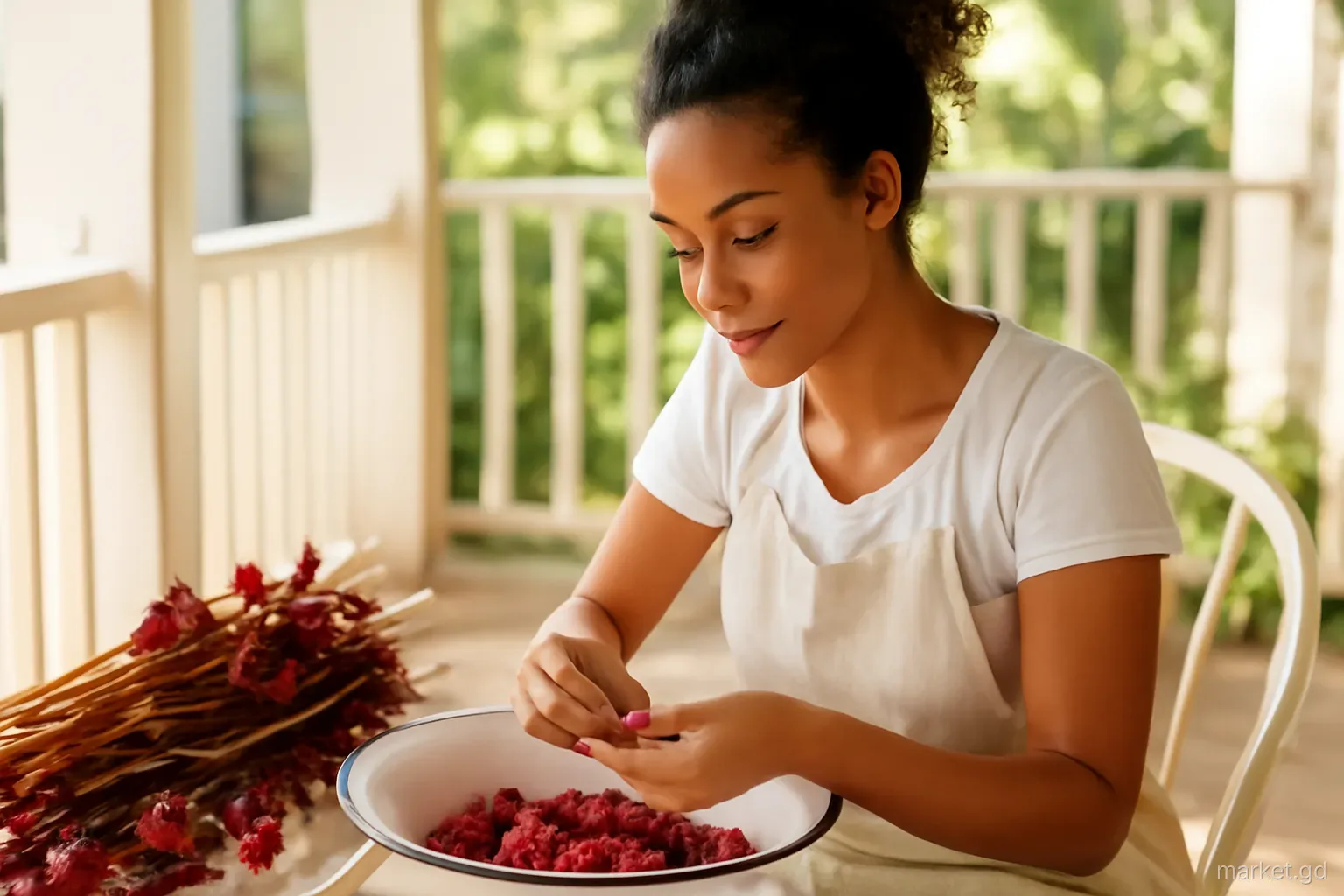
Sorrel, a hibiscus grown for its fleshy red calyces, is the signature of a Grenadian Christmas. The plant flowers as the days shorten in late autumn, which is why fresh sorrel is essentially a November and December crop. It is steeped with spices such as cloves, cinnamon and ginger, sweetened, and often laced with rum to make the deep red drink served to visitors throughout the season.
Vendors sell sorrel either on the stem in bundles or already stripped from the seed pods, which saves work and costs more. Early in the season prices are higher; as more farms harvest, supply peaks in December. In the final days before Christmas demand is intense, and vendors who still have sorrel can sell it quickly. Buying in mid-December, then making a concentrate or freezing the stripped calyces, is a common way to avoid both early prices and last-minute shortages. Dried sorrel is available for those who want the drink at other times of year.
Pigeon peas, provisions and the Christmas table
Pigeon peas, often just called peas, come into season in the later part of the year, and fresh peas are a fixture of the Christmas table, cooked with rice or in stews. Vendors sell them in the pod, which is cheaper but slow to shell, and shelled by the pound, which commands a premium in December because few people have the time to shell large quantities. Fresh peas freeze well, and some households shell and freeze in bulk when supply is high.
Ground provisions also feature: yams are coming into their harvest season towards the end of the year, and sweet potatoes, dasheen and plantains appear alongside them. Breadfruit, pumpkin and christophene are usually available. Seasonings such as chive, thyme, celery and seasoning peppers are in heavy demand for the marinating and cooking that happens in the days before Christmas, and their prices can rise briefly in the final week.
Ginger, spices and baking
Ginger. Fresh ginger is in demand for ginger beer, a traditional Christmas drink, and for seasoning. Buy firm, plump hands with smooth skin; shrivelled ginger is old.
Spices. Nutmeg, cinnamon, cloves, bay leaf and allspice go into sorrel, ginger beer, black cake and ham glazes. Buying whole spices from market vendors is usually cheaper than small packets in supermarkets, and they keep well.
Black cake ingredients. Black cake, or Christmas cake, is made with dried fruit soaked for weeks or months in rum and wine. Raisins, currants, prunes and mixed peel are imported and sold mainly in supermarkets. Many bakers start soaking fruit well before December, buying before the holiday price rise.
Baking basics. Flour, sugar, butter, eggs and essences all see heavy demand. Supermarkets stock up, but popular brands can run short in the final days.
Local rum. Rum features in the cake, the sorrel and on the table. Grenada's distilleries produce a range of rums sold in shops and supermarkets across the island.
Ham, meat and imported goods
Ham is the centrepiece of many Grenadian Christmas tables, whether a whole bone-in ham baked and glazed at home or smaller pre-cooked cuts. Most hams are imported, and supermarkets bring in large stocks for the season. Prices are driven by world markets and shipping costs rather than local supply. Turkey, chicken, pork and beef are also in demand, and local butchers and farmers selling pork or goat take orders ahead of the holidays.
Imported treats, such as apples, grapes, chocolate, nuts and festive drinks, fill the supermarket aisles in December. Buying these early in the month, before shelves empty and the crowds arrive, is usually easier. Many families also receive barrels and parcels from relatives abroad around this time, packed with groceries and gifts, which is one reason the shipping season peaks before Christmas.
How December prices move
December prices follow a demand curve on top of the normal seasonal pattern. In early December, supply of sorrel, peas and ginger is building, and shoppers are spreading their purchases. In the second and third weeks, demand rises steadily as households start cooking, and prices for fresh seasonal crops edge up. In the final days before Christmas, the markets are at their busiest and fresh items like shelled peas and stripped sorrel can sell out by mid-morning.
After Christmas the pattern reverses. Demand falls sharply, many people have spent heavily, and January is often a slow month for vendors. Leftover sorrel and peas may be sold more cheaply in the days after Christmas. Shoppers who make sorrel concentrate or freeze peas early can save money; vendors who overstock just before Christmas risk being left with produce that sells slowly once the holiday passes.
A practical December buying plan
Spreading purchases over the month avoids the worst crowds and prices. A common approach:
- Late November or early December: buy dried fruit for black cake if not already soaking, and stock up on non-perishable baking items and spices.
- First half of December: buy sorrel in bulk while supply is building, strip and freeze it or make concentrate. Buy ginger for ginger beer.
- Mid-December: order ham, pork or other meat from your supermarket or butcher, and buy pigeon peas to shell and freeze.
- Week before Christmas: buy fresh seasonings, provisions, breadfruit and anything else that must be fresh.
- Final days: visit the market early in the morning to avoid crowds and sold-out stalls, and carry small notes to speed up purchases.
- After Christmas: look for reduced prices on leftover seasonal produce for freezing.
Christmas on Carriacou and Petite Martinique
On Carriacou and Petite Martinique the season has its own traditions, including parang, a musical tradition associated with Christmas. The Carriacou Parang Festival has traditionally been held in December, drawing visitors from the mainland. Food traditions overlap with Grenada's, but many ingredients are shipped from the main island or imported, so supply can be tighter and prices higher.
Since Hurricane Beryl struck both islands in July 2024, local farming and some businesses have faced a long recovery. Anyone planning Christmas shopping or travel to the sister islands should check what is available locally and whether festival events are going ahead, rather than assuming everything is as it was before the storm. Ferry schedules over the holidays can also be busy, so plan travel and shopping well in advance.
Visitors bringing gifts across from the mainland often carry fresh produce, sorrel, ham and baking goods for family on the sister islands, which is a long-standing habit at this time of year. Pack perishables in a cooler, keep them out of the sun on the ferry deck, and allow for the extra weight and bulk when booking.
Frequently asked questions
When is fresh sorrel available in Grenada?
Fresh sorrel is mainly a November and December crop, peaking in the weeks before Christmas. It is sold on the stem or stripped. Dried sorrel can be found at other times of the year for making the drink outside the holiday season.
Why are shelled pigeon peas so expensive at Christmas?
Shelling pigeon peas by hand takes time, and demand peaks in December when households want peas for rice and stews. Vendors charge a premium for shelled peas. Buying in the pod and shelling at home is cheaper if you have the time.
How can sorrel be stored for later?
Stripped sorrel calyces can be frozen in bags, or steeped and made into a concentrate that keeps in the refrigerator. Freezing in December allows the drink to be made later in the season without paying the highest prices.
Where is Christmas ham bought in Grenada?
Most hams are imported and sold in supermarkets, which stock up heavily for the season. Ordering early in December, or buying before the final rush, gives the best choice. Some butchers and farmers also take orders for pork and other meats.
Are markets open on Christmas Eve in Grenada?
Markets are usually very busy in the days leading up to Christmas, including Christmas Eve if it falls on a trading day. Opening hours can vary, and Christmas Day and Boxing Day are public holidays. Shop early in the morning to avoid crowds.