Grenada is often called the Spice Isle, and nutmeg is the reason. Yet many people who carry a bag of nutmegs home never use more than one or two, because they are unsure how to crack the shell, how much to grate or what to put it in. The result is a jar of beautiful seeds slowly drying out on a shelf, while a tin of ready-ground nutmeg does the real work.
This page is about using whole nutmeg well: how to judge quality at a market stall, what the shell and the mace tell you, how to crack and grate, how to store for flavour, and how Grenadians use it day to day in drinks, porridge, baking and savoury food. It also covers the safety point that comes with any strong spice.
What you are actually buying
The nutmeg tree produces a fleshy yellow fruit about the size of an apricot. When ripe, the fruit splits to show a dark brown seed wrapped in a bright red, lacy covering. The red web is mace; the seed inside its thin, hard shell is the nutmeg. Both are dried and sold as spices, and the fruit flesh itself is used for jams, syrups and candies.
At a market you may see nutmegs in three forms. Some are still in their shell, with or without dried mace wrapped around them. Some are shelled, showing the wrinkled, marbled brown kernel. And some are ground into powder. For cooking, shelled or shell-on whole nutmegs are the best buy, because the aromatic oils stay locked inside until you grate.
Grenada's nutmeg trade is organised largely through the Grenada Cooperative Nutmeg Association, which buys from farmers, processes and exports. The processing station at Gouyave is the best-known example. Market sellers usually buy from growers directly or grow their own.
How to judge quality at a stall
Weight in the hand. A good nutmeg feels heavy for its size. Light nuts may be dried out, damaged or partly hollow. In commercial grading, sound nutmegs sink in water while defective ones float, which gives a sense of what to look for.
Rattle in the shell. In a dried shell-on nutmeg, the kernel shrinks slightly and may rattle when shaken. That is normal and shows the nut has dried properly.
Surface of a shelled nut. Look for a firm kernel with a fine network of lines and no holes, powdery patches or mould. Small holes can be signs of insect damage.
Smell. Scratch the surface with a fingernail or ask the vendor to cut one. Fresh nutmeg smells strong, warm and sweet. A faint smell suggests age.
Mace colour. Fresh mace is scarlet; dried mace turns orange or golden. Very dull or brittle mace may be old, but colour changes naturally as it dries.
Price as a signal. Very cheap nutmeg may be broken or lower grade. That is fine for grating, as long as it is sound, but compare a few stalls.
Cracking and grating
Whole nutmeg is simple to use once you have done it a couple of times.
- If the nut is in its shell, place it on a firm surface and tap it gently with the back of a heavy knife, a rolling pin or a small hammer until the shell cracks. Peel off the pieces.
- Shell only what you need for the next few weeks. Unshelled nuts keep better.
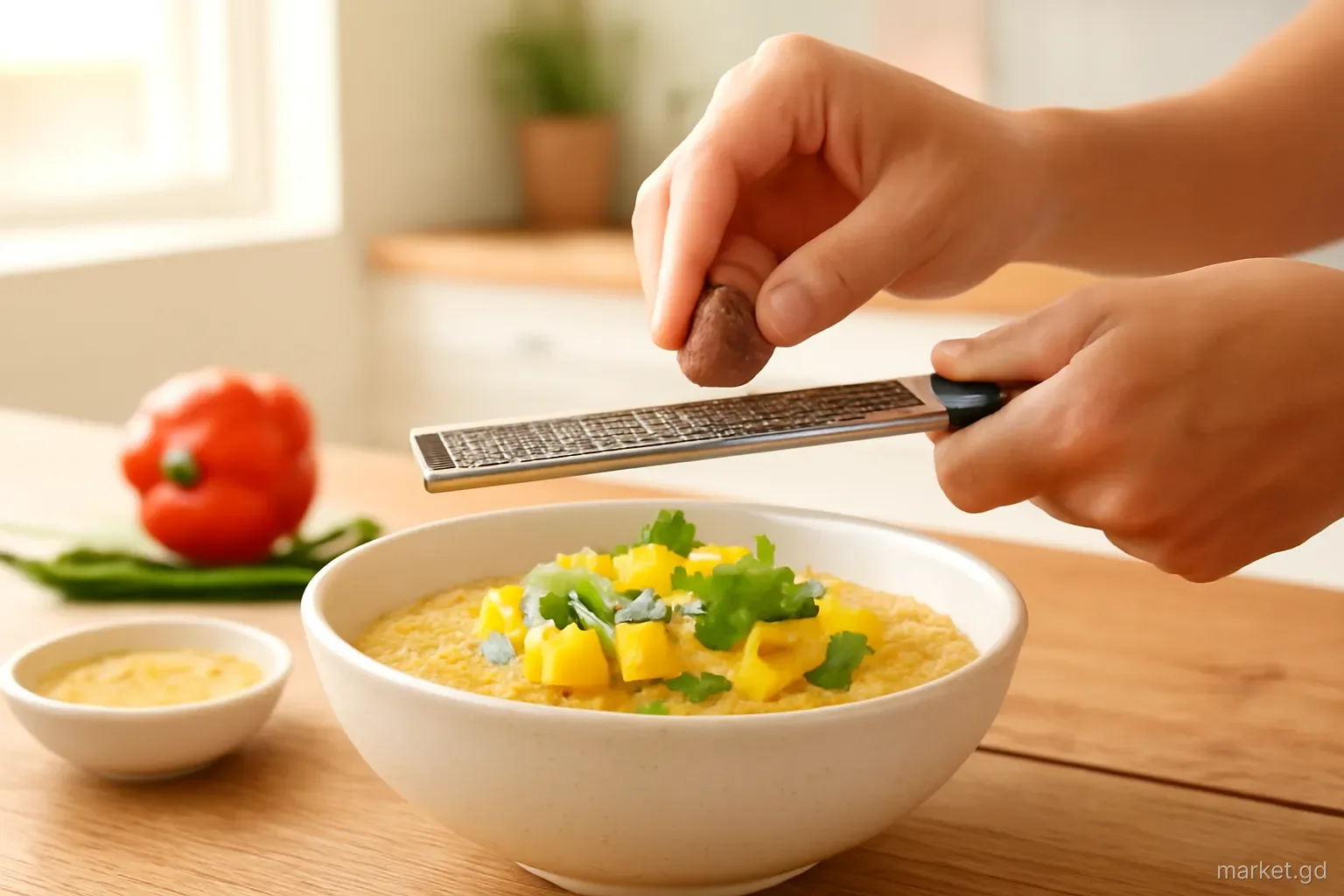
- Use a fine grater, such as a dedicated nutmeg grater or a fine rasp, and hold the nut firmly.
- Grate in short strokes directly over the dish or into a small bowl. A few strokes are often enough.
- As the nut gets small, take care with your fingers. Keep the last piece for a final grating or for infusing in a liquid.
- Store any partly grated nut in an airtight container with the others.
- Clean the grater with a dry brush rather than water, so oils and dust do not clog the teeth.
Storing nutmeg and mace for flavour
Whole nutmeg is one of the most durable spices. Kept in its shell in a cool, dry, dark place, it holds its aroma for a very long time. Shelled nuts also keep well in an airtight glass jar away from heat and sunlight. Ground nutmeg, by contrast, loses much of its fragrance within months, which is why freshly grated nutmeg tastes noticeably stronger.
In Grenada's humid climate, moisture is the main enemy. Keep nutmegs away from the stove and sink, and make sure they are fully dry before storing. If you see mould, discard the affected nuts.
Mace is more delicate. Store it in a sealed container and use it within a year or so for the best flavour. Whole blades of mace can be broken or ground as needed. If you buy nutmeg with mace still attached, separate the two before storing.
If you take nutmeg home, check your country's customs rules. Dried, whole spices are usually allowed but may need to be declared.
How much to grate
Freshly grated nutmeg is stronger than the ground powder in a tin, so recipes written for ground spice can taste heavier when you switch. A useful rule is that a quarter to half a teaspoon of fresh gratings is plenty for a cake, a pot of porridge for four or a white sauce for a family meal. For a single drink, two or three passes over a fine grater is enough; you want the aroma on top, not grit at the bottom of the glass.
Grate at the end of cooking for the brightest flavour. Nutmeg added at the start of a long simmer softens and blends in, which suits stews and soups, but for porridge, cocoa tea, punch and custards, a final grating just before serving gives the warm, sweet fragrance Grenadians expect.
An average nutmeg yields a surprising amount: several tablespoons once grated down. That is why a modest bag lasts a household a long time, and why it pays to taste as you go rather than following a recipe blindly.
How Grenadians use nutmeg
Rum punch and drinks. A grating of fresh nutmeg on top of a rum punch is standard in Grenada. It also goes into eggnog, sorrel drink, milk punches and home-made liqueurs, depending on the household and the season.
Cocoa tea. Grenadian cocoa tea, made from grated cocoa balls, milk and spices, usually includes nutmeg along with cinnamon and bay leaf.
Porridge. Cornmeal, oats, rice or plantain porridge is often finished with nutmeg and cinnamon.
Baking. Sweet bread, cakes, puddings and pies use nutmeg freely, especially at Christmas.
Savoury dishes. Nutmeg goes into macaroni pie, some stews, mashed provisions and white sauces. A small amount lifts dishes without being obvious.
Mace in cooking. Mace has a slightly lighter, more delicate flavour than nutmeg and is used in savoury dishes, pickles and some baking.
Pitfalls and safety
Nutmeg is safe in culinary amounts, but a few points are worth knowing.
- Too much at once. Nutmeg contains myristicin, and eating large amounts, such as several teaspoons or a whole nut, can cause nausea, dizziness, palpitations and hallucinations. Stick to normal cooking quantities.
- Children and pets. Keep whole nuts out of reach of small children and pets, both for this reason and because a whole nut is a choking hazard.
- Buying ground nutmeg as a souvenir. It may already be fading. Whole nuts are better value and more aromatic.
- Storing near heat. A spice jar above the stove loses flavour quickly. Choose a cupboard away from heat.
- Confusing other products. Nutmeg oil, nutmeg syrup and nutmeg jelly are different products made from the fruit or seed. Ask what you are buying if a label is unclear.
Frequently asked questions
How many nutmegs should you buy to take home?
For most households, a small bag of ten to twenty whole nutmegs lasts a long time, since a single nut provides many gratings. Buying more only makes sense if you bake heavily or plan to give some away. Whole nutmegs keep well, but freshness still fades slowly over the years.
Is nutmeg with the shell on better than shelled?
Shell-on nutmeg keeps its oils slightly longer, because the shell protects the kernel. Shelled nuts are convenient and still keep well in an airtight jar. For use within a year or two, either works; for long storage, shell-on is preferable.
What is the difference between nutmeg and mace?
Both come from the same fruit. Nutmeg is the seed inside the shell; mace is the red, lacy covering around the shell. Mace has a lighter, slightly more delicate flavour and is used in savoury dishes and some baking. Nutmeg is stronger and more commonly used.
Can you grate nutmeg without a special grater?
Yes. A fine rasp or the smallest holes of a box grater work well. In a pinch, you can scrape the nut with a sharp knife, though this is slower. Dedicated nutmeg graters are small, inexpensive and sold in many Grenadian shops and markets.
Why does Grenada's flag show a nutmeg?
The nutmeg on Grenada's flag represents the island's long association with the spice and its importance to the economy. Grenada has historically been one of the world's major nutmeg producers, and the spice remains a central part of its identity and agriculture.
How long does ground nutmeg last?
Ground nutmeg starts losing flavour within months of grinding and is noticeably weaker after a year. It is safe to use for longer but contributes much less aroma. Grating whole nutmeg as needed gives far more flavour for the same quantity.