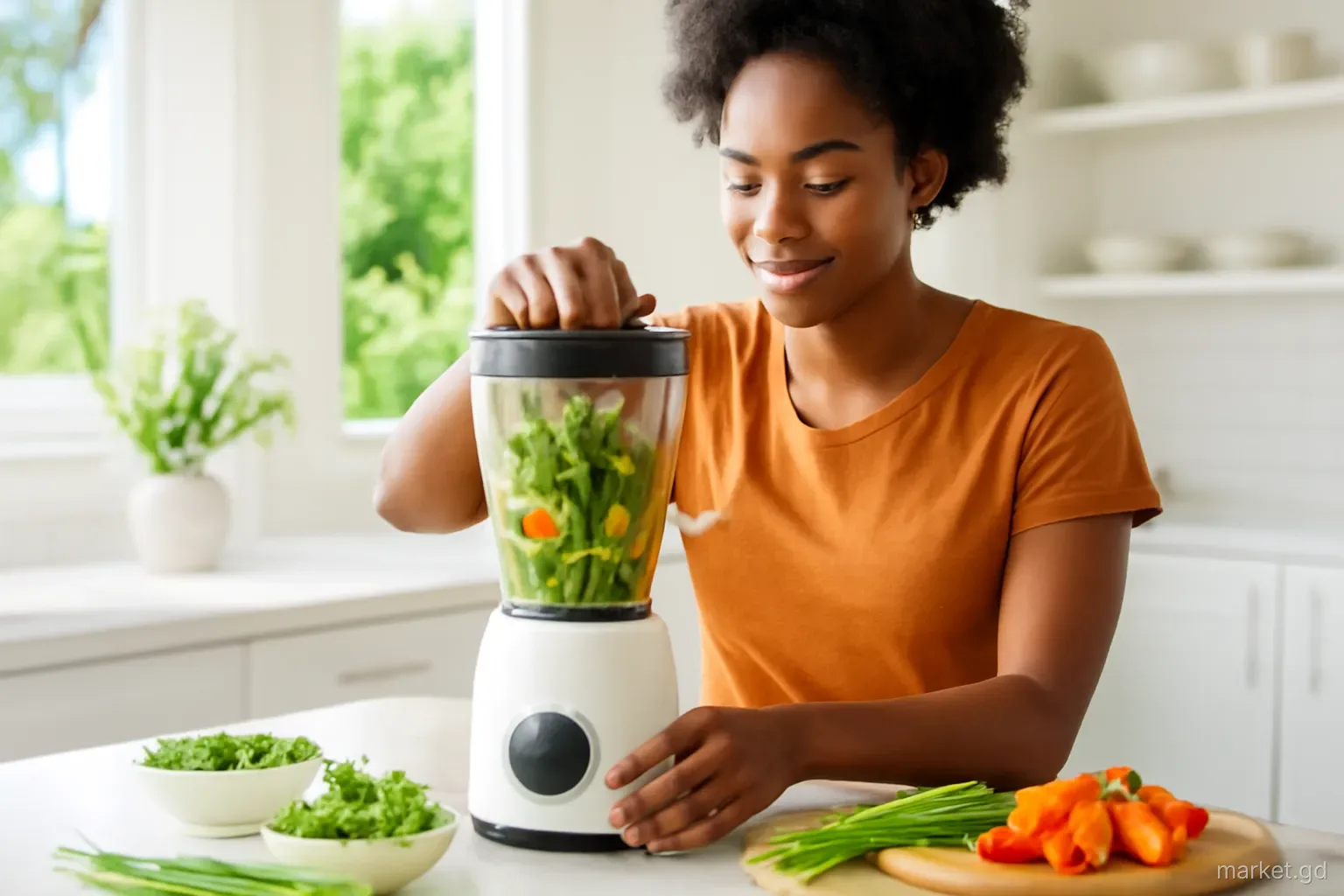
Almost every savoury Grenadian dish starts with the same handful of herbs. Chive, thyme, celery and seasoning peppers are blended or chopped into green seasoning, rubbed into fish and chicken, stirred into stews and oil down and used to flavour rice, peas and soups. At the market they are sold in small, cheap bundles, often tied together so that one purchase gives you the full set.
This page explains what goes into a Grenadian seasoning bundle, how to tell good herbs from tired ones, the difference between mild seasoning peppers and fiery hot peppers, how to make and store green seasoning and the safety points with hot peppers. It is the practical starting point for anyone cooking Grenadian food with market produce.
What is in a seasoning bundle
Chive. In Grenada, chive is a green onion similar to spring onion or scallion, with hollow green leaves and a small white base. It is the backbone of most seasoning mixes.
Broad-leaf thyme. A succulent, fuzzy-leaved herb with a strong aroma, related to mint rather than garden thyme, and widely used in Caribbean cooking. Some bundles include fine-leaf thyme, the familiar small-leaved type, as well.
Celery. Local celery is usually a slender, leafy plant with thin stalks and a strong flavour, closer to leaf celery than to the thick-stalked supermarket type.
Shadow beni. A long-leaved herb with serrated edges and a strong, coriander-like flavour, known elsewhere as culantro. It is used in green seasoning, chow and sauces.
Parsley. Sometimes added, especially curly or flat parsley grown locally.
Seasoning peppers. Small, wrinkled peppers in green, yellow, orange or red that look like hot peppers but have little heat and a fruity, aromatic flavour. They are essential to the Grenadian taste.
Seasoning peppers versus hot peppers
The two look similar, which causes the most common mistake for newcomers. Seasoning peppers are mild and aromatic, used generously for flavour. Hot peppers, often bonnet-type peppers of the scotch bonnet family and smaller, very hot peppers sometimes called bird peppers, are fiery and used sparingly, either whole in a pot for gentle heat or chopped for serious burn.
Ask the vendor before buying: is this seasoning pepper or hot pepper? Vendors will tell you, and many sell both side by side. If you are unsure, touch a cut edge to the tip of your tongue very carefully, or simply ask for a small quantity of each and label them at home.
Colour is not a reliable guide either. Both kinds come in green, yellow, orange and red, and the same plant can carry peppers at several stages. Seasoning peppers tend to be slightly more crinkled and thin-walled, but some hot peppers look almost identical. Smell can help: crush a small piece and a hot pepper often gives off a sharp, eye-watering note, while a seasoning pepper smells sweet and fruity. When in doubt, the vendor's word is the safest test.
Hot peppers are also the base of Grenadian pepper sauces, made with vinegar, mustard, papaya, carrot or other ingredients depending on the household. A single hot pepper can heat a whole pot of stew, so start small.
Choosing fresh herbs
Herbs wilt quickly in heat, and freshness makes a big difference to flavour.
- Look for bright green leaves without yellowing, dark spots or slime.
- Check that chive is crisp, with firm white bases and leaves that are not limp.
- Smell the thyme and celery. They should be strongly aromatic.
- Avoid bundles that have been sitting in direct sun or look wilted.
- Buy from vendors who keep herbs shaded or sprinkled with water.
- Check that seasoning peppers are firm and glossy, without soft spots or wrinkled, dried skin.
- Buy herbs early in the day, when they are freshest, and cook with them or store them soon after.
- If a bundle includes something unfamiliar, ask the vendor what it is and how it is used. Bundles vary between vendors and seasons.
Making green seasoning
Green seasoning is a blended paste of herbs and aromatics used as a marinade and flavour base. Recipes vary by household; this is a typical approach.
- Wash herbs and peppers thoroughly and shake dry.
- Roughly chop chive, thyme leaves, celery, shadow beni and parsley if using.
- Remove stems and seeds from seasoning peppers. Add a small piece of hot pepper only if you want heat.
- Add peeled garlic, onion and, if you like, a little fresh ginger.
- Blend with a splash of water, vinegar or lime juice until a coarse paste forms.
- Taste and adjust. Some cooks add salt, black pepper or a little oil.
- Store in clean jars in the fridge for about a week, or freeze in small portions.
Using green seasoning in Grenadian cooking
Green seasoning goes into almost everything savoury. Fish is washed with lime or lemon and water, then rubbed with seasoning and left to marinate before frying or stewing. Chicken, pork and beef are seasoned in advance, often overnight. Rice and peas, stews, soups and oil down all use chopped herbs or paste as a base.
The herbs also feature fresh: chopped chive and thyme go into dumplings and salads, shadow beni into chow and sauces, and a whole seasoning pepper or two into a pot of soup. Many cooks keep a jar of seasoning paste in the fridge at all times and a bundle of fresh herbs for dishes that need them.
If you buy a bundle at Saturday's market, a sensible routine is to use some fresh over the weekend and blend the rest into seasoning for the week.
Bottled green seasoning and seasoning blends are sold in Grenadian supermarkets, and some are made locally. They are convenient for busy weeknights, but most cooks find that home-made seasoning from fresh market herbs tastes brighter and contains less salt. A useful compromise is to make a large batch on the weekend and freeze it in small portions, so a spoonful is always ready.
Growing a pot of seasoning
Many Grenadian households grow at least some of their own seasoning, and it is easy for residents to do the same. Chive grows readily from the white bases of a market bundle planted in a pot or bed; within a few weeks it sends up new leaves that can be cut again and again. Broad-leaf thyme roots easily from cuttings and thrives in a sunny spot with occasional watering. Seasoning peppers can be grown from seed saved from market peppers and fruit for months once established.
A small container garden on a balcony or by the kitchen door saves money and gives you fresh herbs when the market is closed. Watch for pests such as aphids and caterpillars, water in the dry season and give plants some afternoon shade in the hottest months. Shadow beni prefers partial shade and moist soil.
Even with a home garden, most cooks still buy bundles at the market for larger cooking sessions, but a few pots by the door cover everyday needs.
Pitfalls and safety with peppers
Hot peppers deserve respect. A few habits prevent painful mistakes.
- Wear gloves. When cutting hot peppers, wear gloves or wash hands thoroughly with soap afterwards. Capsaicin lingers on skin for hours.
- Never touch your eyes. Rubbing your eyes or touching contact lenses after handling hot peppers is extremely painful.
- Confusing pepper types. Adding a handful of hot peppers instead of seasoning peppers can make a dish inedible. Ask and label.
- Seeds and membranes. Most of a pepper's heat sits in the pale ribs and seeds. Remove them for milder flavour.
- Children. Keep hot peppers out of children's reach.
- Storing herbs in sealed plastic. Trapped moisture rots herbs quickly. Wrap loosely in a paper towel or cloth instead.
- Overbuying. Bundles are cheap, but herbs spoil fast. Buy for a few days or blend the surplus.
Frequently asked questions
What is Grenadian chive?
In Grenada, chive is a green onion similar to spring onion or scallion, with hollow green leaves and a small white base. It is one of the main herbs in Grenadian seasoning and is sold in bundles at markets, often tied together with thyme and celery. It is not the fine-leaved chive used in European cooking.
What is the difference between seasoning peppers and hot peppers?
Seasoning peppers look similar to hot peppers but have little heat and a fruity, aromatic flavour, used generously in cooking. Hot peppers, such as bonnet-type peppers, are very fiery and used sparingly. Always ask the vendor which is which before buying, since they can look almost identical.
What is shadow beni?
Shadow beni is a long-leaved herb with serrated edges and a strong flavour similar to coriander, known in other places as culantro. It is used in green seasoning, mango chow and sauces in Grenada and elsewhere in the Caribbean. It holds its flavour better than coriander in cooked dishes.
How long does green seasoning last in the fridge?
Home-made green seasoning usually keeps for about a week in a clean, sealed jar in the fridge. Adding vinegar or lime juice helps it last a little longer. For longer storage, freeze it in small portions, such as in an ice cube tray, and use as needed.
How do you keep herbs fresh in a hot climate?
Wrap herbs loosely in a damp paper towel or cloth and store them in the fridge. Avoid sealed plastic bags, which trap moisture and cause rot. Chive can also be stood in a little water. Use fresh herbs within a few days or blend them into seasoning.
What should you do if hot pepper gets in your eyes?
Rinse your eyes with plenty of clean, cool water for several minutes, and avoid rubbing them. Remove contact lenses if you wear them. The burning usually eases with time. If pain or redness persists, seek medical advice. Wearing gloves when cutting hot peppers prevents the problem.