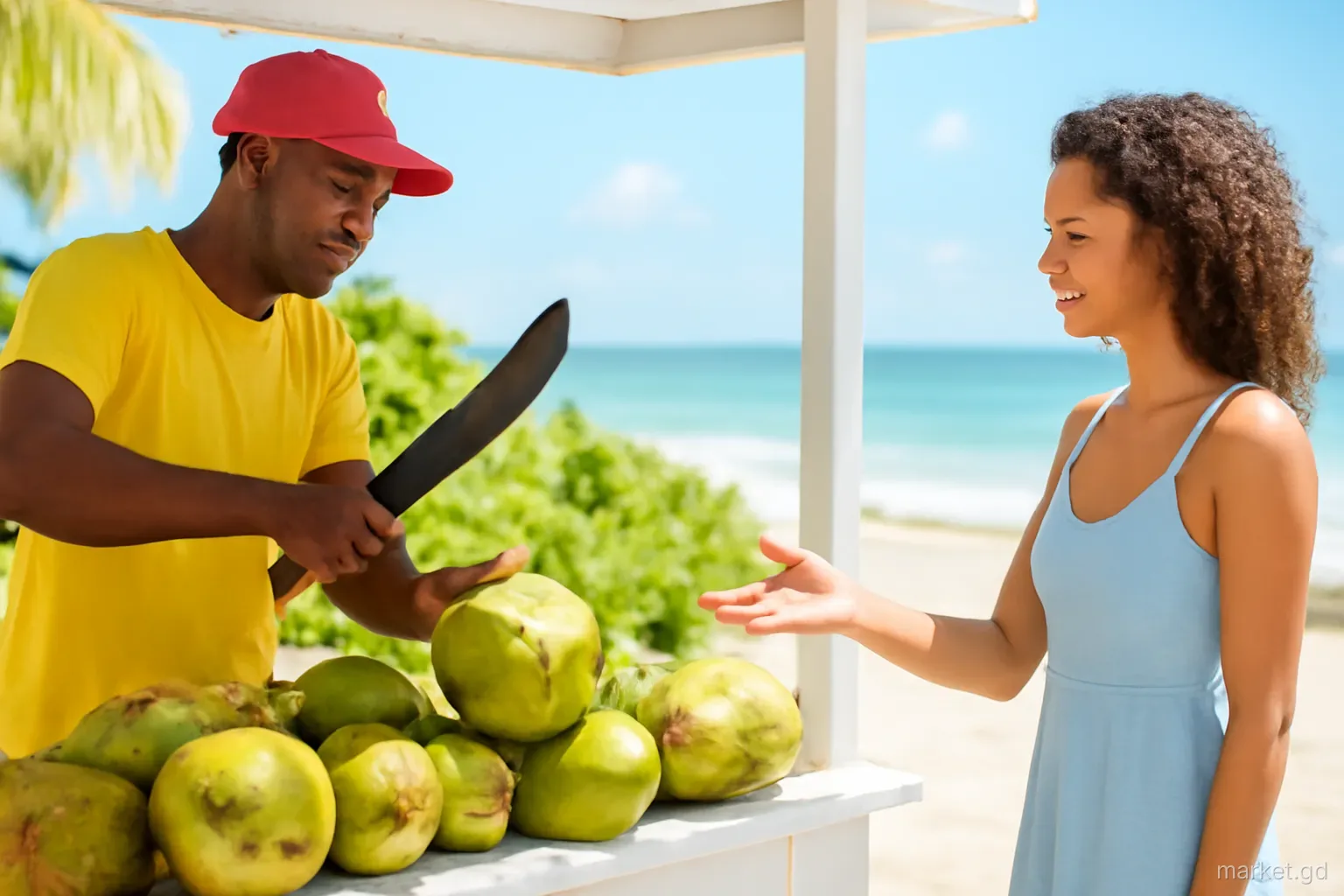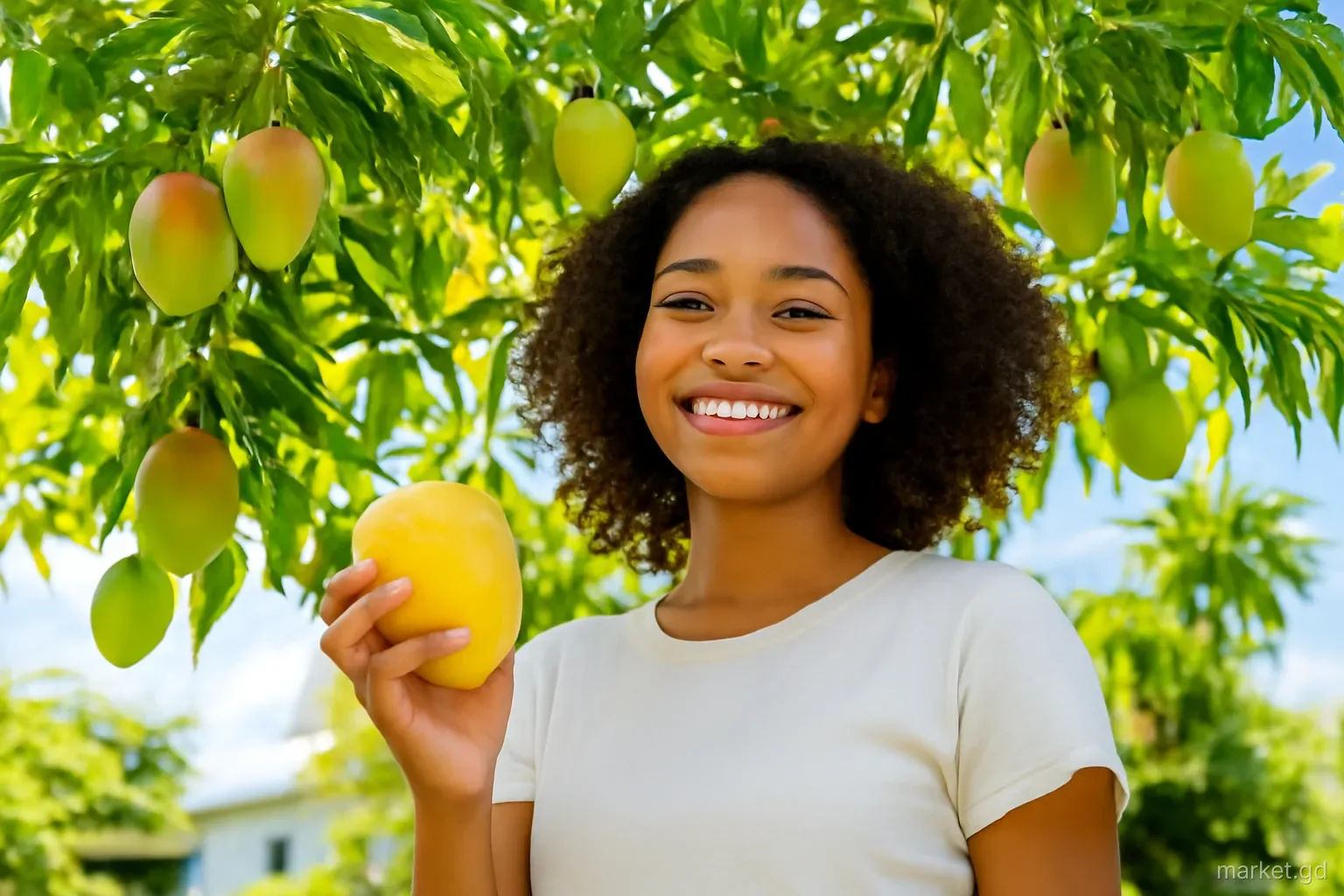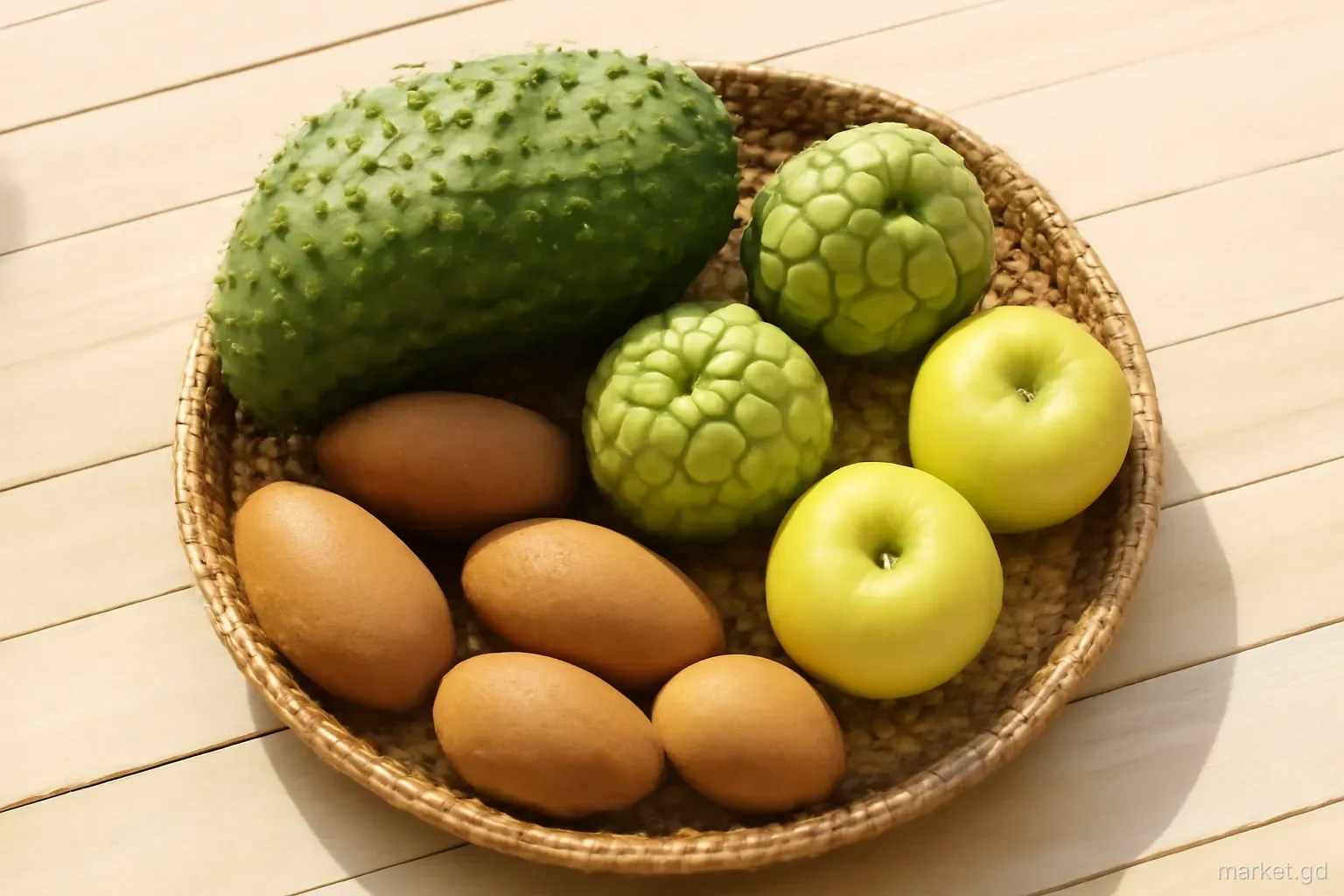
A Grenadian fruit stall can be baffling the first time. Spiny green soursops, scaly sugar apples, rough brown sapodillas and knobbly golden apples sit next to familiar bananas and pawpaws. Vendors know exactly which are ready to eat today and which need two more days on the counter, but the signs are not always obvious to newcomers.
This page is about one practical question: how do you tell when each fruit is ripe, and what do you do with it then? It covers the main less-familiar fruit sold in Grenada, how to judge ripeness by touch, colour and smell, how long each takes to ripen at home and how Grenadians eat them. Seasons vary, so not every fruit will be on sale at once.
A general rule: buy firm, ripen at home
Many tropical fruit are picked mature but not yet soft, because ripe fruit bruises easily and spoils fast. That is the case with soursop, sapodilla, sugar apple and avocado, among others. They finish ripening on the counter at home, usually within two to five days in Grenada's warmth.
Buying a mix of firm and nearly ripe fruit gives you something to eat each day. Tell the vendor when you want to eat each item, and they will usually choose accordingly. Check fruit daily once you get it home, since the change from firm to ripe can be quick.
Keep ripening fruit at room temperature, out of direct sun, and move it to the fridge once ripe to hold it for a day or two longer. Refrigerating unripe tropical fruit often stops it ripening properly.
Soursop
What it is. A large, heart-shaped green fruit with soft spines on the skin and white, juicy, fibrous flesh with large black seeds. The flavour is sweet-sour, often compared to a mix of pineapple, strawberry and citrus.
When it is ripe. The skin darkens slightly and the spines spread apart and soften. The fruit gives clearly when pressed, like a ripe avocado. An unripe soursop is hard; an overripe one is very soft, with dark patches.
Ripening time. Usually two to four days at room temperature from firm.
How it is eaten. Mostly as juice, punch or ice cream. The pulp is pressed through a sieve with water or milk and sweetened. It can also be eaten with a spoon.
Caution. Do not eat or crush the seeds. Use the leaves as tea only in moderation and seek medical advice if you have health conditions, as claims about soursop's medicinal powers are not well supported.
Sugar apple and sapodilla
Sugar apple. Also called sweetsop, a round fruit with knobbly, scale-like segments. When ripe, the segments separate slightly, the skin turns paler or yellowish between the bumps, and the fruit yields to gentle pressure. Break it open and eat the sweet, custardy flesh with a spoon, spitting out the seeds.
Sugar apple timing. Ripe fruit falls apart easily and spoils within a day or two, so eat it soon after it softens.
Sapodilla. An egg-sized to small apple-sized fruit with rough brown skin like a potato. Ripe sapodilla is soft to the touch, and if you scratch the skin lightly, the flesh beneath is brown, not green.
Sapodilla caution. Unripe sapodilla is full of sticky latex and unpleasant to eat. Wait until it is fully soft. Ripe flesh is sweet, with a malty, brown-sugar flavour.
Seeds. Both fruit have hard black seeds that should not be eaten.
Golden apple, guava and passion fruit
Golden apple. Known elsewhere as June plum or ambarella, an oval green fruit that turns yellow as it ripens. Grenadians eat it green and crunchy with salt, or ripe and yellow, when it is softer and sweeter. It is also made into juice and chow. The seed has spiny fibres, so eat around it.
Guava. Ripe guava is yellow or yellow-green, gives slightly to pressure and has a strong, sweet fragrance you can smell from a distance. Flesh may be white or pink. Eat it fresh, or use it in juice, jams and guava cheese.
Passion fruit. Round fruit with yellow or purple skin. Ripe passion fruit is heavy and its skin starts to wrinkle. Cut it in half and scoop out the seeds and pulp, or strain for juice.
Ripening at home. Golden apple and guava ripen within a few days on the counter; passion fruit keeps a week or more and gets sweeter as it wrinkles.
Five finger, tamarind and other fruit
Several other fruit appear in Grenada's markets in season. Their ripeness signs are worth knowing.
- Five finger (carambola): star-shaped when sliced. Ripe fruit is yellow with slightly browned ridges and a sweeter taste; green fruit is sour and used in chow. People with kidney disease should avoid five finger, as it can be dangerous for them.
- Tamarind: brown pods with sticky, sour-sweet pulp around seeds. Ripe pods are brittle and brown. Used in drinks, sauces and tamarind balls.
- Pawpaw (papaya): ripe when mostly yellow and slightly soft. Green pawpaw is used in cooking and pepper sauce.
- West Indian cherry: small, bright red, very sour fruit rich in vitamin C, used in juice. Ripe when deep red and soft.
- Plums: several local types, yellow to red, appear seasonally. Ripe fruit is coloured and slightly soft.
- Avocado: called pear or zaboca in parts of the Caribbean. Ripe when it yields to gentle pressure at the stem end. Varieties differ in skin colour.
Where and when to find these fruit
Market Square in St George's, the Grenville market and roadside stalls around the island are the main places to buy less common fruit. Vendors often specialise in what grows on their own land, so the selection changes from stall to stall and week to week. Saturday morning gives the widest choice, but fruit that ripens quickly, such as sugar apple and soursop, is best bought close to when you plan to eat it.
Seasons vary by fruit and by part of the island. Golden apple, soursop, sugar apple, guava and passion fruit come and go through the year rather than all appearing at once. Sapodilla and plums have their own seasons, and some fruit, such as pawpaw, is available most of the time. Weather plays a role: a drought, heavy rains or a storm can reduce supply for weeks.
If a fruit you want is not on sale, ask. A vendor may know when it will be back, or who in the market has some that day.
Prices for these fruit are usually per piece for large fruit such as soursop and per heap for small ones like golden apple, plums and West Indian cherries. Large, perfect soursops can cost noticeably more than smaller ones. As with all market produce, prices rise when supply is short and fall in a glut.
Mistakes to avoid
Eating sapodilla too early. Unripe sapodilla is gummy and astringent. Wait until it is fully soft and the flesh under the skin is brown.
Refrigerating unripe fruit. Cold can stop soursop, sapodilla and other fruit from ripening properly. Ripen first, then refrigerate.
Leaving sugar apples too long. They go from ripe to spoiled quickly. Eat within a day of softening.
Swallowing seeds. Many tropical fruit have seeds that should not be eaten, including soursop and sugar apple.
Ignoring health advice. Five finger is dangerous for people with kidney disease. Check with a doctor if you have health concerns about any fruit.
Expecting everything at once. Fruit is seasonal. Ask the vendor what is in, and enjoy what the market offers that week.
Frequently asked questions
How do you know when a soursop is ripe?
A ripe soursop gives clearly when pressed gently, like a ripe avocado, and its soft spines spread apart. The skin may darken slightly. Unripe soursop is hard. Buy firm fruit and let it ripen at room temperature for two to four days, checking daily.
What does sapodilla taste like?
Ripe sapodilla has sweet, soft flesh with a malty, brown-sugar flavour, often compared to pear with caramel. It must be fully ripe to be enjoyable, since unripe fruit is full of sticky latex. Test by pressing for softness and scratching the skin to check that the flesh is brown.
Is golden apple eaten green or ripe?
Both. Many Grenadians enjoy golden apple green and crunchy with salt, or in chow, when it is tart and crisp. Ripe golden apple turns yellow and becomes softer and sweeter, good for eating or juice. Watch out for the spiny fibres on the seed.
Can you eat soursop seeds?
No. Soursop seeds should not be eaten, chewed or crushed. Remove them when preparing the fruit, which is easiest by pressing the pulp through a sieve. Eat only the white flesh or use it for juice, punch and ice cream.
Is five finger safe to eat?
For most people, five finger, also called carambola or star fruit, is safe in normal amounts. However, it contains substances that can be dangerous for people with kidney disease, and they should avoid it. If you have kidney problems, check with a doctor before eating it.
Why does Grenada call avocado pear?
In Grenada and several other Caribbean islands, avocado has long been called pear or zaboca in everyday speech. Ask for pear at a market and you will usually be offered avocados. Varieties differ in size and skin colour, so ask the vendor when each will be ready to eat.