Ask for figs at a Grenadian market and you will be handed bananas. In Grenada, as in several other Eastern Caribbean islands, fig is the everyday word for banana, and the market sells many kinds: green fig to boil as a starch, small sweet figs to eat ripe, squat bluggoe for cooking and long plantain that can be green, yellow or black depending on what you want to make.
This page sorts out the names, explains how to choose each type at the right stage of ripeness, how to peel green bananas without staining your hands, how to store them and how Grenadians cook them. It is aimed at anyone shopping at a Grenadian market with a kitchen to cook in.
Why bananas are so central
Bananas were once one of Grenada's main export crops, grown on estates and small farms across the wetter parishes and shipped to Britain. Export volumes fell sharply from the 1990s onwards as trade preferences changed and disease and hurricanes took their toll. But bananas remain a major food crop at home, grown on small plots, in backyards and on hillsides across the island.
That means bananas are in the market almost every day of the year, in several forms. Green bananas are a starch in their own right, boiled with provisions or added to oil down. Ripe bananas are fruit, snacks and baking ingredients. Plantain and bluggoe fill the gap between the two, used green or ripe in different dishes.
Understanding the types helps you buy the right fruit for the meal, rather than ending up with sweet bananas for a savoury dish or starchy plantains for a fruit bowl.
The main types on the market
Green fig. Unripe bananas of ordinary dessert varieties, sold green for boiling. They are starchy and firm, cooked like a vegetable and eaten with saltfish, in oil down or alongside provisions.
Sweet figs. Ripe dessert bananas eaten as fruit. You will see different varieties, from standard long bananas to small, very sweet types. Ask the vendor for the names they use.
Bluggoe. A cooking banana with an angular, squat shape and thick skin. It is starchy when green and used boiled, in soups or in oil down; when ripe it can be cooked or eaten.
Plantain. Larger, longer and more angular than dessert bananas, with thick skin. Green plantain is starchy and used boiled or fried; yellow to black plantain is sweeter and classic for frying.
Mixed hands. Some vendors sell hands at different stages so that a household can use green fruit early in the week and ripe fruit later.
Choosing the right ripeness
Ripeness decides how a banana cooks and tastes. Tell the vendor what you plan to make and when.
- Green fig for boiling: fully green, firm and unblemished. Avoid fruit with yellow patches if you want a firm, starchy result.
- Sweet figs to eat: yellow with small brown speckles for full sweetness; yellow with green tips if you want them to last a few more days.
- Green plantain: firm and green for boiling, tostones-style fried slices or chips.
- Ripe plantain for frying: yellow with plenty of black patches, or even mostly black, while still firm. These caramelise when fried.
- Bluggoe: green for savoury cooking; turning yellow if you want a softer, slightly sweet result.
- Buying ahead: choose fruit at different stages so it ripens in sequence over the week.
Peeling green bananas without the mess
Green bananas and green plantain release a sticky sap that stains hands and clothes. Grenadian cooks use a few tricks.
- Rub a little cooking oil on your hands, or wear gloves.
- Cut off both ends of the banana with a sharp knife.
- Make a shallow cut along the length of the skin, following one of the ridges, without cutting deep into the flesh.
- Prise the skin away with your thumb or the tip of the knife, working around the banana.
- Drop peeled bananas straight into a bowl of water with a little salt or lime to stop them darkening.
- Alternatively, boil the bananas in their skins, cut lengthways first; the skins peel off easily once cooked.
- Clean knives and boards quickly, before the sap dries.
How Grenadians cook them
Boiled green fig. Peeled green bananas boiled in salted water until tender, served with saltfish, stewed meat or as part of a provision plate.
In oil down. Green fig is a regular ingredient in oil down, cooked in coconut milk with breadfruit, dumplings and salted meat.
Fried ripe plantain. Slices of ripe plantain fried until golden and caramelised, served as a side with most meals.
Plantain and banana porridge. Green banana or plantain grated or blended and cooked with milk, spice and sugar into a thick porridge.
Soups. Green bananas and bluggoe are common in heavy Saturday soups and broths.
Baking and snacks. Ripe sweet figs go into banana bread, fritters and cakes. Overripe fruit is ideal for baking.
Plantain chips. Thin slices of green plantain fried until crisp make a popular snack, sold in small bags in shops and made at home.
Green fig salad. Boiled green bananas cut into chunks and dressed like potato salad, sometimes with saltfish, onion and seasoning, appear at gatherings and lunches.
From hillside to market table
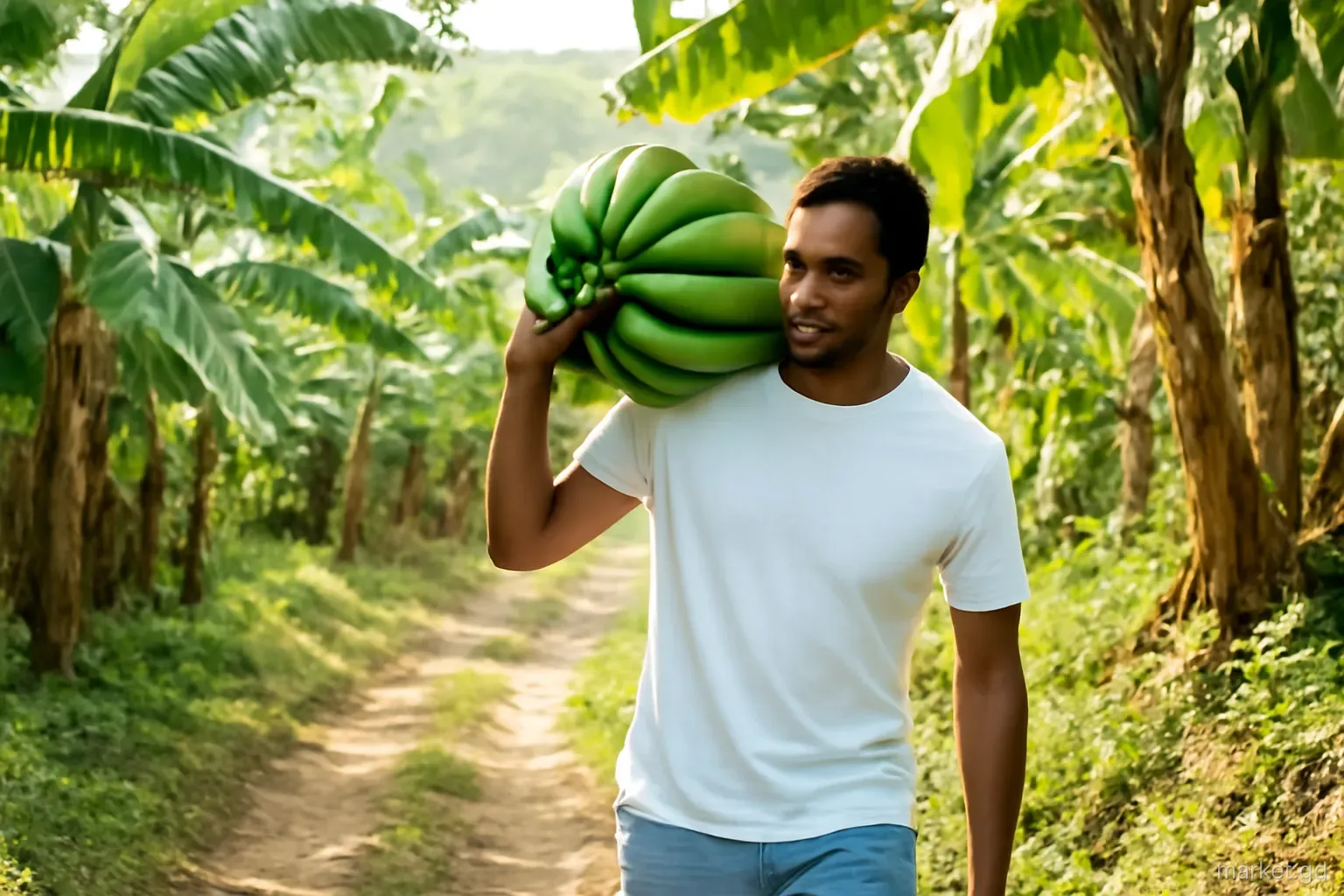
Most bananas in Grenada's markets come from small farms and backyard plots rather than large plantations. A farmer cuts a whole bunch while it is still green, carries it out of the field, and either sells it whole to a higgler or cuts it into hands for the market. Because bananas ripen after cutting, a bunch cut on Thursday can be at the right stage for Saturday's market, green for those who want fig and yellowing for those who want fruit.
That short chain from farm to table is one reason market bananas often taste better than imported supermarket fruit, which is picked well before ripeness and shipped long distances. It also explains why supply can drop sharply after strong winds: banana plants are easily flattened in storms, and it takes months for new plants to bear fruit again. After a hurricane, bananas are often among the first foods to become scarce and among the slowest to recover.
Storing bananas in a hot kitchen
Bananas ripen quickly in Grenada's heat, so storage matters. Keep green and ripe bananas apart, since ripe fruit releases ethylene gas that speeds up ripening nearby. Store them in a cool, shaded spot away from direct sun.
Green fig for boiling should be cooked within a few days, before it starts to turn yellow. Ripe sweet figs can go in the fridge to slow further ripening; the skin turns dark but the flesh stays good for a few more days. Overripe bananas can be peeled and frozen for baking or smoothies.
Plantain is more forgiving. It can be kept at room temperature for days as it moves from green to yellow to black, giving you flexibility in how you use it. If you want to slow it down, buy plantain greener than you need.
Mistakes to avoid
Asking for figs and expecting figs. In Grenada, figs are bananas. If you want the Mediterranean fruit, you will not find it at the market.
Boiling ripe bananas as a starch. Ripe fruit turns mushy and sweet. Use green fig for savoury boiled dishes.
Frying green plantain like ripe plantain. Green plantain does not caramelise. Fry it twice as crisp slices, or let it ripen first.
Ignoring the sap. Banana sap stains clothes permanently. Wear an apron and oil your hands.
Buying a full bunch for a small household. A whole bunch ripens all at once. Buy a hand or a few fingers instead.
Squeezing every banana. Vendors prefer to choose for you. Pressing fruit to test ripeness bruises it and annoys the seller; ask instead.
Forgetting the fridge trick. When sweet figs reach perfect ripeness before you can eat them, refrigerate them. The skin darkens, but the fruit inside stays good for a few extra days.
Frequently asked questions
Why are bananas called figs in Grenada?
In Grenada and several other Eastern Caribbean islands, fig is a long-standing everyday word for banana, likely from older European usage. Green fig means unripe bananas for boiling, and sweet figs are ripe bananas for eating. The Mediterranean fig fruit is not what vendors mean.
What is the difference between bluggoe and plantain?
Both are cooking bananas. Bluggoe is shorter, squatter and more angular, often used green in soups and oil down. Plantain is longer and larger, used green for boiling or chips, and ripe for frying. Both are starchy when green and sweeter as they ripen.
How do you stop green bananas from staining your hands?
Rub cooking oil on your hands or wear gloves before peeling. Cut off the ends, slit the skin lengthways along a ridge and prise it off. Alternatively, boil the bananas in their skins and peel them once cooked. Clean knives promptly.
When is plantain ready to fry?
For sweet fried plantain, wait until the skin is yellow with lots of black patches, or mostly black, while the fruit still feels firm. The sugars then caramelise nicely in the pan. Green plantain can be fried too, but it will be starchy and is best as crisp slices.
Can you eat green fig raw?
Green bananas are hard, starchy and astringent when raw, and are not usually eaten that way. Boiling makes them tender and pleasant. Some people use green banana flour or grated green banana in porridge, but these are cooked before eating.
Are bananas grown for export in Grenada?
Bananas were a major export for Grenada in the past, but export volumes fell sharply from the 1990s onwards. Today bananas are mainly grown for the local market, on small farms and in backyards, which is why they are plentiful in markets throughout the year.