A Grenadian farmer with a good crop of tomatoes, sweet peppers or bananas has more options than it first appears. The crop can go to a market stall run by the family, to a vendor who buys at the farm gate, to the Grenada Marketing and National Importing Board, to hotels and restaurants, to supermarkets, or into the hands of traders who ship produce to other islands. Each route pays differently, carries different risks and demands different things from the grower.
This decision guide compares those channels on price, payment, reliability and effort, so that small farmers can choose the mix that suits their crops and their time. Most successful growers do not rely on a single buyer. They combine two or three outlets, so that when one buyer goes quiet the crop still has somewhere to go.
Selling direct at a market stall
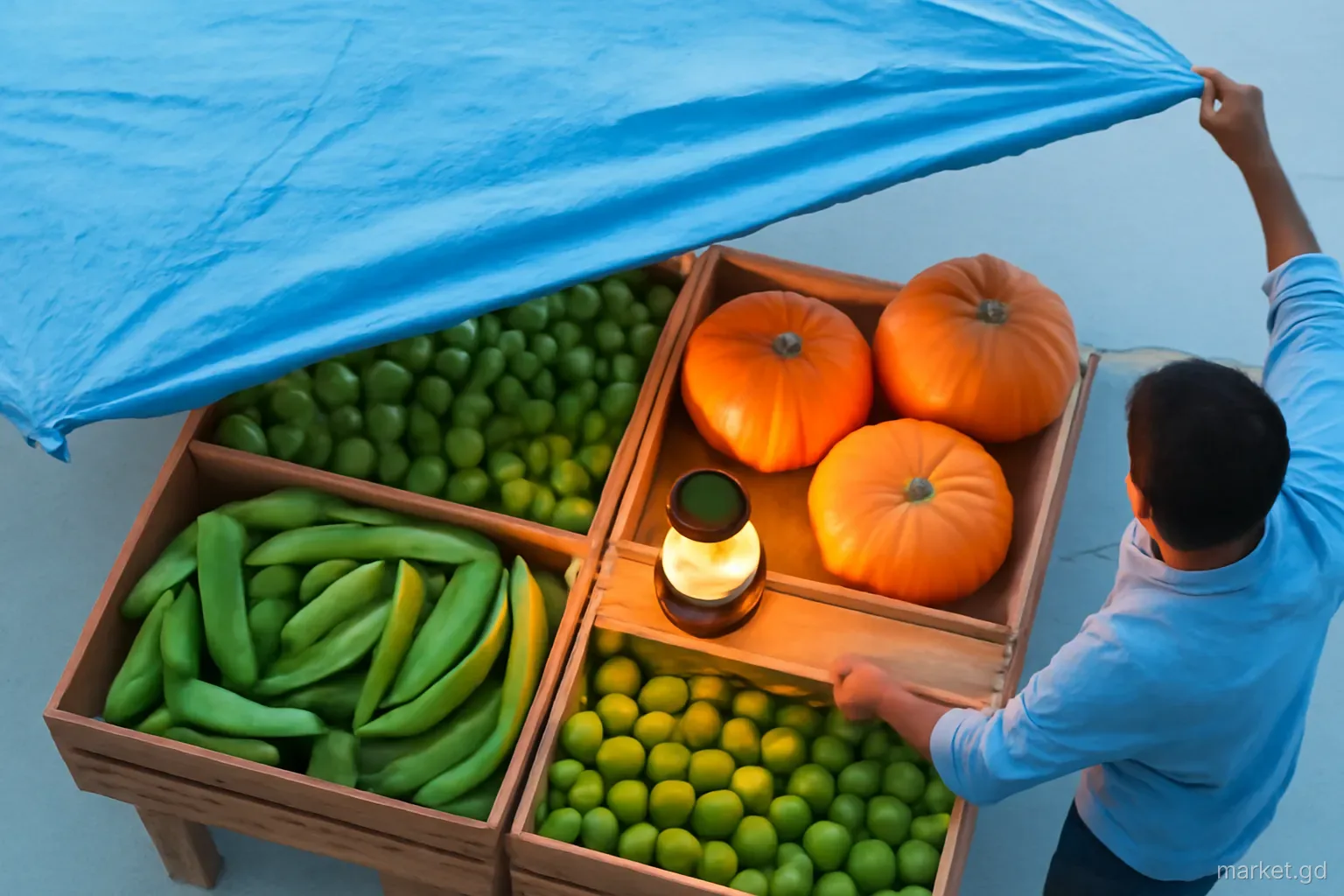
Selling your own produce at Market Square, in Grenville or at a local market gives the highest price per pound, because there is no middleman. You also see directly what customers want, which crops sell out and which sit unsold. For farmers with family members free to run a stall, it is often the most profitable outlet for part of the crop.
The cost is time and labour. A Saturday at the market means reaping and packing on Friday, transport before dawn and a full day standing at the stall, time that is not spent on the farm. Volumes are limited by how much one stall can sell in a day, and a large harvest cannot be cleared through a single table. Weather, competition from neighbouring stalls and slow weeks all fall on the farmer. Direct selling works best for modest volumes, high-value crops and households with someone who enjoys trading.
The Marketing Board
The Grenada Marketing and National Importing Board, usually known as the Marketing Board or MNIB, buys produce from local farmers and supplies its own retail outlets, institutions and other buyers. For a farmer it offers a route to market that does not depend on finding individual customers, and it can absorb larger quantities than a single stall.
Prices paid by the board are generally lower than retail market prices, since the board must cover its own handling, transport and losses. It also has quality standards, so produce that is damaged, undersized or poorly packed may be rejected or graded down. The board's demand varies by crop and season; in a glut it may not be able to take everything on offer. Talk to the board before planting a large area of any crop, so that you know what they expect to need and at what standard. Farmers registered with the Ministry of Agriculture usually find dealing with official buyers smoother.
Hotels and restaurants
The attraction. Hotels and restaurants, especially on the south coast around Grand Anse, Morne Rouge, Lance aux Epines and True Blue, buy steadily through the tourist season and often pay better than wholesale for quality and consistency. Chefs value herbs, salad greens, specialty peppers, fresh fruit and anything hard to import fresh.
What they demand. Consistency above all: the same quality and quantity every week, delivered on time. A hotel that plans a menu around your lettuce cannot cope if the delivery fails. Expect specifications on size, cleanliness and packing.
Paperwork. Hotels usually need invoices, a business name and sometimes a TIN to pay suppliers. Payment often comes on credit terms, such as thirty days or more, rather than cash on delivery.
The risk. Demand drops in the off season, and a supplier can be dropped quickly after a few missed deliveries. Cash-flow pressure from slow payment can hurt a small farm that needs money to replant.
Supermarkets
Grenada's supermarkets sell a growing range of local fresh produce alongside imports, and some actively seek local suppliers for items such as tomatoes, cucumbers, sweet peppers, callaloo, herbs and fruit. Supplying a supermarket can bring steady volume and the recognition of seeing your produce on the shelf.
Like hotels, supermarkets want reliable quantity and quality, proper invoicing and consistent packing. Payment terms can stretch to weeks. For processed products, such as pepper sauce or seasonings, they expect professional labelling and packaging that meets standards set through the Grenada Bureau of Standards, and may want barcodes. Supermarket buyers also compare your price with imported equivalents, so local produce must compete on freshness and quality rather than simply asking for patriotic support. A farmer who can supply in the weeks when imports are expensive or scarce has a strong negotiating position.
Hucksters and inter-island trade
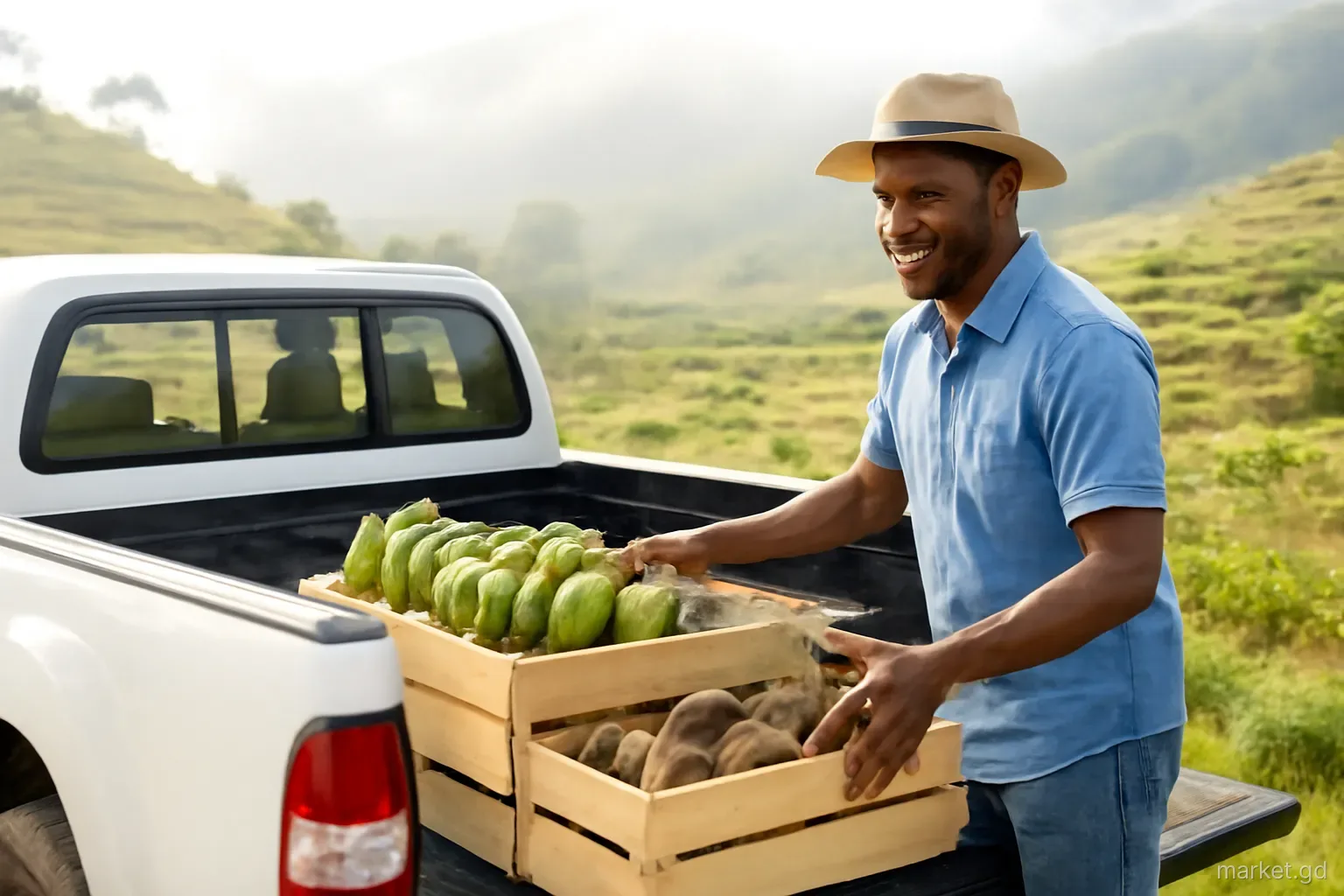
Grenada has a long tradition of traders, often called hucksters or traffickers, who buy produce from farmers and ship it by small vessel to markets in other islands, especially Trinidad and Barbados. They buy in volume, often pay cash and can take crops that the local market cannot absorb. For some growers, they are the main buyer for ground provisions, fruit and seasonings.
The trade is uneven. Demand depends on prices in the destination markets, shipping availability and the rules of other countries, and hucksters may vanish for weeks. Exports of agricultural produce require plant health documentation, such as a phytosanitary certificate from the Ministry of Agriculture's plant protection officials, and some destinations restrict particular crops because of pests. Farmers selling to traders should agree a price before reaping and ideally be paid at collection rather than after the produce has been sold abroad.
Farm gate buyers and roadside tables
The simplest outlet of all is selling at the farm. Vendors and small traders drive the country roads buying produce to take to town, and some farmers keep a roadside table or a shed where passing drivers stop for bananas, coconuts, citrus or provisions. Farm gate sales cost the grower almost nothing in time or transport, and payment is usually immediate. For a farm far from any market, or a household with no one free to sell, they can be the main channel.
The trade-off is price. A farm gate buyer takes on transport, the market day and the risk of unsold stock, and pays accordingly. Farmers who sell this way do best when they know what the produce is fetching in town, deal with more than one buyer and refuse to be rushed into a low price on the day. A roadside table adds margin but needs someone nearby to mind it, and it should never block the road or a driver's view at a bend. Many growers use farm gate sales for bulk and lower grades, and keep their best produce for buyers who pay more for quality.
How to choose your mix
There is no single best outlet. These questions help decide where each crop should go:
- How much time does the household have for selling, as opposed to farming? Less time favours the board, traders and farm gate buyers.
- Can you supply the same quantity every week? If not, hotels and supermarkets will be difficult; markets and traders are more forgiving.
- How quickly do you need cash? Credit terms from hotels and supermarkets suit farms with some cash reserve; markets and hucksters pay faster.
- How perishable is the crop? Delicate greens and herbs need short, quick routes; yams, pumpkins and dried spices can wait for a better price.
- Do you have the paperwork? Business registration, a TIN and invoices open doors to institutional buyers.
- What happens if one buyer drops out? Spreading sales across at least two channels protects the farm from sudden losses.
Frequently asked questions
Does the Marketing Board buy from any farmer?
The Marketing Board buys from local farmers, but its demand depends on the crop, the season and its own sales. Produce must meet its quality standards. Speak to the board before planting a large area, and register as a farmer with the Ministry of Agriculture.
How do farmers start supplying a hotel in Grenada?
Approach the chef or purchasing manager with samples, a list of what you can supply and in what quantity, and a realistic delivery schedule. Expect to provide invoices and wait for payment on credit terms. Start small and prove reliability before committing to large volumes.
Do hucksters need any permits to ship produce abroad?
Exporting agricultural produce generally requires plant health documentation, such as a phytosanitary certificate from the Ministry of Agriculture, and compliance with the import rules of the destination country. Some crops are restricted because of pests. Traders handle this, but farmers should understand it.
Are supermarkets in Grenada interested in local produce?
Many supermarkets stock local produce and look for reliable suppliers, especially of fresh vegetables, herbs and fruit. They expect consistent quality, proper packing and invoicing, and they compare prices with imports, so freshness and reliability are the main selling points.
Is it better to sell at the farm gate?
Farm gate sales to vendors or traders save time and transport, but usually pay the lowest price. They suit large harvests, busy farmers and crops that need to move quickly. Many growers sell part of the crop at the gate and take the best produce to market or institutional buyers.