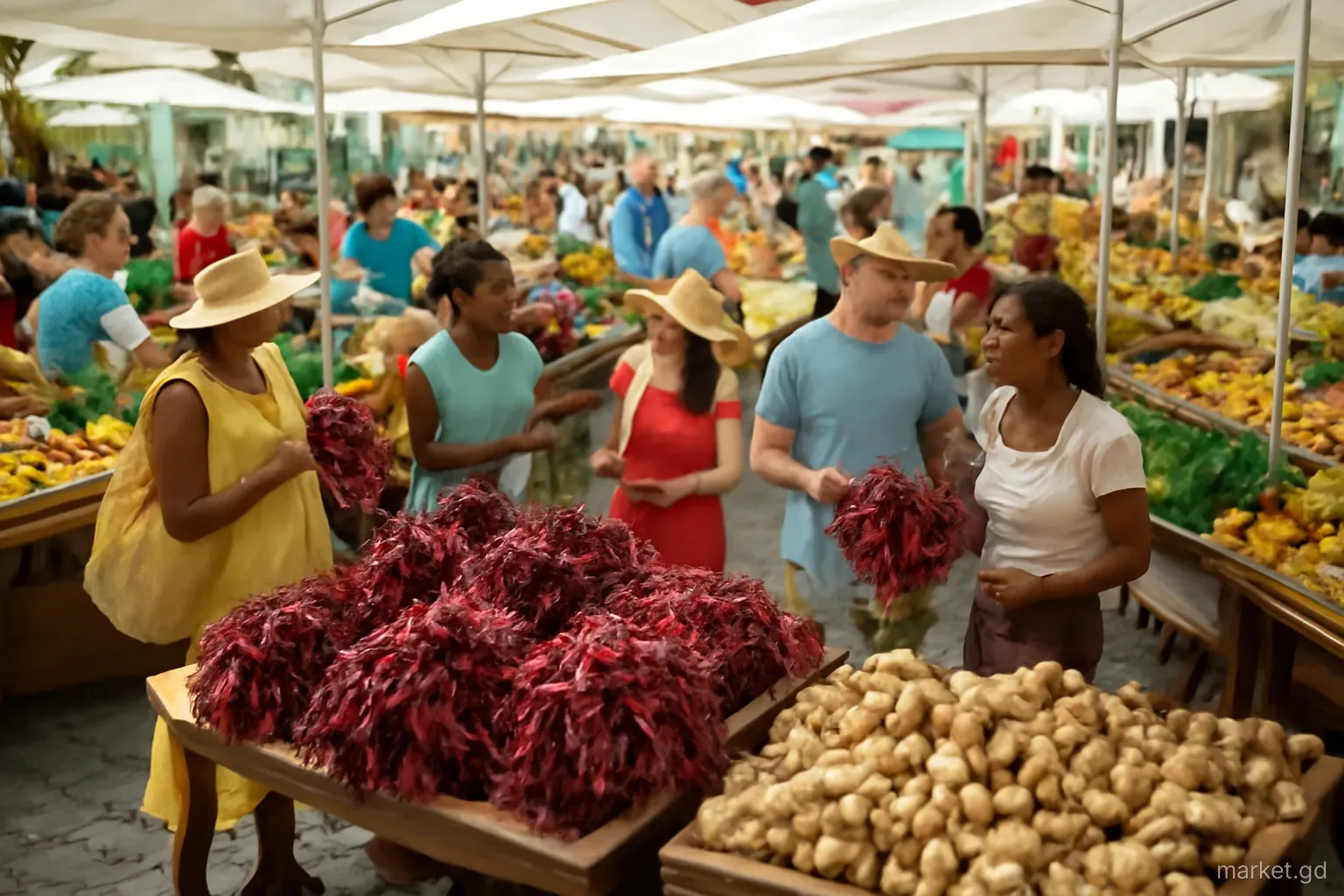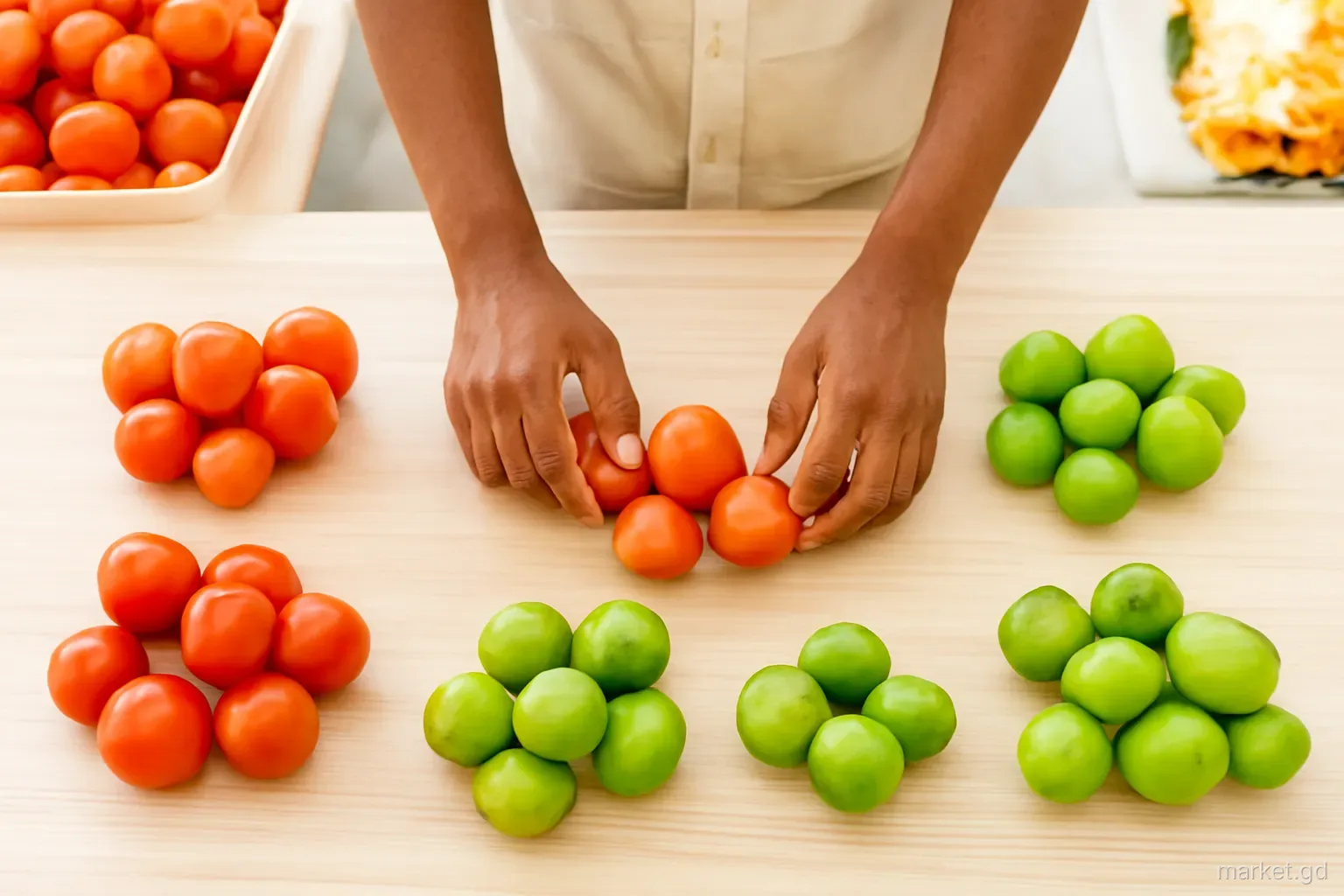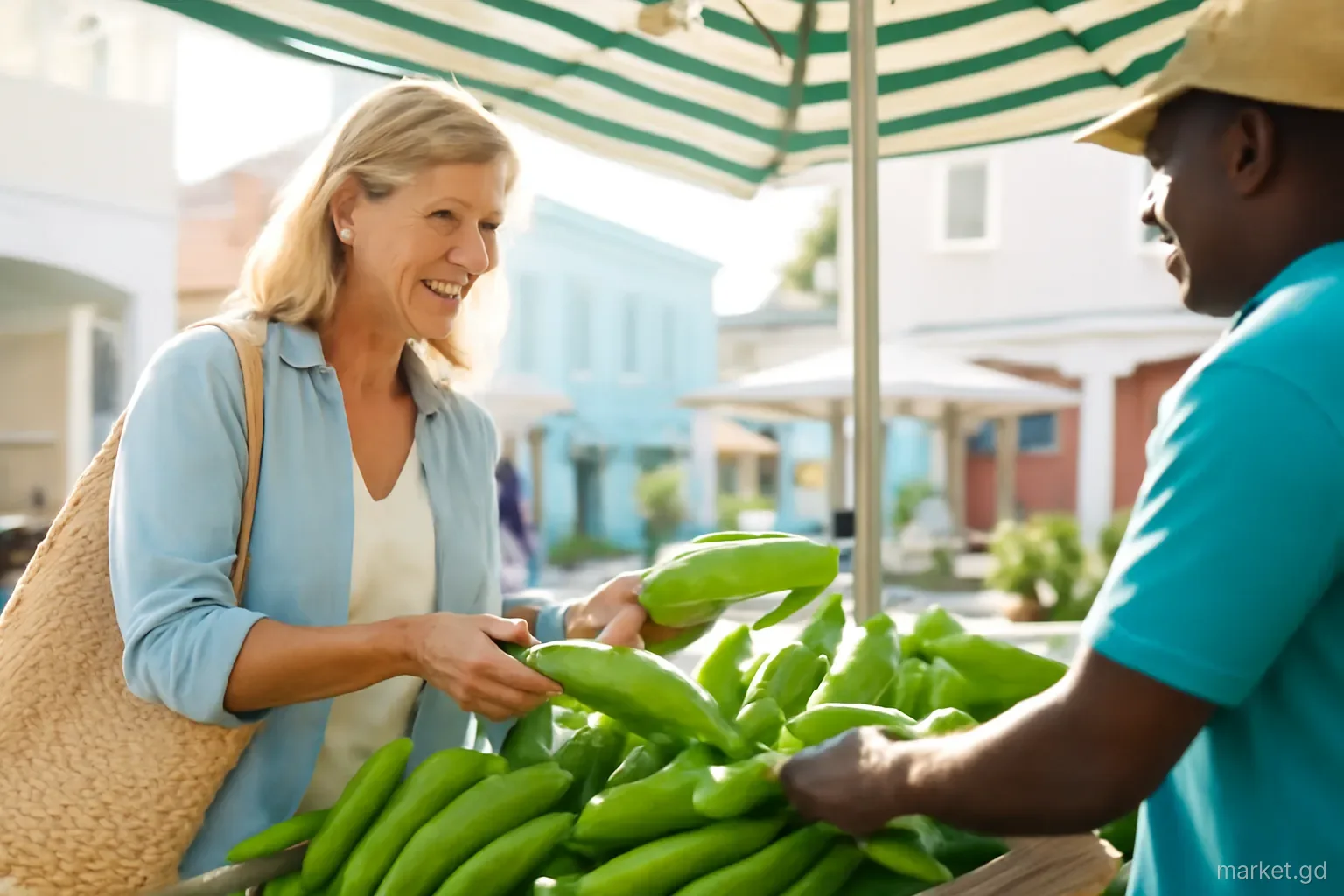
Visitors go to Market Square once, take photographs and buy a spice basket. People who live in Grenada go every week, and the market works very differently for them. The same vendor who quotes a visitor in US dollars will, after a month of Saturdays, put aside the best breadfruit, tell you the christophene is tired this week and suggest the bodi instead, and round the total down without being asked.
This page is for residents: long-stay renters, retirees, medical students with a kitchen, and new arrivals who want to feed a household from local produce rather than imported supermarket stock. It covers how to split shopping between days, how a vendor relationship actually forms, what a realistic weekly basket looks like, and the habits that keep produce from rotting in a hot kitchen by Wednesday.
Which day for which job
Saturday is the full market. Farmers and higglers come in from the country parishes before dawn and the square is at its widest choice between roughly six and ten in the morning. For a resident, Saturday is the day for the big shop: ground provisions, a breadfruit or two, the week's seasoning, fruit at different stages of ripeness, and anything that only appears in season.
Friday afternoon and evening is the quieter alternative many working people use. Some vendors are already set up for the weekend, the crowd is thinner and there is time to talk. The trade-off is that a few growers only arrive on Saturday, so the very best of the week's crop may not be there yet.
Weekdays are top-up days. Fewer stalls trade from Monday to Thursday, but there is usually enough for greens, tomatoes, limes, bananas and fruit. Residents who live in or near town often stop in midweek for the perishables that do not last from Saturday, especially leafy greens and ripe fruit. Sunday is not a market day, and on public holidays the square can be thin or empty, so plan around them.
How a regular vendor relationship forms
Pick one or two stalls and keep going back. Grenadian market trade runs on familiarity. Buying from the same person each week matters more than chasing a slightly lower price from someone new. After a few visits you will be recognised, greeted by name or by a nickname, and served with more care.
Greet first, every time. Good morning before anything else. It is basic courtesy in Grenada and the fastest way to be treated as a neighbour rather than a passer-by.
Ask rather than pick. Let the vendor choose and tell them what you need: a breadfruit to roast today, plantain to fry on Thursday, mangoes for the weekend. They will select for timing, which is something no supermarket does.
Accept advice. When a vendor says the dasheen is not good this week, take it. That honesty is the point of the relationship, and ignoring it signals you are not listening.
Do not haggle hard over small amounts. Local produce is not priced with a large margin. Regulars rarely bargain; instead they receive a little extra, a slightly bigger heap or a few limes thrown in. That goodwill disappears quickly if every purchase becomes a negotiation.
Pay in EC dollars and small notes. Paying in local currency with change ready marks you as someone who lives here. It also avoids awkward exchange-rate arithmetic at a busy stall.
A realistic weekly basket
What a household buys depends on how much it cooks, but a typical Saturday shop for two people eating mostly at home might look like this. Prices vary with season, weather and supply, so treat any figure you hear as a snapshot rather than a rule.
- Starches for the week: one breadfruit, a few pounds of yam or dasheen, sweet potato, a hand of green fig and two or three plantains at different stages so they ripen in sequence.
- Seasoning: a bundle of chive, broad-leaf thyme, celery and a few seasoning peppers, plus one or two hot peppers if you like heat. Many residents blend this into green seasoning on Saturday afternoon.
- Vegetables: callaloo for one meal early in the week, christophene, a wedge of pumpkin, cucumber, tomatoes and bodi or ochro depending on what looks fresh.
- Fruit: bananas, a pawpaw that will be ready midweek, limes, and whatever is in season, such as mangoes in mid-year or golden apple and soursop when they appear.
- Extras: a coconut or two if you cook with fresh milk, fresh ginger, and a few whole nutmegs to grate over drinks and porridge.
Budgeting: where the market saves money and where it does not
Local produce at the market is usually cheaper than the same item in a supermarket, and much cheaper than imported equivalents. A household that builds meals around provisions, breadfruit, local greens and seasonal fruit spends noticeably less than one buying imported potatoes, salad leaves and apples. The saving is largest in a glut, when mangoes, avocados or breadfruit are everywhere and vendors sell by the heap.
The market does not save money on everything. Onions, garlic, carrots, cabbage and potatoes are often imported or grown in limited quantities, and their market price is close to supermarket price. After a hurricane, a drought or heavy rain, local supply drops and prices rise sharply for weeks; residents who arrived after a good year are sometimes surprised by this. Imported staples, dry goods, dairy and meat are better bought at a supermarket or a wholesale outlet.
A practical approach is to plan the week's meals around what the market has, not the other way round. Arrive with a rough idea, then let the vendors decide the details.
Reading the season from the stalls
One advantage of shopping weekly is that you start to see the year turn. Mangoes build from a few early fruit to heaps sold for very little by mid-year, then vanish. Golden apple, soursop, plums and avocados each have their weeks of plenty. Sorrel appears towards Christmas. Pigeon peas and some citrus come with the cooler months at the end of the year. After a dry spell, greens become scarce and small; after steady rain, callaloo and herbs are lush and cheap.
Residents who notice these shifts cook better and spend less. Instead of insisting on a fixed shopping list, they ask what is plentiful and build the week around it. Vendors respect this, and it is also the easiest way to learn local names and dishes, because the person selling you an unfamiliar fruit will usually explain how to eat it.
Keeping produce fresh in a hot kitchen
Heat and humidity are the main enemies once you get home. A routine on Saturday afternoon saves waste later in the week.
- Unpack immediately. Produce left in a bag in a warm car or kitchen sweats and spoils within hours.
- Keep whole yams, dasheen, sweet potatoes and dry coconuts out of the fridge, in a cool, shaded, airy spot. Do not wash them before storing.
- Wrap seasoning herbs and callaloo loosely in a paper towel or cloth and refrigerate. Use callaloo within two or three days.
- Blend surplus chive, thyme, celery, peppers, garlic and onion into green seasoning and freeze it in small portions.
- Separate fruit by ripeness. Ripe fruit goes in the fridge; fruit still ripening stays on the counter away from direct sun, and checked daily.
- Cook mature breadfruit within a day or two before it softens, or boil and freeze pieces for later.
- Wash all produce in clean water before eating, and keep a lid on fruit bowls to discourage fruit flies and ants.
Common mistakes residents make
Arriving at eleven. By late morning on Saturday the best stock is gone and some vendors are packing up. Early is not optional if you want choice.
Buying everything ripe. A whole basket of ripe fruit will not survive the week. Buy in stages: some for today, some for Tuesday, some for Thursday.
Forgetting bags. Grenada has been restricting single-use plastics and polystyrene, and many vendors have limited bags. Bring sturdy reusable bags and something rigid for soft fruit.
Ignoring the rest of town. Market Square is one stop. The fish market, bakeries and the supermarket near the bus terminal fill the gaps, and a resident's routine usually links them in one trip.
Treating it like a supermarket. Picking up and squeezing stock without asking, or walking off mid-conversation, is noticed. Patience and courtesy are part of the price.
Frequently asked questions
What time does Market Square open on Saturday?
There is no single opening bell. Vendors start setting up before dawn and trade is lively from around six in the morning. For the widest choice, aim to arrive by eight. Many stalls start winding down from late morning to early afternoon, so plan your shopping for the cooler hours.
Is the market cheaper than the supermarket for residents?
For local produce such as provisions, breadfruit, greens and seasonal fruit, usually yes. For imported or semi-imported items like onions, potatoes and carrots the difference is small. Prices also swing after storms or drought, so the saving varies through the year rather than staying fixed.
Can you pay by card at Market Square?
Plan on cash. Most vendors are small traders working with EC dollar notes and coins, and card payment is not something to expect. Bring small denominations so vendors can give change early in the morning when they have little float.
Is it rude to bargain with market vendors?
Light bargaining on a large purchase is not offensive, but hard haggling over a few dollars on local produce is frowned upon. Regular customers tend to receive extra produce or rounded-down totals instead of negotiating, which works better for both sides over time.
Where can residents buy local produce on Sundays?
Market Square does not trade on Sundays. Some roadside stands and small shops in villages sell produce, and supermarkets open limited hours in some areas. Most residents simply do their main shop on Saturday and plan the weekend's cooking around it.
Do vendors deliver or take orders?
Some regular vendors will hold items for a familiar customer or take a request for the following week, especially for larger quantities. This depends entirely on the individual relationship, so it is something to ask about after you have been buying from the same stall for a while.