The first time you shop at a Grenadian market, the prices are easy to understand but the quantities are not. A vendor says five dollars, and it turns out to mean a small heap of tomatoes, a bundle of chive tied with a strip of banana leaf, or a pound of dasheen weighed on a battered scale. Bananas come by the hand, breadfruit by the piece, seasoning by the bundle, and some things by whatever the vendor decides looks fair.
None of this is complicated once you know the system, and knowing it saves money and misunderstandings. This page explains the main ways produce is sold in Grenada's markets, what each unit usually contains, how to ask for less or more, and the few points where buyers commonly go wrong.
Why there is no single system
Grenada officially uses the metric system for many purposes, but everyday market trade still runs largely on older habits. Weight is commonly quoted in pounds, many items are sold by count or by heap, and herbs and greens are sold by the bundle. Each method suits a particular type of produce and a particular kind of customer.
Heaps and bundles are fast. A vendor working alone with a queue does not want to weigh every handful of limes; a fixed heap at a round price speeds things up and needs no scale. Weighing suits heavy, irregular items such as yams, where size varies too much for a heap to be fair. Counting suits items that come in natural units, like breadfruit, coconuts and pineapples.
Prices are almost always quoted in EC dollars, often in round amounts such as two, five or ten dollars. Understanding what that round amount buys is the key to shopping well.
The main units you will meet
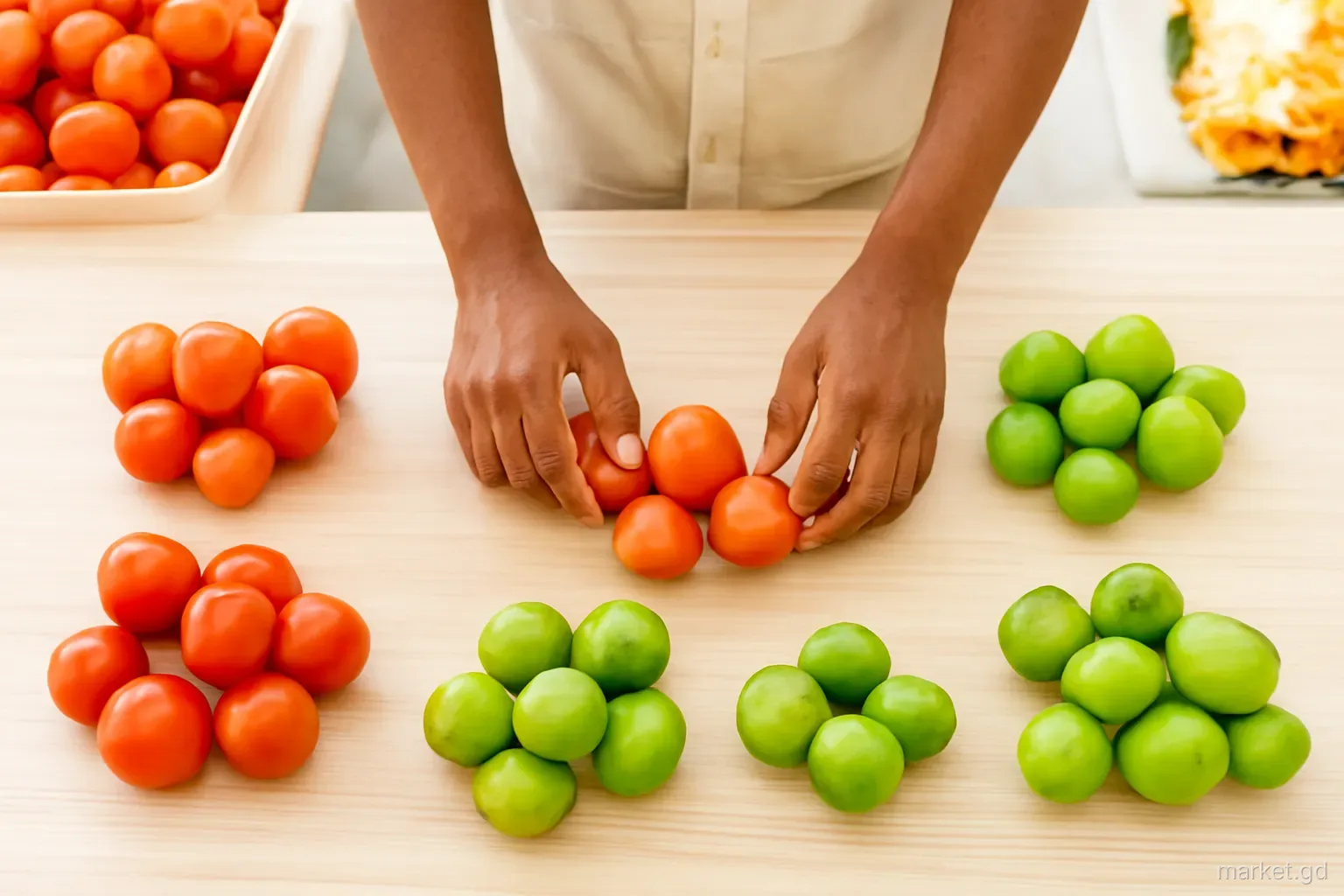
By the heap. A small pile of produce set out on the table at a fixed price. Tomatoes, limes, small peppers, golden apples, plums, sweet potatoes and small fruit are often sold this way. The heap size reflects the season: in a glut it grows; in a shortage it shrinks while the price stays the same.
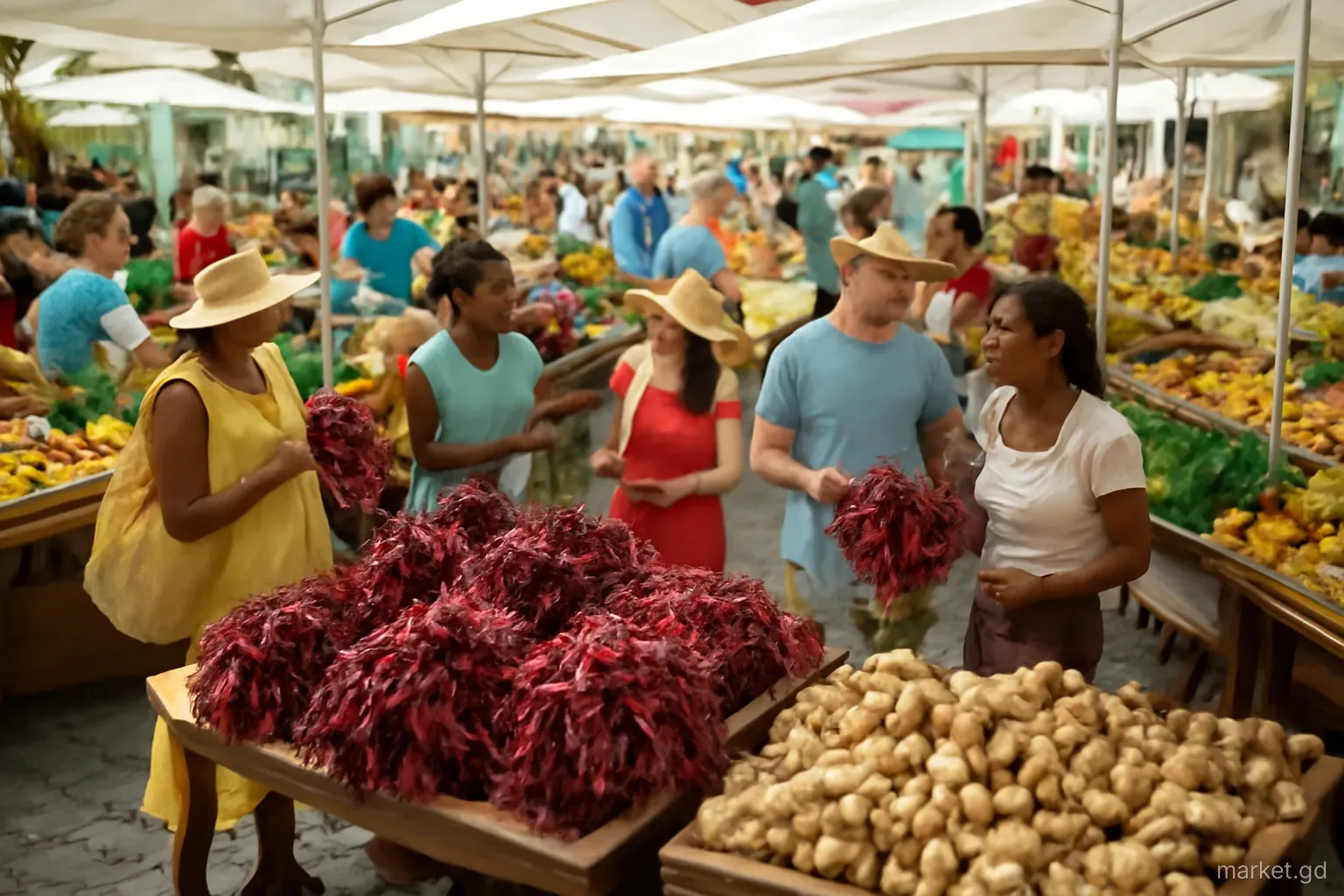
By the bundle. Herbs and leafy greens are tied together. A seasoning bundle might hold chive, thyme, celery and a pepper or two; callaloo is sold in bundles of leaves with stems. Bundle size varies between vendors, so look before buying.
By the pound. Heavier provisions such as yam, dasheen, tannia and sometimes pumpkin or christophene are weighed, usually on a hanging or table scale. Large yams and pumpkins are often cut and sold in pieces by weight.
By the hand or bunch. Bananas, green fig and plantain come by the hand, a cluster cut from the larger bunch, or sometimes individually. A full bunch is a large purchase meant for a big household or a reseller.
By the piece. Breadfruit, coconuts, pineapples, pawpaws, soursop and similar large fruit are priced individually, with bigger or better pieces costing more.
By the bag or container. Spices, pigeon peas, shelled nuts and small items may come in pre-packed bags or measured from a container. Ask what weight a bag holds if it matters to you.
How to ask for what you want
Grenadian vendors are used to customers adjusting quantities. A few phrases and habits make it easy.
- Greet the vendor first, then ask the price of the item, for example: how much for the tomatoes?
- Listen to the answer carefully. Five dollars a heap is different from five dollars a pound.
- If a heap or bundle is more than you need, ask for half or a smaller amount. Many vendors will make up a smaller heap at a smaller price.
- If you want more, ask for two heaps or a larger quantity. Regular customers sometimes get a little extra on bigger purchases.
- For weighed items, ask for the weight before cutting. Once a yam is cut, the vendor reasonably expects you to buy that piece.
- Let the vendor choose for ripeness when you explain when you will eat it.
- Check the total before paying, especially if you have bought several items at different units.
What a fair price looks like
There is no fixed price list at a market, and prices change with the season, the weather and supply. After a storm or a long dry spell, local produce becomes scarce and prices rise. When a crop floods in, such as mangoes at their peak or avocados in season, heaps get bigger and prices drop.
A useful benchmark is to watch what other customers pay before you buy, or compare a few stalls selling the same item. Most vendors charge locals and visitors the same for everyday produce, especially when the buyer greets them, asks politely and pays in EC dollars. Items sold mainly to visitors, such as spice baskets and gift packs, are a different matter and are more likely to carry a margin.
Supermarket prices give another reference point for heavy staples. If a market price for imported onions or potatoes is much the same as the supermarket, that is normal. The market's real advantage is in local produce, where the price is usually lower and freshness higher.
Local names that affect what you get
Units are only half the story; names matter too. Ask for figs in Grenada and you will be handed bananas, not the Mediterranean fruit. Green fig means unripe bananas for boiling, while bluggoe is a squat, angular cooking banana. Callaloo means the young leaves of the dasheen plant, sold in bundles, not the amaranth sold under that name in some other islands. Christophene is chayote, golden apple is the June plum and seasoning peppers are mild, aromatic peppers that look like small hot peppers but carry little heat.
Getting the name right means getting the right item at the right unit. Ask for a bundle of seasoning and you receive a mixed bunch of herbs; ask for a pound of dasheen and you receive the root, not the leaves. If you are unsure, point and ask what it is called. Vendors are usually happy to explain, and a few words of local vocabulary make every later visit easier.
Scales, weights and checking
Most weighing at the market is honest, but understanding how it works helps you feel confident.
- Scale types vary. You will see hanging spring scales, small table scales and occasionally electronic scales. Older scales may not be precise, but differences are usually small.
- Pounds, not kilograms. Weights are typically given in pounds. One kilogram is roughly 2.2 pounds, useful if you are following a metric recipe.
- Watch the reading. It is reasonable to look at the scale as the vendor weighs. Doing so politely is normal and not seen as an accusation.
- Ask about cut pieces. For large items cut to order, agree roughly how much you want before the knife goes in.
- Container sizes vary. If spices or peas are sold by a cup, tin or bag, ask how much it holds compared with another stall.
Mistakes that cost buyers
Confusing heap and pound prices. The most common misunderstanding. Always confirm what unit the price refers to.
Picking up produce to make your own heap. Vendors arrange their heaps deliberately. Ask them to make a smaller one rather than taking from several.
Paying in US dollars without asking. Many vendors accept US notes, but the rate and the change given in EC dollars are up to them. Agree the total first.
Buying a full bunch by mistake. If you only need a few bananas, say so. A full bunch is a large quantity that will ripen all at once.
Forgetting to compare. A quick walk around the market before buying shows you the range of heap sizes and prices on the day.
Frequently asked questions
What is a heap at a Grenadian market?
A heap is a small pile of produce sold for a fixed price, often in round EC dollar amounts. It is used for tomatoes, limes, peppers, small fruit and similar items. The number of pieces in a heap changes with the season, getting bigger when produce is plentiful and smaller when it is scarce.
Do markets in Grenada use kilograms or pounds?
Market vendors mostly weigh in pounds, though Grenada uses metric measures in many official contexts. Supermarkets may label goods in either. If you think in kilograms, remember that one kilogram is roughly 2.2 pounds, which helps when comparing prices or following recipes.
Can you ask for half a heap or a smaller bundle?
Yes. Most vendors will make up a smaller heap or bundle at a lower price if you ask politely. It is a normal request, especially for visitors or small households. Do not rearrange the produce yourself; let the vendor put together what you need.
Are market prices in Grenada fixed?
There is no official price list. Vendors set prices based on supply, season and their costs. Everyday produce is usually priced the same for everyone, but prices rise after storms or drought and fall in a glut. Comparing a few stalls is the best way to judge a fair price.
How are bananas sold in Grenada?
Bananas, green fig and plantain are usually sold by the hand, a cluster cut from the bunch, or individually. A whole bunch is a much larger quantity. Say how many you want and when you plan to eat them, and the vendor can choose ripe or green fruit accordingly.
Is it rude to watch the vendor weigh produce?
No. Watching the scale as produce is weighed is normal, and vendors expect it. Doing so in a friendly, relaxed way is simply part of shopping. If something seems wrong, ask politely; misunderstandings are usually honest mistakes rather than attempts to cheat.