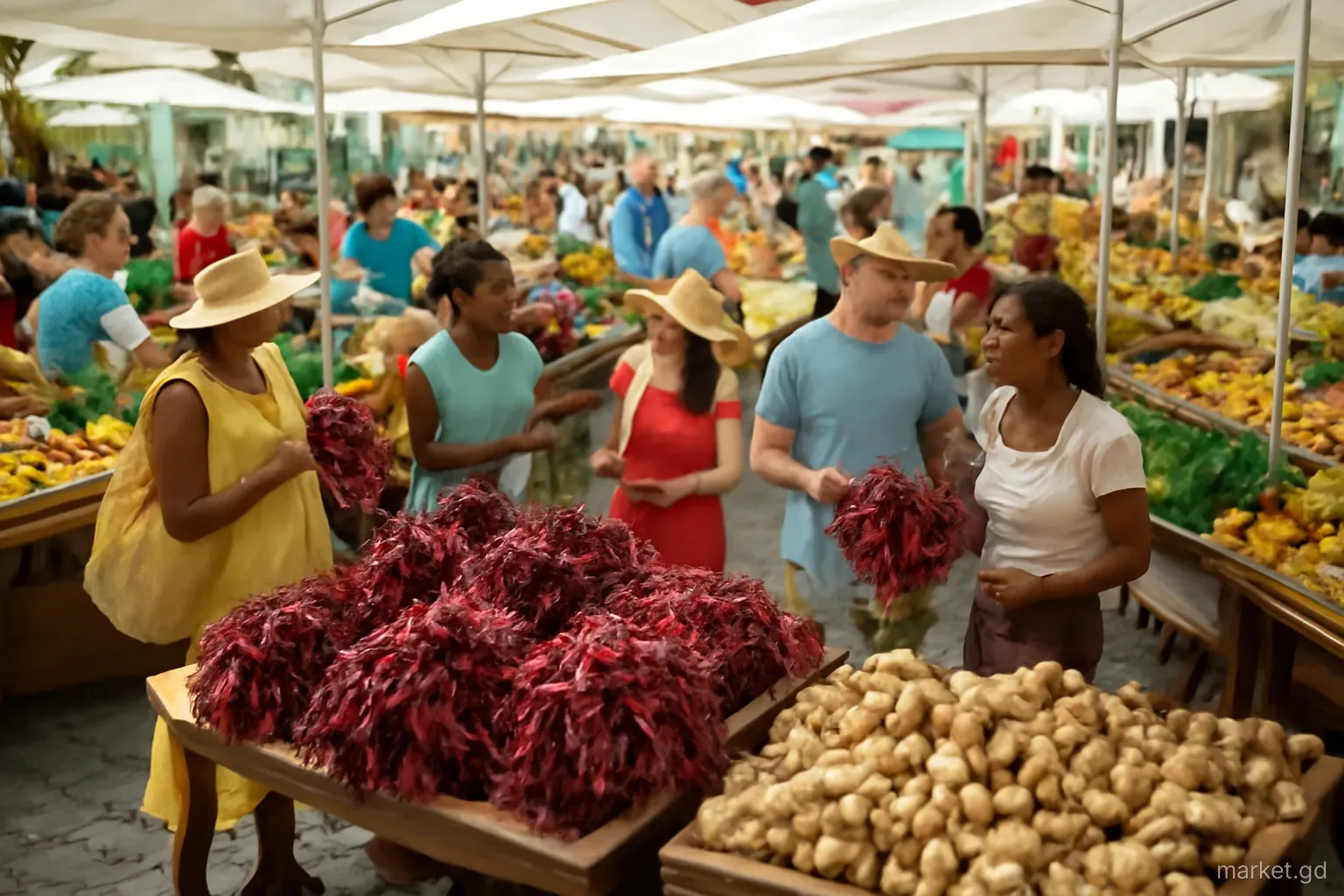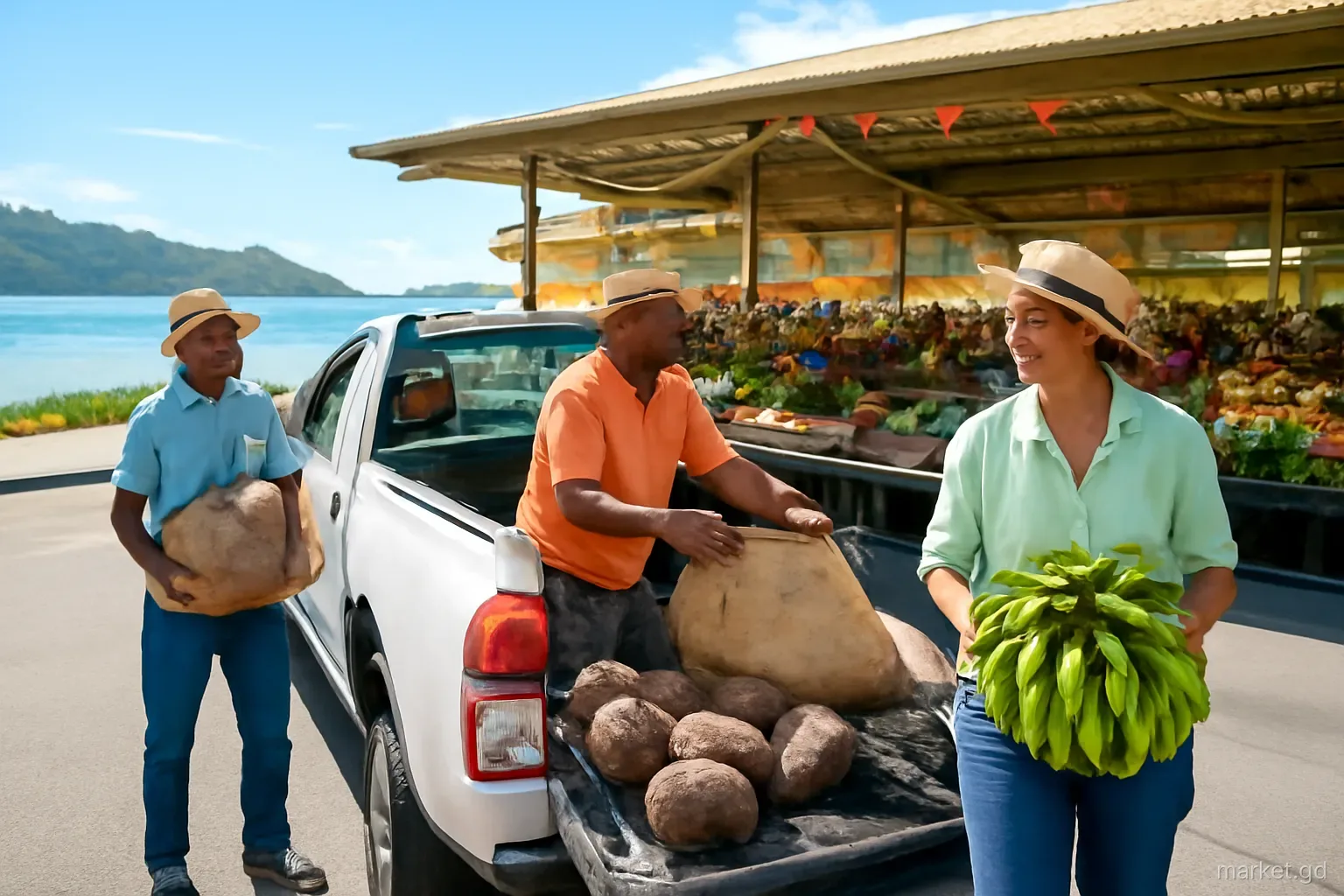
Grenville is Grenada's second town and the commercial centre of St Andrew, the largest parish and one of the most important farming areas on the island. Its market feels different from Market Square in St George's: fewer visitors, fewer spice baskets made for suitcases, and more sacks of provisions, bunches of green bananas and bags of produce heading home to kitchens across the east coast.
For anyone staying on the Atlantic side, or anyone curious about where St George's gets a lot of its food, Grenville market is worth a morning. This page explains how the market fits into the town, what you are likely to find, which days and hours work best, and how to get there and back without spending half the day on the road.
Why Grenville matters to Grenada's food supply
St Andrew covers a large share of Grenada's land, running from the central mountains down to the Atlantic coast. Its wetter hillsides and valleys have long produced cocoa, nutmeg, bananas and ground provisions, and many small farms still work these crops. Grenville sits at the centre of that country, on the bay where cargo once left for Europe and where roads from the interior villages meet the coast.
That geography makes Grenville a collection point. Growers from the surrounding districts sell in town, higglers buy to resell elsewhere, and the bus routes that link Grenville to St George's carry both passengers and bags of produce. When a St George's vendor tells you the dasheen came from St Andrew, there is a fair chance it passed through or near Grenville.
The town also has a fish market close to the water, banks, pharmacies, hardware shops, supermarkets and the main bus terminal for the east coast, so the market is part of a full errand-running town rather than a stand-alone attraction.
What you will find on the stalls
Ground provisions in quantity. Dasheen, yam, tannia, eddoes and sweet potato are often sold in larger amounts than in town, reflecting a customer base that cooks for big households. Ask for a smaller quantity if you only need a meal's worth.
Bananas in every form. Green fig for boiling, ripe sweet figs for eating, bluggoe and plantain. This is banana country, and bunches can be large.
Seasonal fruit straight from nearby farms. Mangoes, avocados, golden apple, soursop, citrus and plums appear according to season, often fresher than what reaches St George's a day later.
Spices for everyday cooking. Nutmeg, cinnamon bark, bay leaf, cloves and turmeric are sold, but more often in plain bags and practical quantities than in decorated gift baskets.
Cocoa products. Home-made cocoa balls or sticks for cocoa tea turn up on some stalls, reflecting the parish's cocoa history.
Seasoning and greens. Chive, thyme, celery, callaloo and peppers sit alongside cabbage, christophene and pumpkin.
A town built on trade
Grenville grew as a port. For much of the colonial period and into the twentieth century, produce from the eastern estates, especially cocoa and nutmeg, was gathered in the town and shipped from its bay. Warehouses, merchants and the institutions that served farmers clustered around the waterfront, and the town became the natural place for people from the surrounding villages to sell and buy.
The pattern survives in a different form. Export shipping now goes through St George's, but Grenville still functions as the east coast's service centre. Farmers come to town to sell, to bank, to buy tools and fertiliser and to catch a bus to the capital. On a Saturday morning this everyday economy is concentrated around the market and the bus terminal, which is why the town can feel much busier than its size suggests. Visitors who understand this see the market less as an attraction and more as a working part of the parish.
When to go
As across Grenada, Saturday morning is the busiest and best-stocked time. Vendors set up early and trade is brisk in the first hours of daylight; by early afternoon the choice narrows. Friday is also busy as people prepare for the weekend, and some shoppers prefer it because the town is less crowded than on Saturday.
Weekday mornings bring a smaller market, still useful for fruit, greens and bananas. Sunday is quiet across the town and not a day to plan a market trip. Public holidays and the period around big events can change the pattern, with more trade in the days before Christmas and Easter and very little on the holidays themselves.
Weather matters more on the east coast. Grenville is on the windward side, exposed to Atlantic trade winds and showers, especially in the rainy season from roughly June to November. Heavy rain can delay farmers coming down from hill villages, so on a very wet morning stalls may fill later than usual.
Getting there and back
Grenville is reachable by route bus, taxi or hire car. Most visitors staying in the south will cross the island one way or another.
- Decide on your route across the island. The road through the mountains via Grand Etang is shorter but winding and steep; the routes along the coast through St David's or around the north are longer.
- If going by route bus, start at the Melville Street terminal in St George's and look for the bus showing the Grenville route on the windscreen. Ask the conductor which way it goes if you have a preference.
- Expect the trip from St George's to take roughly an hour, sometimes more, depending on the road, traffic and stops.
- Arrive early. Leaving the south around six or seven puts you in Grenville while the market is in full swing.
- In Grenville, the market, bus terminal and fish market are close together in the town centre, so you can do everything on foot.
- For the return, buses back to St George's run frequently in the morning and slow down in the late afternoon and evening. Do not leave the return until dusk if you depend on buses.
- If you are driving, park legally away from the narrow streets around the market, which become congested on Saturday morning.
Combining the market with the east coast
Pearls and the old airport. North of town, the Pearls area was Grenada's main airport before Point Salines opened in the 1980s. It is a short drive and part of a loop along the coast.
Cocoa and chocolate country. St Andrew and neighbouring St Patrick and St John hold several cocoa estates and chocolate makers. A market morning can be followed by a visit, but check opening times and whether a booking is needed first.
Grand Etang on the way. If you cross the island through the mountains, the Grand Etang Forest Reserve and crater lake are on the route and make a natural stop in either direction.
Fish and lunch in town. The fish market near the water and the small cook shops in town make Grenville a practical place for lunch after the market, without the cruise-day crowds of St George's.
What to check before you go
Grenville is a working town, not a visitor attraction, and a little preparation avoids frustration.
- Bring EC dollars in small notes. Card payment is unlikely at stalls, though banks and ATMs are in town.
- Bring a cool bag if you plan to buy fish or keep produce fresh on a long ride back across the island.
- Check the weather. A rough Atlantic morning with heavy showers is not the best day for an open-air market.
- Greet vendors before asking prices. Courtesy matters at least as much here as in St George's.
- Be careful on the roads. Traffic, narrow streets and buses pulling in and out are busy around the terminal on market mornings.
- Do not expect tourist souvenirs in volume. For craft items and gift baskets, St George's has more choice.
Frequently asked questions
What day is the main market in Grenville?
Saturday morning is the main market day, with Friday also busy. Weekday mornings have a smaller market with fruit, greens and bananas. Sunday is quiet. For the widest choice, arrive early on Saturday before the heat and before stock is sold to higglers and regular customers.
Is Grenville market cheaper than St George's?
Prices for local produce are often similar or slightly lower, since the market is close to where much of it is grown and caters mainly to local shoppers. The bigger difference is the quantity and freshness of provisions and bananas, and fewer stalls pitched at visitors.
How long does it take to get from St George's to Grenville?
Allow roughly an hour by road, depending on the route, traffic and stops. The mountain road via Grand Etang is shorter but slow; coastal routes are longer. Route buses take a little more time than a private car because of stops along the way.
Can tourists visit Grenville market?
Yes. Visitors are welcome and the market is a good look at everyday food shopping on the east coast. It is busier with local shoppers than with tourists, so be patient, greet people and ask before photographing vendors or their stalls.
Is there a fish market in Grenville?
Yes, Grenville has a fish market close to the waterfront in the town centre, near the main market and bus terminal. What is available depends on the day's catch and sea conditions on the Atlantic coast, so mornings are generally the best time to look.
Can you buy spices to take home in Grenville?
Yes, though most spices are sold in plain, practical packaging rather than decorative baskets. Whole nutmeg, cinnamon bark, bay leaf and cloves are easy to find. Check your home country's rules on bringing plant products and declare them if asked.