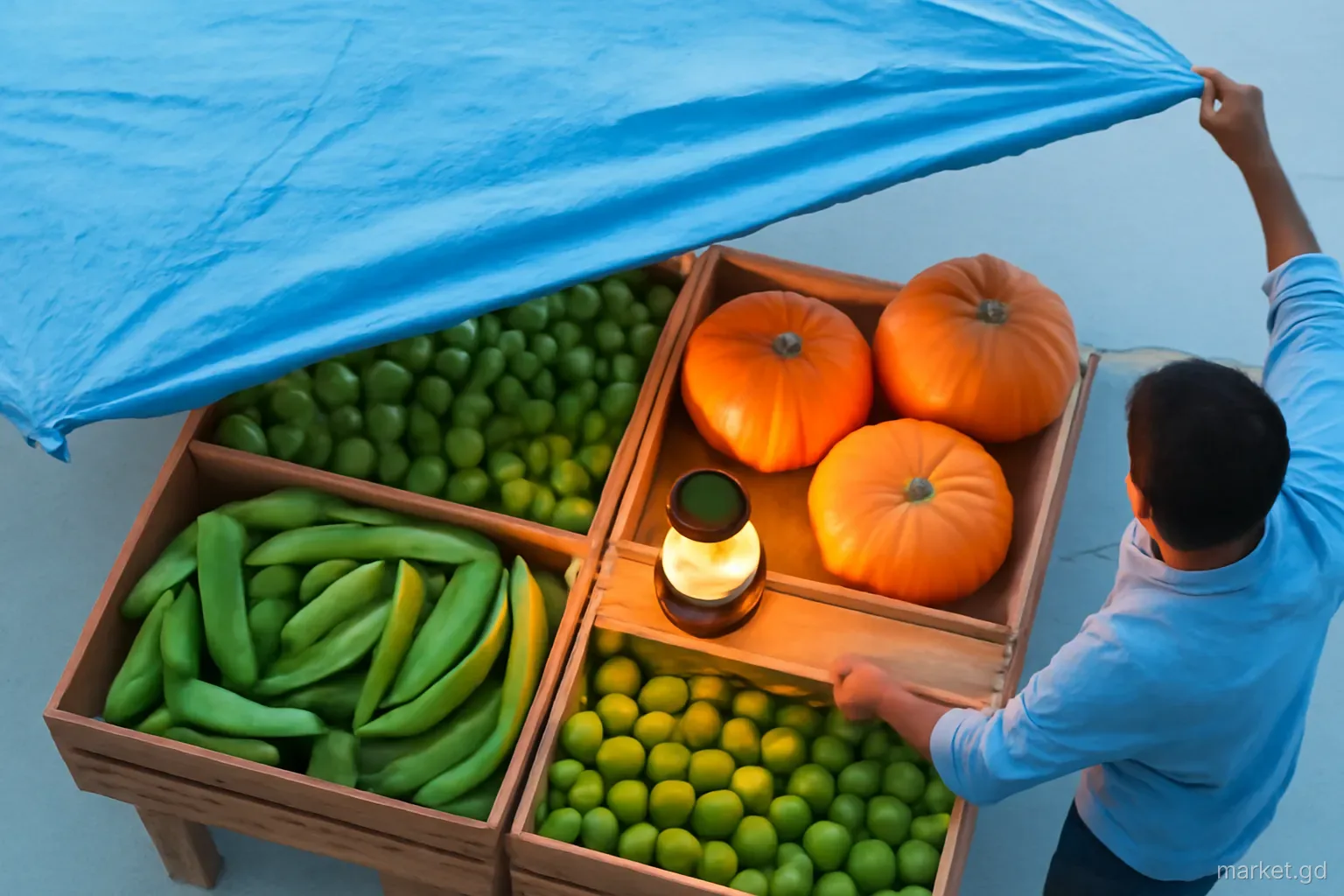
Most people who start selling in Grenada begin the same way: a few crates of produce, a borrowed table and a spot where buyers already walk past. The question that follows quickly is whether that spot is actually yours to use. Public markets, the roadside, a bus terminal, a beach and a private yard all fall under different rules, and the vendor who sets up without asking can lose a morning of sales, a load of produce or the goodwill of the vendors around them.
This page explains how vending space is allocated in Grenada, Carriacou and Petite Martinique, what documents new vendors are usually asked for, how stall fees tend to work and where newcomers go wrong. Procedures and fees are set by government and change from time to time, so treat this as a map of the process and confirm the details with the market office or ministry concerned before you spend money.
Who controls vending space in Grenada
The large public markets, such as Market Square in St George's, the market in Grenville and the smaller markets in towns like Gouyave and Hillsborough, are public facilities. Day-to-day they are run by market staff, usually a market supervisor or clerk who keeps the list of stall holders, collects fees and settles disputes about space. Policy, fees and major decisions sit with the government ministry responsible for markets and local services. In practice the person on site is where you start, because they know which stalls are vacant, which are held by absent regulars and what the waiting list looks like.
Selling along a public road or pavement is a separate matter. Roadside vending is common across the island, from fruit tables on the Western Main Road to coconut carts near the beaches, but a public road is not a free-for-all. Blocking traffic or a footpath can bring a visit from the police, and some busy areas are managed more closely than others. Selling from private land, such as the front of a house or a shop forecourt, needs the owner's permission and ideally a clear agreement on what you pay and when.
Papers new vendors are usually asked for
Identification. A national ID card, passport or driver's licence. Market staff need to know who holds each stall, especially when space is scarce and stalls pass between family members.
A business name registration, if you trade under a name. Selling as yourself under your own name is simple. Trading as "Mama's Spice Corner" or any other brand means registering the business name with the Corporate Affairs and Intellectual Property Office (CAIPO). It is not usually demanded for a basic produce stall, but suppliers, banks and hotels will want it later.
A taxpayer identification number. The Inland Revenue Division issues TINs. Many small vendors never need to file much, but a TIN is often asked for when you open accounts, sell to institutions or apply for support programmes.
A food handler's certificate for anything cooked or cut. Selling prepared food, juices or cut fruit brings in the Environmental Health side of the Ministry of Health. Whole raw produce is treated more lightly than food that is handled and served.
Proof of where produce comes from. Praedial larceny, the theft of crops and livestock, is a long-running problem for Grenadian farmers. A vendor who can show a farmer registration with the Ministry of Agriculture, or a simple record of who supplied the goods, is in a much stronger position if questions are asked.
Applying for a stall, step by step
The exact route varies between markets, but the sequence below is how most vendors get established.
- Visit the market on a busy day and on a quiet day. Note which areas sell produce, which sell meat or fish, which sell crafts, and where buyers actually walk.
- Ask for the market supervisor or clerk, explain what you plan to sell and ask whether stalls are available, whether there is a waiting list and what the fee is.
- If the market works by application, ask for the form and the list of attachments. Bring copies of your ID and any registration you already hold.
- Sort out health requirements first if you will handle food. A stall approval does not replace a food handler's certificate, and inspectors can visit any stall.
- Agree the terms in writing where possible: stall number, days you will trade, fee, how it is paid and what happens if you miss days.
- Keep every receipt for stall fees. In any later dispute about who has the right to a space, a paper trail matters more than how long you have been there.
How stall fees usually work
Public market fees in Grenada are modest compared with shop rents, and they are normally charged per day, per week or per month depending on the market and the type of stall. A covered stall with a counter, a spot on the open floor and a space on the pavement outside the market building can all be priced differently. Fees are set by government and revised occasionally, so a figure heard from another vendor may be out of date; the market office is the only reliable source.
Budget for the extras as well. Vendors often pay for storage of crates and umbrellas, ice, transport for produce, bags and their own time on the road. Some markets charge for use of cold rooms or lock-up space where these exist. When working out whether a stall pays, add the fee to these costs and divide by the number of trading days. A small daily fee on a day that brings few buyers can still be the difference between a profit and a loss, which is why many vendors concentrate on Friday and Saturday rather than trading all week.
Mistakes that cost new vendors
The most common mistake is taking a spot that looks empty but belongs to a regular who comes on certain days. Market custom is strong, and setting up in another vendor's place, even with no written rule against it, sours relations quickly. Ask the supervisor and the neighbouring vendors before you unpack.
Another is assuming a stall can be passed on privately. Stalls sometimes move between relatives with the market office's knowledge, but "renting out" a public stall to a stranger without approval can cost the original holder the space. A third is ignoring the basics of public health: leaving rotten produce behind, washing knives in buckets of dirty water or selling cut fruit uncovered. Inspectors and other vendors notice. Finally, some newcomers underestimate the market week. Saturday is the main day in St George's and most towns; trading on a Tuesday afternoon will not tell you what the stall can really do.
Carriacou and Petite Martinique
On Carriacou and Petite Martinique everything happens at smaller scale. The market in Hillsborough and the vendors around the jetty serve residents, yachts anchored in Tyrrel Bay and visitors arriving on the inter-island ferry, so the best trading times follow boat arrivals as much as the day of the week. Local administration runs through the Ministry responsible for Carriacou and Petite Martinique Affairs, and the people to ask about space are generally the local government offices in Hillsborough.
Hurricane Beryl struck both islands in July 2024 and damaged homes, farms and public buildings. Market arrangements, supply from local farms and the condition of buildings may still differ from what they were before the storm, so anyone planning to sell there should check the current situation in person or with the local office before bringing stock across from the mainland. Produce shipped from Grenada also adds freight and handling costs that need to be built into prices.
Frequently asked questions
Is a licence needed to sell fruit by the roadside in Grenada?
Selling a few items of your own produce informally is common, but roadside vending is still subject to rules on obstruction and public health, and some busy areas are managed. Ask the police station or the relevant ministry in your area before setting up a permanent table, and always keep the road and footpath clear.
How long is the waiting list for a stall at Market Square?
It varies with demand and the type of stall. Covered stalls in the busiest sections can be hard to get, while spaces for occasional traders open up more often. The market supervisor can tell you whether there is a list and roughly how it moves. Trading on quieter days first can help you get known.
Can a foreigner rent a market stall in Grenada?
Non-nationals running a business in Grenada usually need the right to work, such as a work permit or a CSME skills certificate where it applies. Check your immigration status with the Immigration Department and the Ministry of Labour before trading, because a stall allocation does not grant permission to work.
Is a food handler's certificate needed to sell whole vegetables?
Whole, uncut raw produce is generally treated differently from prepared food. Once you cut fruit, make juice, sell drinks or cook anything, expect to need a food handler's certificate from the Environmental Health Department. If unsure, ask them before you start rather than after an inspection.
What happens if a vendor misses market days for a few weeks?
Rules differ, but a stall left unused without explanation can be reallocated, especially where others are waiting. If you will be away because of illness, a crop gap or travel, tell the market office and keep your fees up to date so your claim to the space is on record.