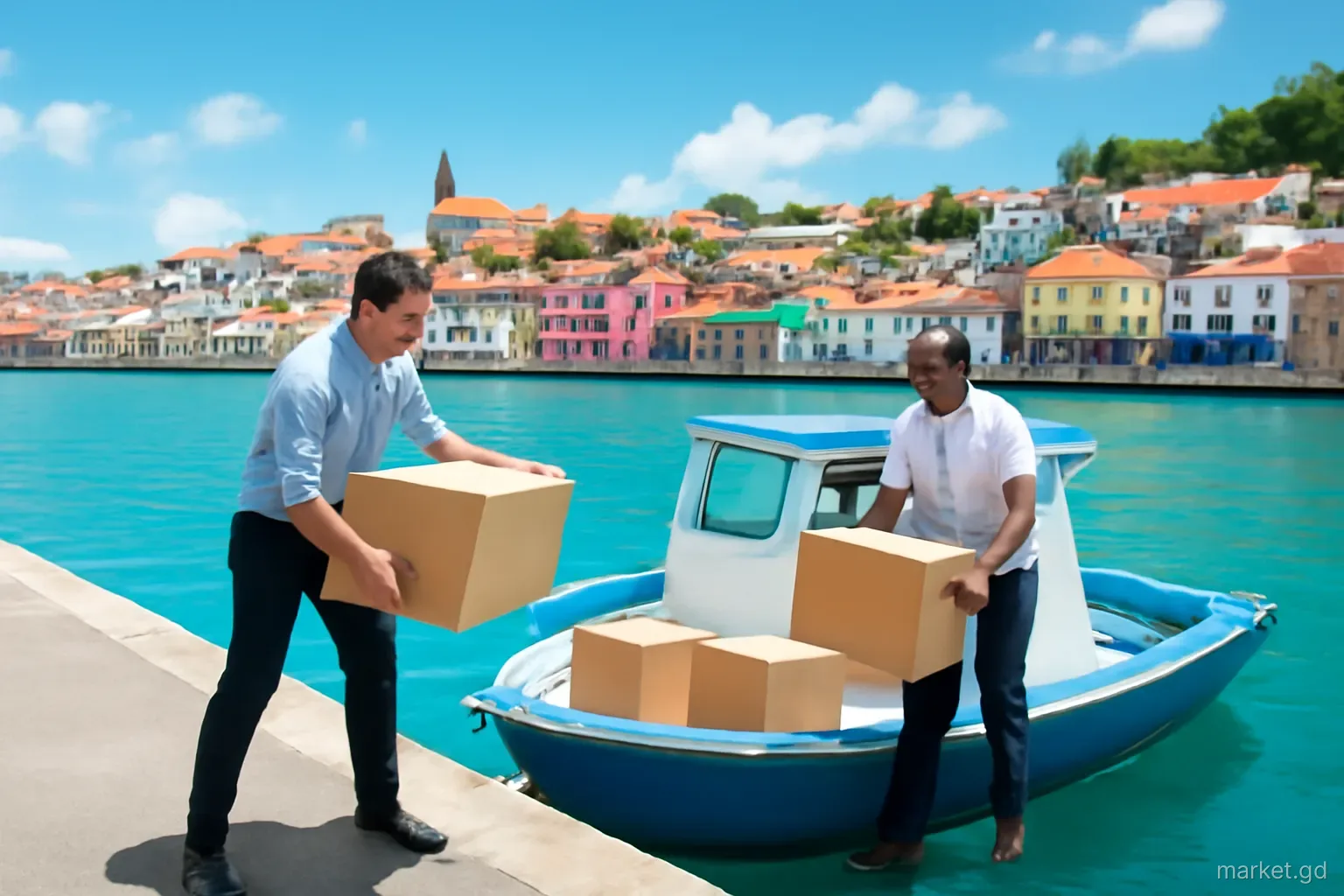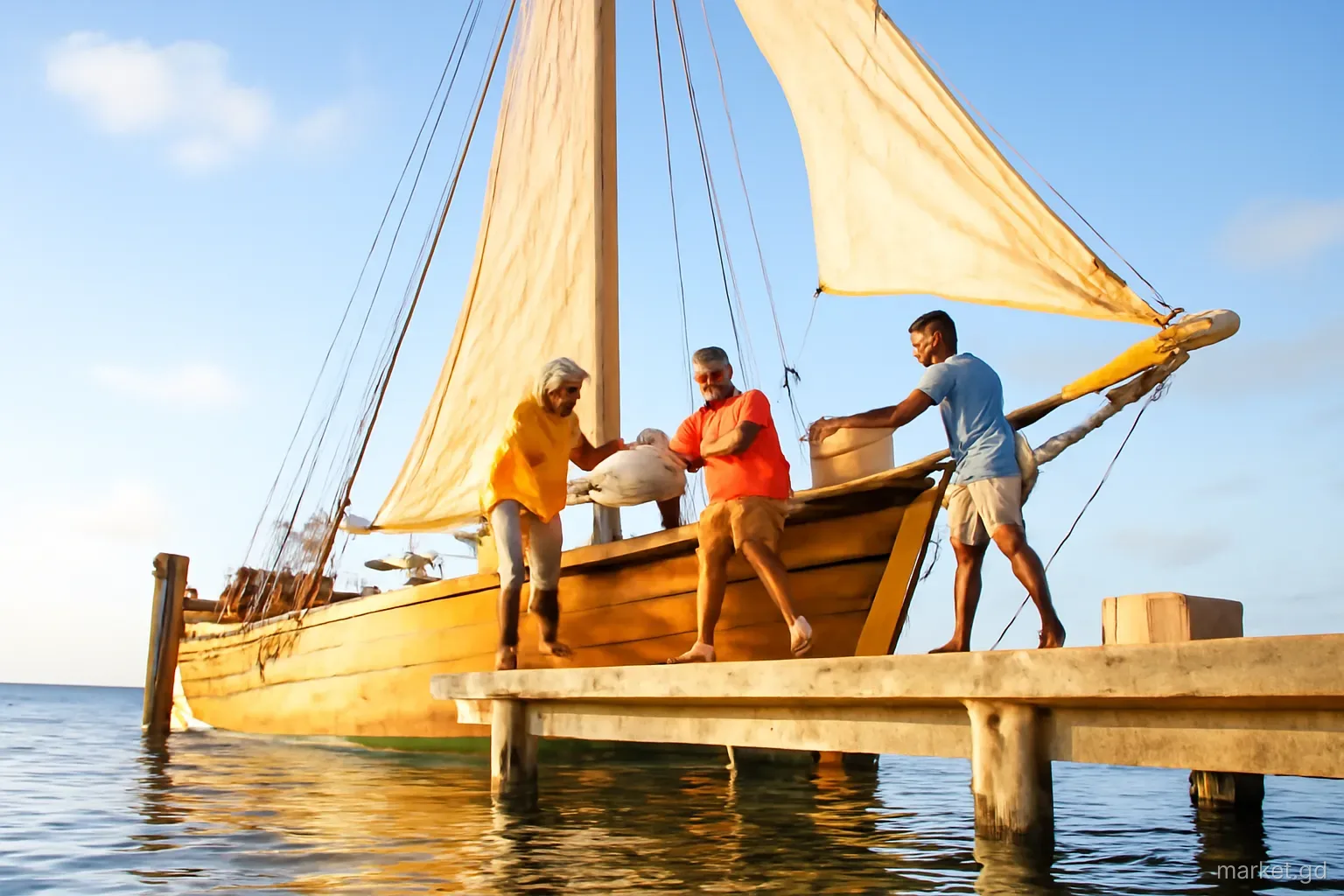
On Carriacou and Petite Martinique, almost everything on a shop shelf, every bag of cement and every sheet of roofing has crossed the sea at least twice: once to Grenada, and again from St George's to the sister islands. That second leg shapes daily life. It adds cost, adds time and makes a missing part or a delayed boat a real problem for a builder, a shopkeeper or a family waiting on furniture.
This guide explains how goods generally move from mainland Grenada and from abroad to Carriacou and Petite Martinique, what to plan for, and where things go wrong. It is written with the aftermath of Hurricane Beryl in mind: the storm devastated both islands in July 2024, and schedules, operators and port facilities have been affected since. Confirm current arrangements locally before relying on any route.
The second sea leg: how it works
Large international cargo for the sister islands normally arrives first at the port of St George's, where containers are unloaded and cleared, or sometimes moved on in bond. From there, goods travel north on smaller cargo vessels and inter-island boats that run between St George's and Carriacou, traditionally to Hillsborough, the main town and port, though docking points have shifted at times since Beryl, with some continuing to Petite Martinique.
Passenger ferries on the Grenada to Carriacou route also carry limited parcels and baggage, which is how many small items, shop orders and family packages make the trip. Larger or heavier goods, vehicles, building materials, appliances and bulk groceries normally go by cargo boat.
Petite Martinique has a long seafaring and trading tradition, and its boat owners have historically carried goods between the Grenadines islands. Trade across the nearby border with St Vincent and the Grenadines also exists, but any goods crossing it are imports and must go through customs; informal carrying of undeclared goods is illegal whatever the size of boat.
For visitors and residents moving between the islands, it is also worth knowing that airlines flying the short hop to Lauriston Airport on Carriacou have tight baggage limits on small aircraft. Heavy shopping usually goes more economically by sea.
What to arrange before goods leave St George's
Who receives and clears the goods. If goods arrive from abroad, decide whether they will be cleared in St George's and then shipped on, or moved under customs control to be cleared in Carriacou. Your broker or shipper should explain which route applies.
Who moves goods to the boat. Someone has to collect goods from the port, a warehouse or a mainland store and deliver them to the cargo boat. Many island buyers use a trusted agent, relative or the supplier's own delivery.
Freight on the second leg. The boat owner or operator charges separately, usually by item, weight or volume. Ask for the rate before goods are loaded and agree who pays it.
Packing. Goods are often handled by hand and stacked on open decks. Wrap anything that must stay dry and protect appliances from knocks.
Collection on the island. Know who will meet the boat in Hillsborough or at the Petite Martinique jetty, and how goods get from the quay to the shop or building site.
Timing, weather and the cost of waiting
Cargo boats on the route run to their own schedules, and departures can be affected by weather, loading, mechanical issues and demand. Rough seas in the channel are common at certain times, and in hurricane season boats may stay in port when systems pass nearby. A day or two of delay is normal; a week is not unusual after bad weather or when a boat is out of service.
For shopkeepers, this means ordering further ahead than mainland shops do and holding more buffer stock, especially of staples such as rice, flour, cooking gas, water and cleaning products. For builders, it means checking that every fitting, fixing and tool is on the order before the boat leaves: discovering a missing set of hinges on Carriacou can cost days.
Cost is the other side. Freight on the second leg, handling at both ends and occasional losses all feed into island prices, which is why the same product often costs more in Hillsborough than in St George's. Buying in bulk on the mainland can save money, but only if the extra freight and storage are counted.
Petite Martinique adds one more step for many goods, either a connecting boat from Carriacou or a direct sailing when one is available. Residents there often combine orders with neighbours to make a trip worthwhile, a habit that also reduces freight per item.
A practical sequence for a large order
Families rebuilding or furnishing a house, and shops restocking, have found that a written sequence prevents most problems:
- Make a complete list of everything needed, including fixings, accessories and spares, and check it against the supplier's invoice before payment.
- Ask the supplier whether they deliver to the cargo boat, and which boat or operator they normally use for Carriacou or Petite Martinique.
- Contact the boat operator for the next available sailing, the freight rate and how goods should be packed or palletised.
- Arrange insurance if the value justifies it, and photograph goods as they are loaded.
- Send the recipient on the island a copy of the invoice and the expected sailing, so they can meet the boat and check contents on arrival.
- Check every item on the quay before signing for it, and report damage or shortages immediately to the boat operator and the supplier.
After Beryl: what changed and what to check
Hurricane Beryl destroyed or damaged a very large share of homes and buildings on Carriacou and Petite Martinique, and port facilities, shops and boats were affected too. In the months that followed, relief and reconstruction cargo dominated the route, building materials were in heavy demand and prices for some goods rose.
Reconstruction has been ongoing, but the situation varies. Some operators returned quickly, others changed schedules or vessels, and some businesses on the islands reopened in new locations or with different stock. Treat any older information about sailings, cargo rates or which shop carries what with caution, and ask on the island before you plan.
Government and aid programmes have at times offered concessions on duties or VAT for building materials and household goods for affected residents. These come with conditions and time limits, and they require proper application. Ask the Customs and Excise Division or the relevant ministry for the current position rather than relying on word of mouth.
For anyone ordering from abroad on behalf of family on the islands, the practical lesson from the storm period is to ask the recipient what is actually available locally before shipping. Some goods that were scarce in the first months after Beryl later became easy to buy in Hillsborough again, and shipping them from Miami would have cost more than buying on the spot.
Common mistakes on the island route
The problems that come up most often are predictable, and most can be avoided with a phone call or a list:
- Incomplete orders. One forgotten item can halt a job for a week until the next boat.
- No one at the quay. Goods left unattended on the jetty can be damaged by rain or go missing.
- Assuming the ferry takes everything. Passenger ferries have limits on parcel size, weight and type; bulky goods need cargo boats.
- Unclear payment. Not agreeing in advance who pays the second-leg freight leads to goods being held.
- Undeclared cross-border goods. Buying in St Vincent or Union Island and bringing goods in without declaring them is smuggling, with seizure and fines as the result.
A short written checklist kept by whoever meets the boat, listing what was ordered and in how many pieces, catches most of these problems on the quay rather than days later at the site or shop.
Frequently asked questions
How are goods shipped from Grenada to Carriacou?
Small parcels often travel on the passenger ferry, while larger items, building materials, appliances and bulk groceries go on cargo boats that run between St George's and Hillsborough. Freight is charged separately for this leg. Schedules and operators change, especially since Hurricane Beryl, so confirm the current options locally before arranging a shipment.
Can imported goods be cleared in Carriacou rather than St George's?
Depending on the arrangement, goods arriving from abroad may be cleared in St George's and shipped on, or moved under customs control for clearance on Carriacou. A customs broker or the shipping agent can explain which route applies to your goods and what it costs. Ask before the goods arrive to avoid storage charges.
Why do goods cost more on Carriacou than in St George's?
Goods for Carriacou and Petite Martinique pay for an extra sea journey, extra handling at both ends and occasional losses or damage. Smaller order sizes also mean island shops have less buying power. Those costs are built into shelf prices, which is why bulk buying on the mainland can save money if freight is counted.
Is it legal to bring goods from Union Island into Carriacou?
Union Island belongs to St Vincent and the Grenadines, so goods brought from there into Carriacou or Petite Martinique are imports. They must be declared to customs and may attract duty and VAT. Bringing goods in without declaring them is smuggling and can lead to seizure of the goods and penalties.
How can a shop on Carriacou avoid running out of stock?
Order further ahead than mainland shops, keep buffer stock of staples, especially in hurricane season, and maintain good relationships with more than one supplier and boat operator. A simple written reorder list for each product, with a minimum stock level, prevents the scramble that follows a delayed boat or a storm.